Key takeaways:
- The initial US-Iran deal commits both sides to seek a final agreement within 60 days and end hostilities on all fronts, including in Lebanon.
- Vice President JD Vance is leading the US delegation, while Mohammad Bagher Ghalibaf and Foreign Minister Abbas Araghchi are leading Iran’s team.
- Iran said it closed the Strait of Hormuz over Lebanon ceasefire violations, but US Central Command said 55 merchant ships transited the waterway Saturday.
US and Iranian officials opened direct talks in Switzerland on Sunday, days after their presidents signed an initial agreement intended to end the war, but continued fighting in Lebanon and tensions over the Strait of Hormuz quickly tested the accord.
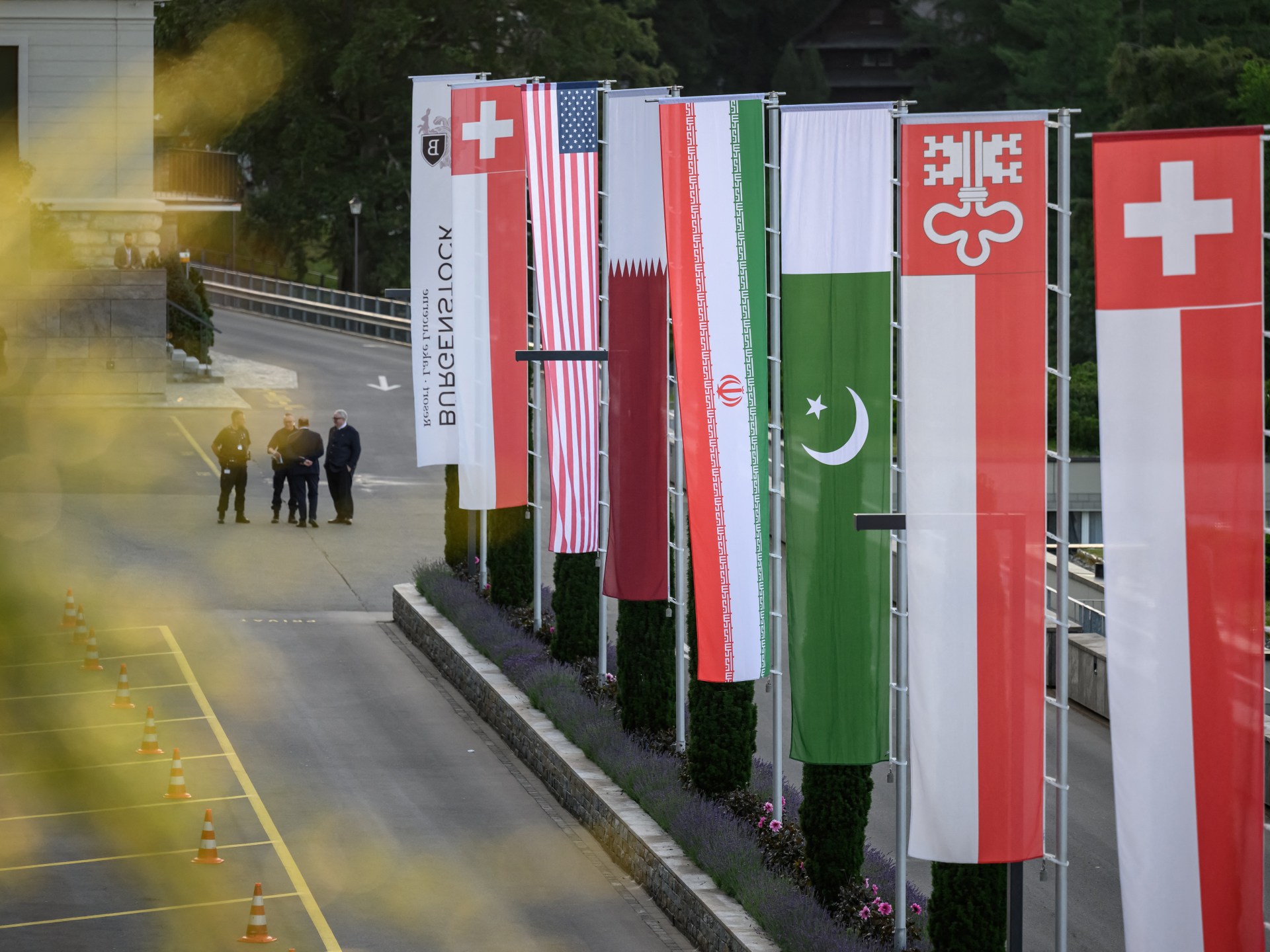
The negotiations are being held in Bürgenstock, a resort above Lake Lucerne, with Pakistan and Qatar involved in mediation, Al Jazeera reported. The BBC reported that Pakistan has acted as a mediator throughout the war and hosted an earlier round of negotiations between Washington and Tehran.
The initial deal, signed last week by US President Donald Trump and Iran’s president, commits the sides to seek a final agreement within 60 days and to end hostilities on “all fronts,” including in Lebanon. It also includes the reopening of the Strait of Hormuz, a $300bn plan for Iran’s “reconstruction” and the termination of “all types of sanctions” on Iran, the BBC reported.
But the nuclear issue — described by the BBC as the main reason given by the US for the conflict — remains unresolved and is set to be negotiated during the 60-day period, which can be extended.
Vice President JD Vance is leading the US delegation, joined by Trump’s special envoy Steve Witkoff and Trump’s son-in-law Jared Kushner. Iran’s delegation is led by parliamentary speaker Mohammad Bagher Ghalibaf and Foreign Minister Abbas Araghchi. Pakistan’s Prime Minister Shehbaz Sharif and army chief Field Marshal Asim Munir are attending, and Al Jazeera reported that Qatar’s Prime Minister Sheikh Mohammed bin Abdulrahman bin Jassim Al Thani is also expected to take part.
Before leaving for Switzerland, Vance said the US hoped to make “progress on the nuclear issue” and “on the Lebanon ceasefire issue.” Esmaeil Baghaei, spokesperson for Iran’s Ministry of Foreign Affairs, said Iran would be “pressing for implementation” of US commitments and “seeking clarity on how exactly the other side intends to carry out those commitments.” The BBC quoted Tehran as saying it would be “demanding that the other side fulfil its commitments.”
Lebanon is expected to dominate the opening phase. Iran says the agreement includes a ceasefire there and that continued Israeli attacks violate the deal. “The Zionist regime continues to violate its commitment in Lebanon. This issue will be the main topic of discussion in today’s talks,” Baghaei said in a video shared by Iran’s state news agency IRNA, according to Al Jazeera.
The BBC reported that deadly clashes have continued between Israel and Hezbollah despite the deal and a ceasefire the two sides agreed on Friday. Israel says its conflict with Hezbollah is separate from the war on Iran, which it mounted alongside the US on Feb. 28. Lebanon was drawn into the war after Hezbollah fired rockets into Israel in retaliation for a strike that killed Iran’s supreme leader, the BBC reported. Israel then launched a bombing campaign across Lebanon and occupied about 5% of southern Lebanon, according to the BBC; Al Jazeera reported that Israel currently occupies one-fifth of the country.
Al Jazeera reported that Israeli forces killed dozens of people in Lebanon on Saturday despite a reported ceasefire with Hezbollah, and that Israeli attacks since early March have killed more than 4,000 people and displaced more than one million.
The Strait of Hormuz is another flashpoint. Iran said Saturday it had closed the vital shipping route over ceasefire violations in Lebanon, but the BBC reported that tracking data showed vessels continued to pass through. US Central Command said Saturday that safe passage remained intact, with 55 merchant ships transiting the waterway and carrying more than 17 million barrels of oil to global markets, according to Al Jazeera.
Trump wrote that there would be “NO TOLLS” in the strait during or after the 60-day ceasefire period, “unless they are imposed by and for the United States of America,” Al Jazeera reported.
When technical talks begin, Iran’s nuclear programme will be central. Al Jazeera reported that Washington says Iran must not possess, buy or develop nuclear weapons, or have the capacity to do so, while Tehran maintains its programme is civilian and says it may accept limits if sanctions are removed.


Be First to Comment