Key takeaways:
- Police charged a 30-year-old Sudanese national with attempted murder, possession of a bladed article in public and threats to kill after Monday’s Belfast stabbing.
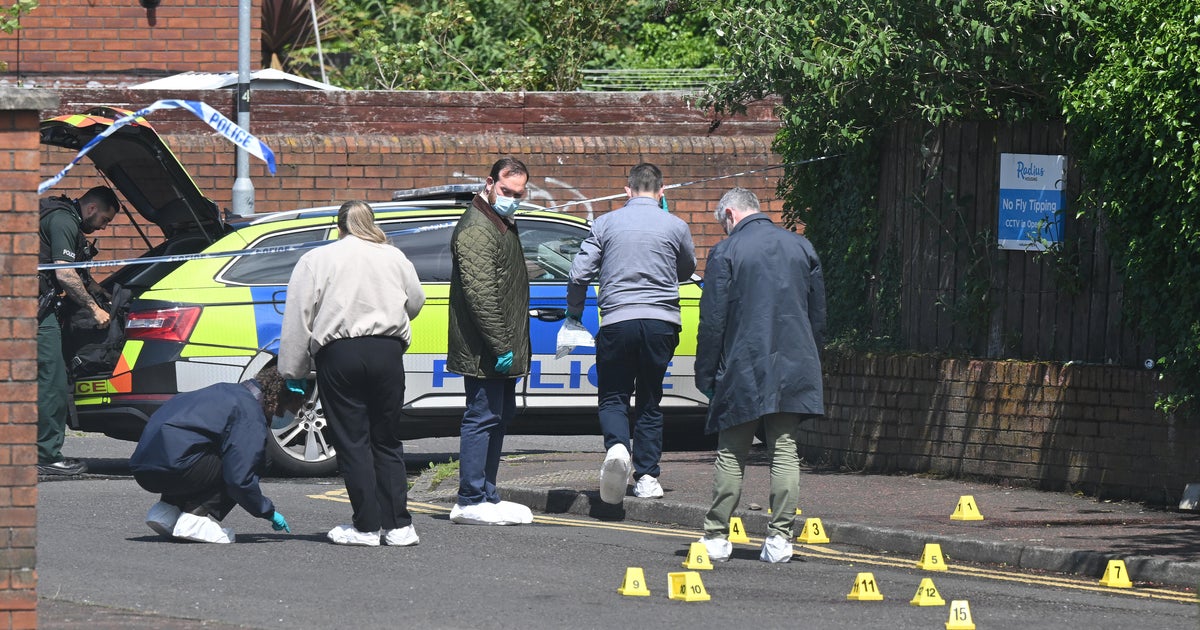
- The victim, a man in his 40s, suffered serious slash wounds to his face, eyes, neck and back, and police said a kitchen knife was found at the scene.
- Protesters in Belfast set vehicles on fire, including a bus, and the BBC reported that about 100 men damaged homes on a street in east Belfast.
Hundreds of anti-immigration protesters took to the streets of Belfast on Tuesday night, setting vehicles on fire and blocking roads, after police charged a Sudanese man over a brutal knife attack that left a man in his 40s with serious injuries.
The attack happened late Monday in north Belfast and was captured on video that spread widely on social media. British Prime Minister Keir Starmer called it “horrific” and “sickening.”
“I have absolutely no tolerance for abhorrent scenes of violence like this on our streets,” Starmer said on X. “My thoughts are first and foremost with the victim, and I thank the first responders, including members of the public who intervened.”
Police said the victim suffered serious slash wounds to his face, eyes, neck and back. Northern Ireland Assistant Chief Constable Ryan Henderson described the assault as “brutal” and said a kitchen knife was found at the scene. Video showed members of the public trying to fight off the attacker before police arrived, and senior officers credited them with saving the victim’s life.
The Police Service of Northern Ireland initially described the suspect as Somali, CBS News reported, but later identified him as a Sudanese man in his 30s. On Tuesday evening, police charged a 30-year-old Sudanese national with attempted murder, possession of an article with a blade or point in a public place, and threats to kill. He was due to appear at Belfast Magistrates’ Court on Wednesday.
Police said they were investigating a motive but had no information at this stage to suggest the attack was terrorism-related. Henderson said the PSNI had declared the assault a “critical incident.”
“We have commenced an investigation to establish a motive,” he said, adding that the attack would have “sent shockwaves through the community, causing real concern.”
The suspect’s immigration status became a focus of public debate and online calls for protests. Police said it was understood he lived locally and had been granted leave to remain in the U.K. in September 2023 after claiming asylum. Police said he had traveled to Belfast in February 2023 by bus from Dublin, having flown there from Paris on an unknown date.
“There is no trace of this suspect on any of our national security databases, and he was not known to the Police Service of Northern Ireland,” Chief Constable Jon Boutcher said.
Gavin Robinson, a British member of Parliament from the Democratic Unionist Party, said in Parliament that the suspect was in the U.K. on a five-year visa. Henderson said he was aware of speculation about the suspect’s immigration status and had spoken with U.K. Home Office colleagues, but CBS News reported that U.K. authorities had not yet confirmed the exact details.
By Tuesday evening, protesters had gathered at several points in Belfast, many of them masked. Police deployed armored vehicles, and helicopters flew over the city. Protesters set fire to several vehicles, including a bus in east Belfast, and blocked roads. The BBC reported that a crowd of 100 men kicked in doors and broke windows of homes on a street in east Belfast. Sky News showed footage of a house on fire. A few dozen protesters also blocked Parliament Square in London.
Henderson appealed for calm. “I understand that last night’s attempted murder will leave people feeling a range of emotions, from fear to anger,” he said. “I appeal for calm and the safety of all of our communities in response to this.”
Leaders of Northern Ireland’s main political parties jointly condemned the attack and urged people not to share the graphic video. “There is no place in our society for this kind of brutality,” leaders of the five main parties said, calling for “space to allow justice to take its course.”
The unrest followed repeated protests over immigration policy in Britain and came about a year after anti-immigrant rioting in Northern Ireland amid anger over an alleged sexual assault. CBS News reported that charges in that case were later dropped, with prosecutors citing a lack of evidence.





Be First to Comment