Key takeaways:
- Spirit Airlines plans to cease operations as soon as Saturday if no government bailout is secured.
- The Trump administration proposed a $500 million aid package, but bondholders and officials opposed the terms.
- Spirit has lost $60 million in early 2026 and faces record jet fuel costs, complicating its bankruptcy exit.
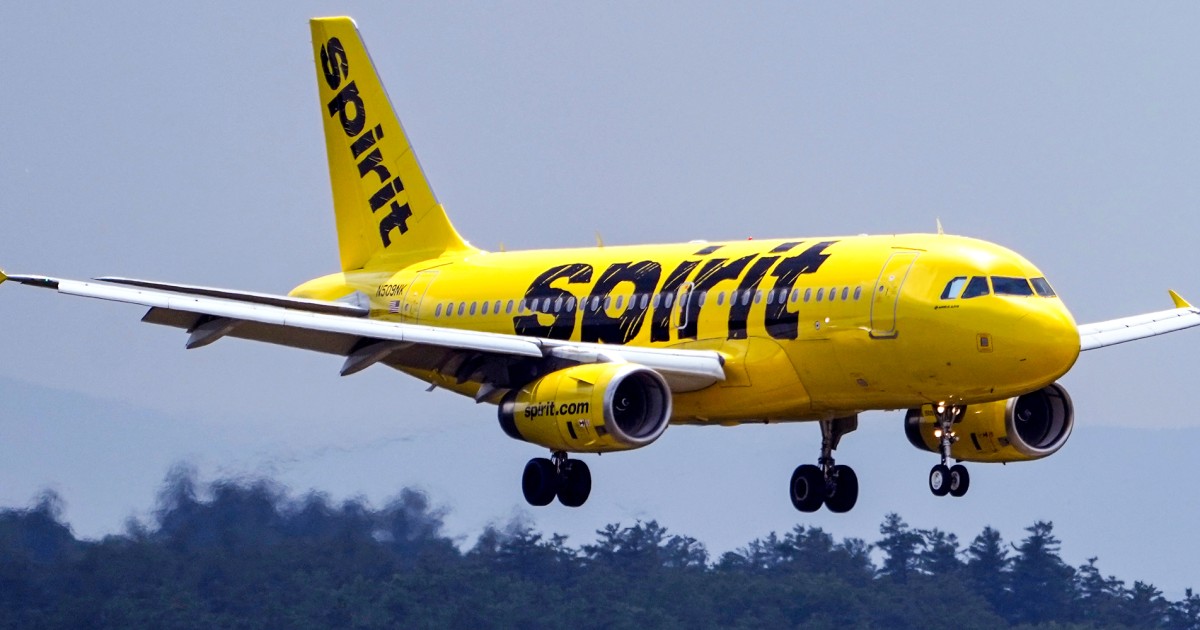
Spirit Airlines is preparing to cease operations as soon as Saturday unless a last-minute government intervention occurs, sources told CBS News. Negotiations over a $500 million federal aid package have stalled after bondholders rejected the terms. Officials within the Trump administration have been informed that Spirit will shut down within 24 hours, with no expected bailout effort, according to sources familiar with the discussions.
President Donald Trump acknowledged the situation on Friday, stating, “Well, I guess we’re looking at it. If we can do it, we’ll do it but only if it’s a good deal.” He added, “I’d like to save the jobs, but we’ll have an announcement some time today. We gave them a final proposal.”
Despite the looming shutdown, Spirit continued normal operations on Friday, focusing on safely completing scheduled flights. A spokesperson for the bankrupt airline declined to comment on the bailout talks, saying only that “Spirit is operating as usual.”
Reports from The Wall Street Journal, The New York Times, and Bloomberg News indicate that Spirit is laying the groundwork for liquidation after surging jet fuel costs made its planned exit from bankruptcy unfeasible. United Airlines said it is preparing to support Spirit customers and employees if the shutdown occurs.
Spirit had approached the White House seeking financial assistance in recent weeks. The proposed $500 million bailout would have involved the U.S. government taking a stake in the company. However, the plan faced opposition from Wall Street, Capitol Hill, and members of the Trump administration. Transportation Secretary Sean Duffy criticized the idea, saying it would be “tossing good money after bad,” noting that Spirit has struggled to achieve profitability despite significant financial support.
Trump expressed skepticism about the rescue, stating, “We’re looking at it. But if we can’t make a good deal… no institution has been able to do it.” He emphasized the administration’s efforts to help, noting the potential loss of 14,000 jobs and describing the negotiations as “a tough deal.”
Sara Nelson, president of the Association of Flight Attendants, urged the president to act, warning of the impact on nearly 20,000 employees and consumers. She wrote on X, “If @realDonaldTrump wants to help @SpiritAirlines he can do it. It’s in his hands. Everyday Americans will hurt — beyond the nearly 20k employees who will lose their livelihoods — it will cost consumers $1B annually. If you’re in charge @POTUS then make it happen now.”
Spirit, one of five ultra-low-cost carriers in the U.S., has faced ongoing financial challenges. It lost $60 million in the first two months of 2026, before jet fuel prices reached record highs. The airline previously attempted to merge with JetBlue, but a federal judge blocked the deal on antitrust grounds.
Industry analysts warn that losing Spirit could harm consumers by reducing competition and driving up fares. Travel expert Katy Nastro said, “Even if you’ve never flown on Spirit, you want them in the market to help put pressure on those other larger carriers. It actually helps keep prices cheap. So even if you’re not a big Spirit fan, you want to see them succeed.”
However, a government bailout could set a precedent for other struggling carriers like Frontier and JetBlue, analysts at J.P. Morgan cautioned. Earlier this week, the Association of Value Airlines, representing Allegiant, Avelo, Frontier, Spirit, and Sun Country Airlines, requested $2.5 billion in government support to offset rising fuel costs and avoid fare increases. The group stated, “Temporary government support to preserve vital industry competition is not without precedent.”





Be First to Comment