Key takeaways:
- The U.S. will start a naval blockade of maritime traffic to and from Iranian ports in the Strait of Hormuz at 10 a.m. ET Monday, but will not block vessels transiting the strait to non-Iranian ports.
- Oil prices surged sharply following the blockade announcement, with U.S. crude rising 8% to over $104 per barrel and Brent crude increasing more than 7%.
- The U.K. will not participate in the U.S. blockade but is leading a coalition effort with over 40 nations to reopen and protect freedom of navigation in the Strait of Hormuz.
The United States will initiate a naval blockade of maritime traffic entering and exiting Iranian ports starting Monday at 10 a.m. ET, according to U.S. Central Command (CENTCOM). The blockade, ordered by President Donald Trump, aims to restrict vessels accessing Iranian ports in the Arabian Gulf and Gulf of Oman but will not impede ships transiting the Strait of Hormuz to and from non-Iranian ports. CENTCOM advised commercial mariners to monitor notices and communicate with U.S. naval forces when operating near the Gulf of Oman and Strait of Hormuz.
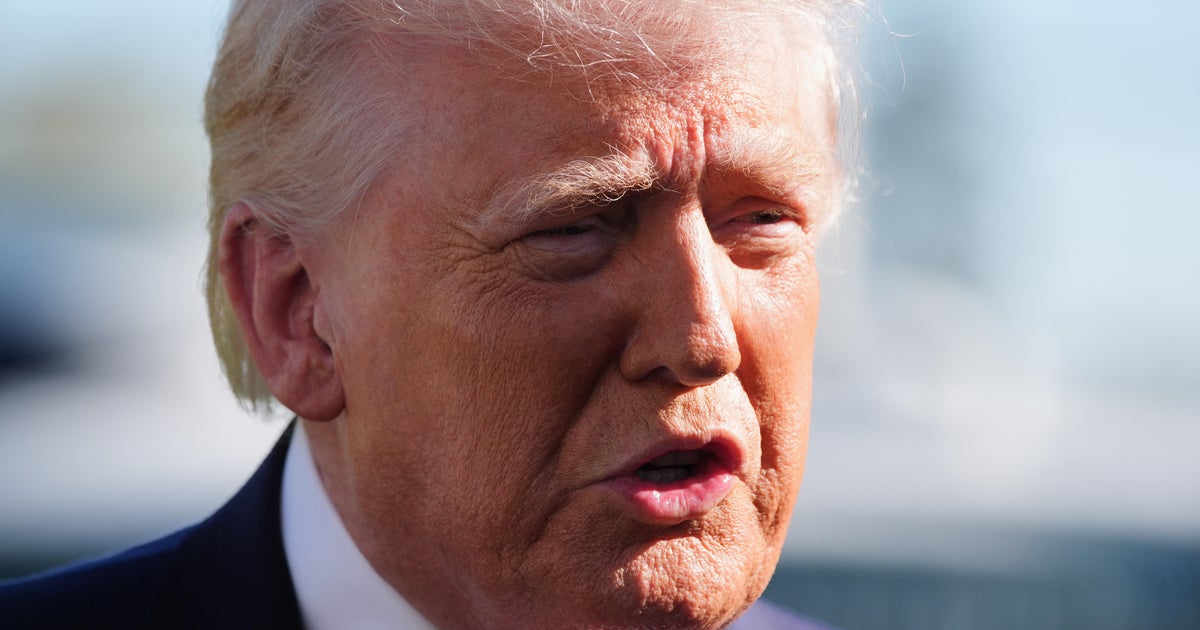
President Trump announced the blockade on Sunday, stating on Truth Social that the U.S. Navy would “begin the process of BLOCKADING any and all Ships trying to enter, or leave, the Strait of Hormuz,” and added that vessels paying tolls to Iran would be interdicted even in international waters. The announcement followed unsuccessful peace negotiations in Islamabad between U.S. officials, including Vice President JD Vance, and Iranian and Pakistani delegates. Vance reported that Iran “have chosen not to accept our terms” and departed Pakistan after marathon talks.
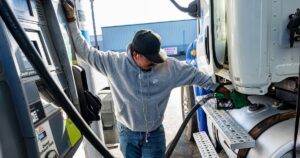
The blockade announcement triggered a sharp surge in global oil prices. U.S. crude oil prices jumped 8% to over $104 per barrel, while Brent crude rose more than 7% to $103 per barrel. Wholesale gasoline and heating oil prices also spiked, with gasoline up 6% and heating oil, a proxy for jet fuel, rising 10%. Stock futures declined sharply amid market uncertainty.
Iran’s parliament speaker, Mohammad Bagher Qalibaf, responded to the blockade by posting a map of gas stations near the White House and warning that Americans would soon be “nostalgic for $4–$5 gas.” He emphasized that the Strait of Hormuz remains under Iran’s “full control,” with the Revolutionary Guard stating the waterway is open to non-military vessels but that military ships would face a “forceful response.”
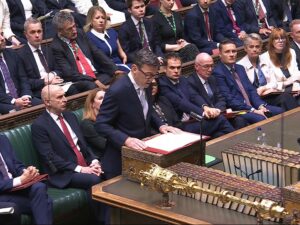
Despite President Trump’s claims that the United Kingdom and other countries would join the blockade, a U.K. government source told CBS News that the U.K. will not participate in the blockade. Instead, the U.K. is leading planning efforts with over 40 nations, many NATO members, to reopen the Strait of Hormuz and protect freedom of navigation. The U.K. government stressed the importance of keeping the strait open without tolls and is working with France and other partners to form a coalition for this purpose.
Experts have expressed concern about the blockade’s impact on oil markets. Kevin Book of ClearView Energy Partners noted that reduced oil volumes generally tighten markets and raise prices, but the blockade’s scope and Iran’s response will be critical factors. Jonathan Elkind of Columbia University highlighted uncertainty about the blockade’s implementation timeline, suggesting it could be a negotiating tactic.
The Strait of Hormuz is a vital global energy corridor, with hundreds of ships passing daily before the conflict began. Since the war’s start on February 28, ship traffic has drastically decreased, with fewer than 10 vessels passing most days. Last week, only 24 ships exited the strait, and on Friday, just two ships passed, neither carrying oil or gas.
The blockade follows a failure to reach agreements on key U.S. demands during peace talks, including Iran ending uranium enrichment, dismantling nuclear facilities, ceasing support for groups like Hamas and Hezbollah, and fully opening the Strait of Hormuz without tolls. Meanwhile, Israel and Lebanon are preparing for negotiations amid ongoing conflict involving Hezbollah.
Vice President Vance made calls to Israel’s ambassador to the U.S. on his return from Pakistan, signaling continued diplomatic engagement. Meanwhile, U.S. lawmakers are preparing for potential supplemental funding requests for the conflict, with costs already estimated at $11.3 billion for the first week.
The situation remains tense, with Iran’s Revolutionary Guard warning that military vessels approaching the strait will be seen as violating ceasefire agreements. The U.K. Maritime Trade Operations center also reported a recent incident near Yemen involving an armed skiff approaching a sailboat, underscoring regional security risks.
GOP Representative Mike Turner defended the administration’s approach, emphasizing the need to prevent Iran from controlling the strait and acquiring nuclear weapons. He called for allied cooperation, stating, “The president… is certainly calling all of our allies and everyone to the table.”



Be First to Comment