Key takeaways:
- Gasoline and diesel prices in the U.S. have surged to levels not seen since mid-2022, with unleaded gasoline reaching $4.02 per gallon and diesel climbing to $5.45, driven largely by escalating conflict involving Iran.
- The war with Iran has disrupted global oil markets, notably through Iran’s blockade of the Strait of Hormuz, causing crude oil prices to rise over 50% for WTI and nearly 60% for Brent, with U.S. crude surpassing $100 per barrel.
- Higher fuel costs are impacting the economy by increasing household expenses and potentially reducing consumer spending, while transportation and goods delivery face rising costs; energy-dependent countries in Europe and Asia are experiencing inflation and economic slowdowns.
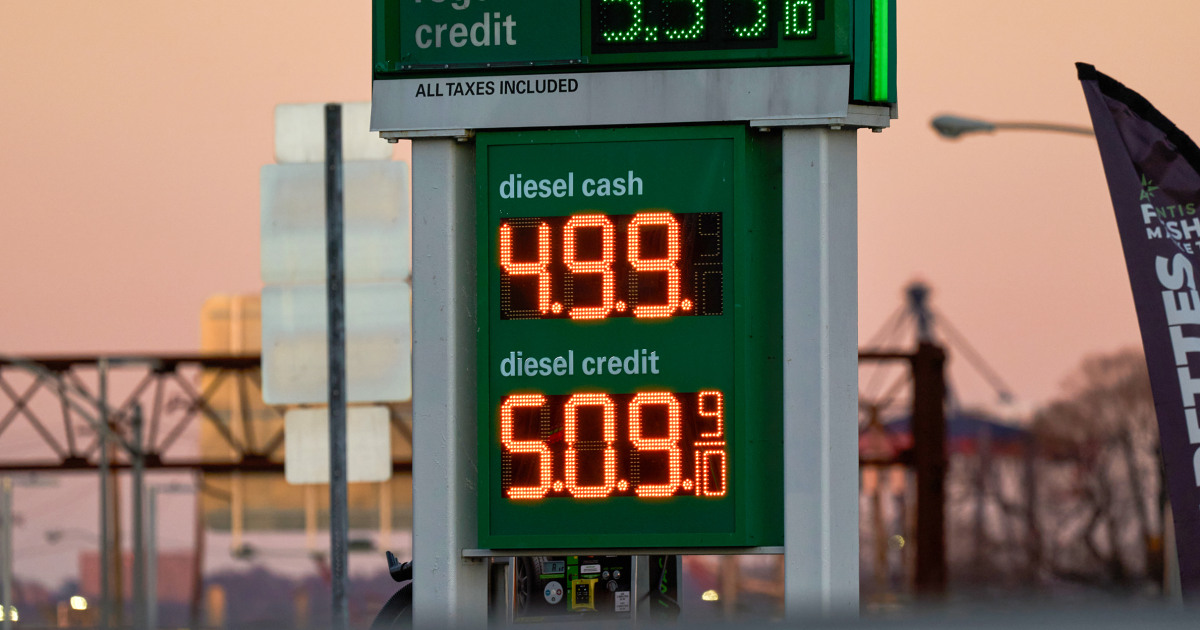
Gasoline and diesel prices in the United States have surged to levels not seen since mid-2022, driven largely by escalating tensions and conflict involving Iran. According to AAA, the average price of a gallon of unleaded gasoline reached $4.02 on March 31, marking the first time since last year that prices crossed the $4 threshold. Diesel fuel, essential for trucks, farm equipment, and public transit, has seen an even sharper increase, climbing to $5.45 per gallon—more than $1.80 higher than the same period last year.
The rise in fuel costs is closely linked to the ongoing war with Iran, which began in late February following attacks by the United States and Israel. Since the conflict’s onset, U.S. West Texas Intermediate (WTI) crude oil prices have increased by over 50%, while Brent crude, the international benchmark, has surged nearly 60%. On March 27, U.S. crude oil prices surpassed $100 per barrel for the first time since Russia’s invasion of Ukraine in 2022. The war has disrupted global oil markets, particularly through Iran’s effective blockade of the Strait of Hormuz, a vital maritime corridor through which about one-fifth of the world’s oil supply passes.
Iran’s actions in the Strait of Hormuz have significantly reduced tanker traffic, with overall passage down more than 90% in March compared to pre-war levels. The blockade and threats against ships associated with the U.S. or Israel have left many tankers stranded in the Persian Gulf, limiting the flow of oil to global markets. While some vessels linked to countries such as India and China have been allowed to pass, the disruption has contributed to the sharp rise in crude oil prices and, consequently, higher fuel costs for consumers worldwide.
The increase in fuel prices is having widespread economic effects. Analysts warn that higher gasoline and diesel costs could reduce consumer spending on non-essential goods and services. Economists from the Stanford Institute for Economic Policy Research estimate that the average U.S. household will spend an additional $740 on gasoline this year due to elevated oil prices. Industry experts note that while consumers have already felt the impact of rising gasoline and jet fuel prices, the broader economic consequences of higher diesel costs—affecting transportation and goods delivery—are expected to unfold in the coming months. Meanwhile, energy-dependent countries in Europe and Asia are facing even more severe challenges, including inflation, rationing, and downward revisions to economic growth forecasts.










Be First to Comment