Key takeaways:
- Artemis II, launching April 1, is NASA’s first crewed mission using the Space Launch System and Orion capsule, sending four astronauts on a nine-day lunar flyby without landing.
- The mission will test Orion’s systems in deep space, including life-support, radiation protection, and emergency procedures, while orbiting the moon and coming within 6,000 miles of its surface.
- Artemis II marks humanity’s return beyond Earth orbit since 1972, paving the way for future lunar missions aimed at establishing a sustainable presence on the moon by 2028.
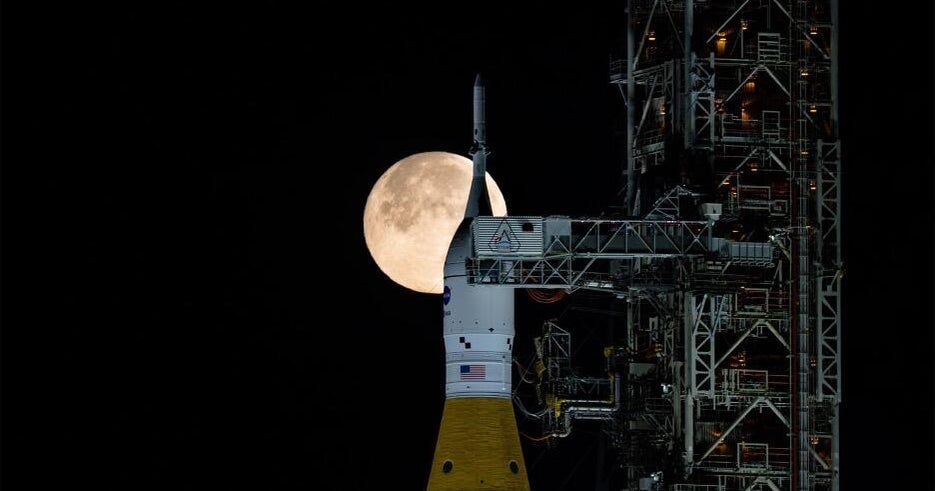
NASA is set to launch the Artemis II mission this Wednesday, April 1, at 6:24 p.m. EDT, marking a significant milestone in human space exploration. The mission will send a crew of four astronauts—NASA’s Reid Wiseman, Victor Glover, Christina Koch, and Canadian astronaut Jeremy Hansen—on a nine-day journey looping around the moon and back to Earth. This will be the first crewed flight of NASA’s Space Launch System (SLS) rocket and the Orion deep space crew capsule, named Integrity by the astronauts. The launch, from Kennedy Space Center in Florida, follows several delays caused by technical issues that NASA has since resolved.
Artemis II is a test mission designed to evaluate the performance of the Orion spacecraft and its life-support systems in deep space. The crew will spend the first day orbiting Earth, conducting critical checks on environmental controls, navigation, propulsion, and waste management systems. Following this, the spacecraft’s main engine will fire to set the course toward the moon. During the four-day transit, the astronauts will test Orion’s radiation protection and practice emergency procedures in preparation for future missions. The mission will not include a lunar landing but will circle the moon, coming within approximately 6,000 miles of its surface on April 6.
This mission represents the first time humans have traveled beyond Earth orbit since the Apollo 17 mission in 1972. If successful, the Artemis II crew will surpass the Apollo 13 record for the farthest distance traveled from Earth, reaching about 248,655 miles. The astronauts will spend much of their time near the moon capturing photos and videos and making observations of lunar features. The return journey will conclude with a splashdown in the Pacific Ocean near San Diego on April 10.
Artemis II is a critical step toward NASA’s broader goal of establishing a sustainable human presence on the moon. The agency plans to follow this mission with Artemis III, which aims to dock astronauts with lunar landers in low-Earth orbit, and Artemis IV, targeting a crewed lunar landing near the moon’s south pole by 2028. NASA Administrator Jared Isaacman emphasized the agency’s commitment to a long-term lunar presence, stating, “America will never again give up the moon.” The Artemis program also serves as a strategic response to international competition in space exploration, notably from China, which aims to send astronauts to the lunar surface by 2030.











Be First to Comment