Key takeaways:
- The Nasdaq Composite fell about 4% in early Wednesday trading, while Nvidia shares slid 7%.
- Anthropic shares fell below their $83 IPO price after three straight days of losses.
- October’s Personal Consumption Expenditures inflation reading rose to 3.8% from 3.6% in September.
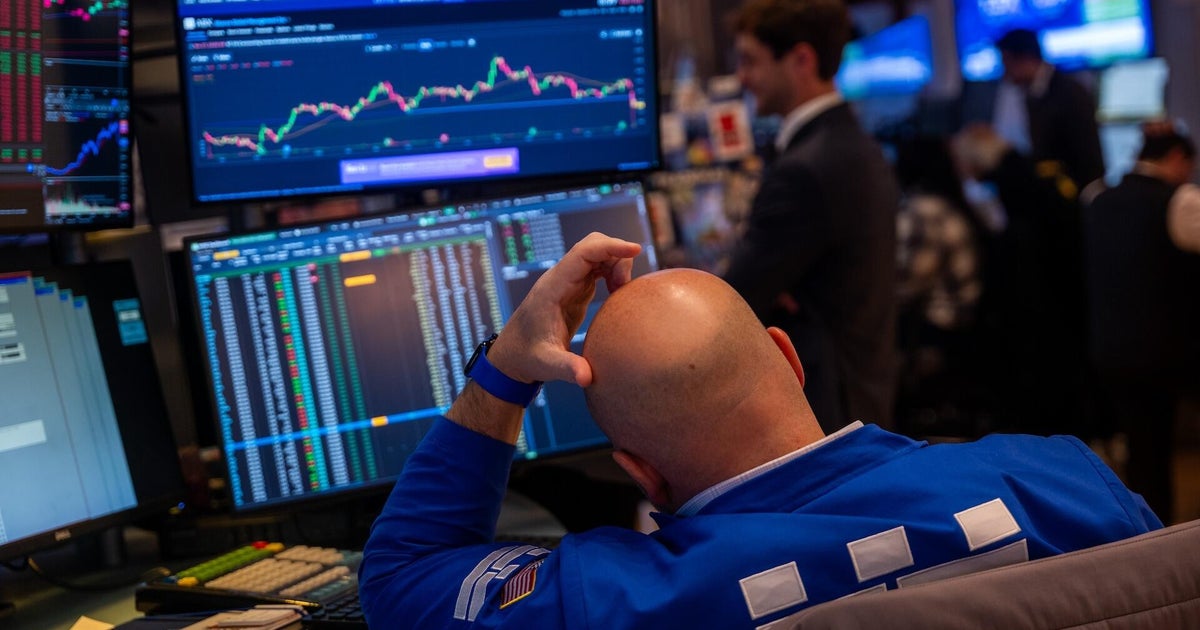
U.S. stocks plunged Wednesday as a rally sparked by Jensen Huang’s return to Nvidia faded, with falling shares in artificial intelligence companies, new tariffs and rising inflation adding to investors’ concerns.
In early trading, the Nasdaq Composite dropped about 4%, the S&P 500 fell roughly 2.6% to nearly 3%, and the Dow Jones Industrial Average lost about 900 points, according to the early figures reported by CBS News and NBC News. Nvidia shares slid 7%, NBC News reported. The declines followed another sharp fall Tuesday and threatened to erase Monday’s surge.
That rally began after Nvidia unexpectedly reinstated Huang as chief executive following his resignation amid revelations of extramarital affairs. Nvidia’s central role in supplying AI chips — and financing other companies involved in the technology’s expansion — has made its swings consequential for the broader market. On Monday, the Nasdaq 100 jumped 6.8% and the S&P 500 gained 4.7%, NBC News reported.
“The risk-off tone has returned over the last 24 hours, as Monday’s rebound in tech stocks lost momentum once again,” Deutsche Bank strategists wrote in a note cited by NBC News. According to NBC News, the Nasdaq 100, already in correction territory before Monday, fell Wednesday into a bear market, defined as a decline of at least 20% from its most recent high.
Anthropic also extended its slide after an initial public offering last week. Its shares rose more than 17% on their first day of trading Friday, then posted three straight days of losses, NBC News reported. The outlets gave different early Wednesday prices: NBC News put the shares at about $78, while CBS News reported $75.66, below their $83 IPO price. CBS News described the offering as the largest in history.
The declines reflect broader questions about whether the enormous sums flowing into AI and data centers will pay off. Goldman Sachs expects AI investment to exceed $1 trillion in 2026 and called the technology next year’s “dominant driver of business investment growth,” according to the BBC. Capital Economics said investors had been questioning AI companies’ finances even before the U.S. midterm elections, CBS News reported. It also said Democratic gains could bring more opposition to data center construction.
Trade policy added another source of uncertainty. The Trump administration announced new tariffs Wednesday affecting major trading partners, including China, the European Union and Japan, NBC News reported. Before the announcement, a Chinese commerce ministry spokesperson said, “Tariff wars and trade wars are in the interests of neither side,” calling the move “political manipulation.”
Inflation figures raised the prospect of higher borrowing costs. The Federal Reserve’s preferred inflation measure, the Personal Consumption Expenditures index, rose to 3.8% in October from 3.6% in September, NBC News reported. Its core reading, which excludes food and energy, climbed to 3.3% from 3.1%. Investors expect the Fed to raise rates at its December meeting, CBS News reported, a step that could make financing AI expansion more expensive.
Markets will close Thursday for Thanksgiving and trade for only half a day Friday, leaving investors with little time this week to assess the latest developments.




Be First to Comment