Key takeaways:
- California restricted Waymo’s driverless freeway operations on Nov. 11, citing an imminent hazard to public safety.
- California officials cited three vehicles entering an active construction closure and another trying to pass officers conducting a traffic break.
- Waymo has paused freeway operations across its U.S. markets but continues to operate on regular streets.
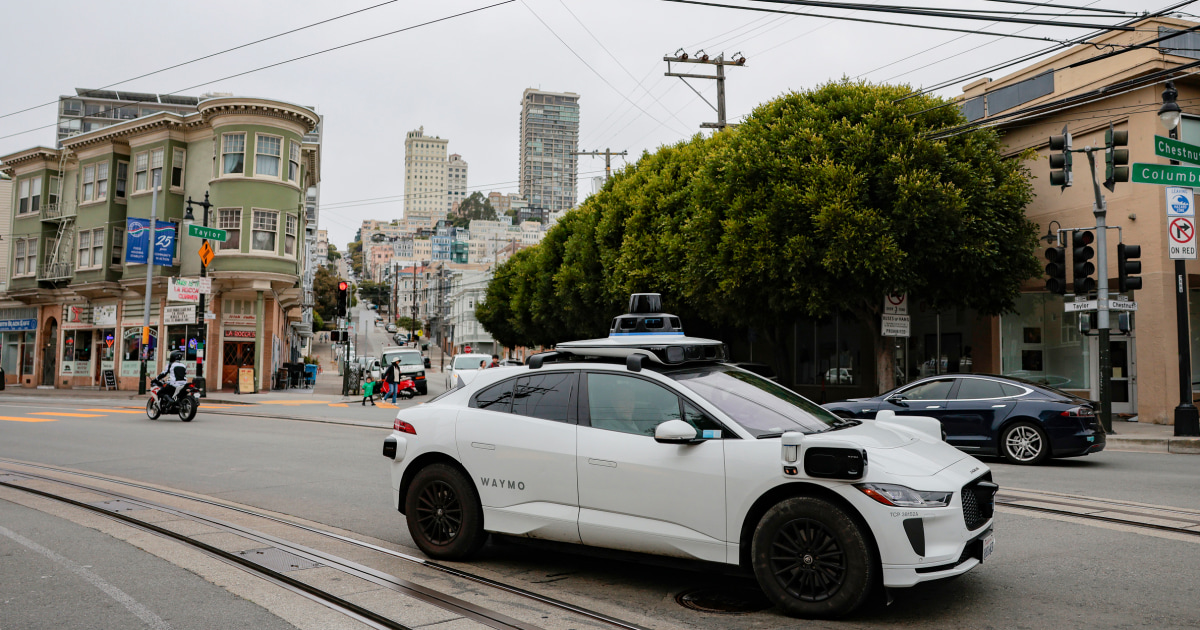
Waymo has stopped sending its driverless taxis onto freeways across the United States after California barred the vehicles from state highways, citing an “imminent hazard to public safety” following incidents near San Francisco.
The restriction applies only to freeway travel. Waymo’s robotaxis will continue operating on regular streets while the company works to restore freeway service, a spokesperson said Tuesday.
“We’ve proactively implemented a freeway operating restriction across all of our markets,” the spokesperson said in a statement to NBC News. “Notably, this only extends to our freeway service, and we’re working to quickly and safely re-open freeway routing.”
California’s Department of Motor Vehicles imposed its restriction Nov. 11. The agency said three Waymo vehicles entered an active construction closure on a San Francisco-area highway. The BBC identified the road as U.S. Route 101, south of San Francisco.
The department also cited an incident this month in which a Waymo vehicle tried to pass highway patrol officers conducting a traffic break on another San Francisco-area freeway. Footage widely seen on social media appeared to show the vehicle attempting to overtake patrol vehicles that were deliberately slowing traffic, the BBC reported.
“The Department determined that Waymo’s driverless freeway operations pose an imminent hazard to public safety due to recurring incursions by its vehicles into active construction zones where construction workers, vehicles and equipment are present,” the California agency said.
The department said it had placed similar restrictions on Waymo after similar incidents earlier this year. Its current ban will remain until the company demonstrates that it has taken effective corrective action to address the problems behind the restrictions.
Waymo said the construction-zone incidents caused no injuries or collisions and that it is complying with California’s order. The company said it is working with state officials “diligently and responsibly to resume freeway operations.”
A Waymo spokesperson told the BBC that, “In alignment with our safety-first principles, we have also temporarily restricted freeway operations across our other operating markets to evaluate our performance.”
The National Highway Traffic Safety Administration said it is in contact with California’s DMV and Waymo and will “take additional actions as appropriate.”
Waymo, owned by Google parent Alphabet, operates robotaxis in more than a dozen U.S. cities. The BBC put the number at 15 and reported that freeway rides had been available in only a handful of markets, including San Francisco, Los Angeles and Miami. Waymo introduced its driverless taxis in San Francisco in 2024, according to NBC News.
The company’s website says its vehicles are involved in 95% fewer crashes resulting in serious injury than human drivers, according to the BBC. The BBC also reported that Waymo recalled thousands of self-driving cars in May over a software issue that could allow them to drive into flooded roads. Neither the California restriction nor Waymo’s nationwide freeway pause affects its service on city streets.







Be First to Comment