Key takeaways:
- NBC News and CBS News projected Lawrence as the winner over Barrett in Michigan’s 7th Congressional District.
- Lawrence called for a federal moratorium on data center development; Barrett favored leaving decisions to local communities.
- Barrett backed resolutions to limit presidential war powers over Iran while also campaigning with Trump and receiving his endorsement.
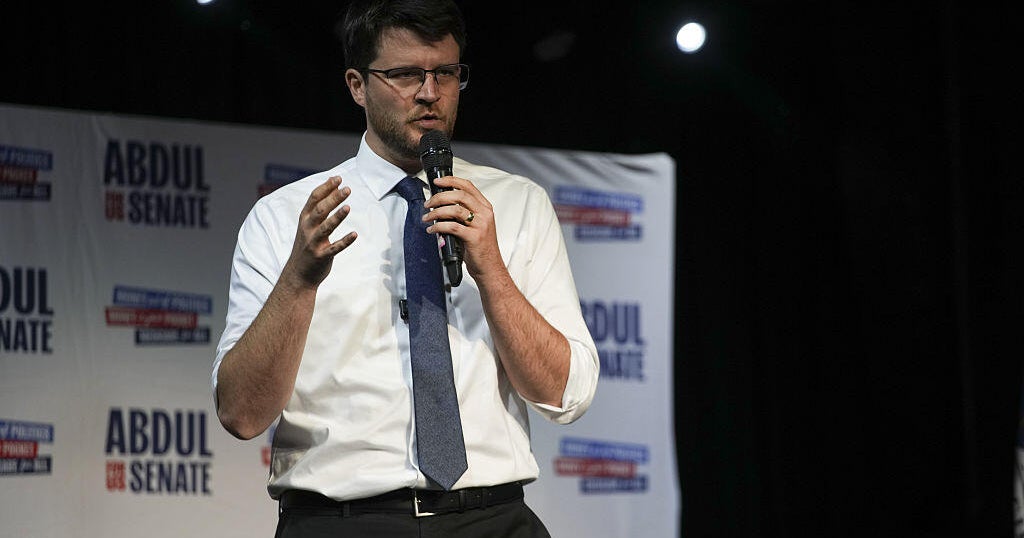
Progressive activist William Lawrence has defeated Republican Rep. Tom Barrett in Michigan’s closely watched 7th Congressional District, according to projections by NBC News and CBS News. The result gives Democrats a victory in a swing district that backed President Donald Trump in 2024 and that Barrett had flipped to Republicans that year.
Lawrence, a co-founder of the climate group Sunrise Movement, campaigned on the cost of living and opposition to data center development. He also called for tighter restrictions on artificial intelligence and opposed the use of Flock cameras, NBC News reported. His win is an unusual battleground victory for the Democratic Party’s left flank, which has built much of its strength in heavily Democratic districts and cities.
Barrett, a first-term congressman and Army veteran who previously served in the Michigan Legislature, won the district by 3 points in 2024. The Lansing-area seat was previously held by Elissa Slotkin, who is now a U.S. senator. Barrett argued that Lawrence was too far left for the district, while the campaign unfolded amid voter dissatisfaction with the economy under Trump and opposition to data centers, NBC News reported.
Both candidates sought to address concerns about the facilities, but proposed different approaches. Lawrence called for a federal moratorium on data center development. Barrett introduced legislation to prevent the federal government from overriding local decisions on data centers; Lawrence said that measure did not go far enough. Barrett told NBC News in September that he disagreed with Trump’s remark that communities unwilling to accept data centers wanted to end up “backwards and poor.”
“I think that ultimately this decision has to rest with the people who live in those communities, and I respect that,” Barrett said.
The candidates also clashed over AI at a debate last month. Lawrence urged a pause in advances in the technology, citing warnings from whistleblowers. Barrett called for “robust protections” but argued that a pause would empower U.S. adversaries.
Barrett sought some distance from Trump on the war with Iran. He was among the first House Republicans to back war powers resolutions aimed at limiting the president’s ability to pursue the war without congressional approval, though he campaigned with Trump this summer and had his endorsement, CBS News reported.
Lawrence entered the general election after winning a divisive Democratic primary with less than half the vote; two moderate opponents split the remainder, according to CBS News. He also faced scrutiny over deleted social media posts. NBC News cited one pandemic-era post that said, “F— isolation and the nuclear family domicile.” CBS News reported on a 2021 post aimed at former Democratic Sen. Joe Manchin that said, “Our generation says f*** you for everything… Hurry up and die so that we can get started.” Lawrence distanced himself from past posts, including one calling to defund the police.
Lawrence said he let his Democratic Socialists of America membership lapse in July and was not campaigning as a DSA candidate. “Partisan and ideological labels … do a lot more to divide us than they do to bring people together,” he told NBC News.






Be First to Comment