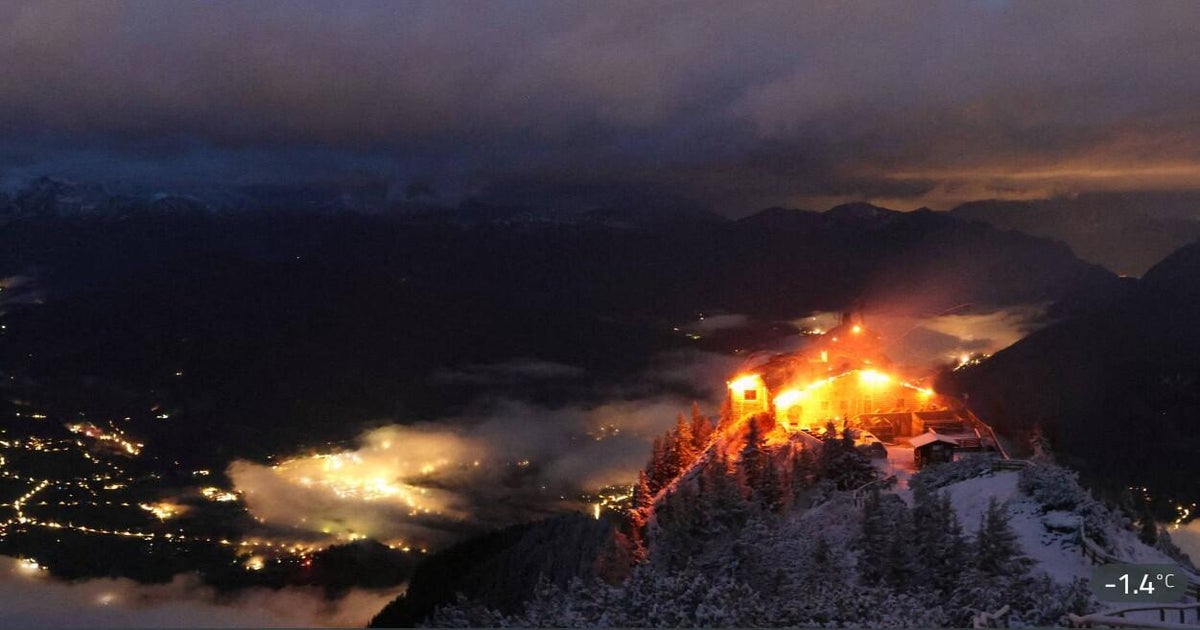
Key takeaways:
- Firefighters found the Kehlsteinhaus engulfed in flames after an alarm at about 9:15 p.m. Friday.
- Police detained one suspect but have not established publicly whether that person was connected to the fire.
- No injuries were reported; the BBC said about 200 emergency personnel were deployed and the fire was still burning early Saturday.
German police have detained a suspect after a fire engulfed the Eagle’s Nest, Adolf Hitler’s former mountain retreat in Bavaria, on Friday night. No injuries were reported, and investigators are examining the cause of the blaze and whether the detained person is connected to it.
Dispatchers in Traunstein received a fire alarm from the building, also known as the Kehlsteinhaus, at about 9:15 p.m. local time, or 7:15 p.m. GMT. Firefighters arrived to find it “completely engulfed in flames,” according to Upper Bavaria South police. Authorities said no one was inside.
The remote location complicated the response. Fire trucks had difficulty reaching the site “due to the local conditions,” police said. Difficult terrain was also hindering efforts to put out the fire, which was still burning early Saturday, the BBC reported. About 200 emergency personnel had been deployed, according to the BBC.
“Shortly after the fire broke out, a suspect came into the focus of investigators,” police said in a statement cited by CBS News. One person was taken into custody, and the cause of the fire is under criminal investigation. Authorities have not established publicly whether the suspect was involved in starting it.
The Eagle’s Nest stands above the town of Berchtesgaden on the Obersalzberg mountain. Completed by the Nazis in 1938 at an elevation of 6,017 feet, it was occasionally used by Hitler as a temporary seat of government. The BBC reported that he met commanders there to plan the 1941 invasion of the Soviet Union and used the surrounding area as a backdrop for propaganda films portraying him as a lover of animals and nature.
The building survived World War II largely intact. CBS News reported that it was spared Allied bombing, preserving much of its original state; the BBC said it escaped destruction after the Nazis’ defeat in 1945. It later became a popular tourist destination with a restaurant and beer garden, also described by the BBC as a mountain inn.
The site’s website describes it as “one of the few undamaged monuments of the Hilter era” and says it “stands for the insanity of the regime,” according to CBS News. The BBC cited the official website’s description of the building as “a cautionary reminder of the abysses of the inhumane Nazi dictatorship.”










Be First to Comment