Key takeaways:
- The Supreme Court declined to hear appeals by Mohammed, Mustafa Ahmed al-Hawsawi and Walid bin Attash.
- Their 2024 plea deals called for guilty pleas and life sentences, avoiding a possible death penalty.
- A federal appeals court ruled that then-Defense Secretary Lloyd Austin had the authority to withdraw the agreements.
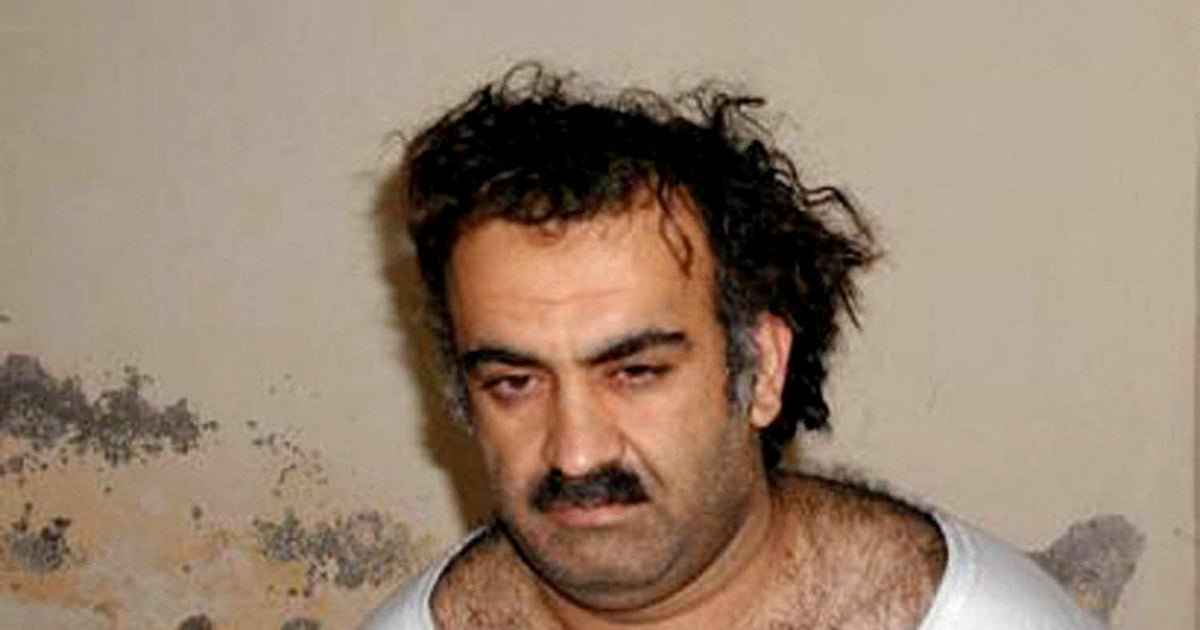
The Supreme Court on Monday rejected an appeal by Khalid Sheikh Mohammed and two other men accused of plotting the Sept. 11 attacks, leaving in place the U.S. government’s withdrawal of plea deals that would have spared them the death penalty.
Mohammed, Mustafa Ahmed al-Hawsawi and Walid bin Attash had asked the court to revive agreements they reached with military prosecutors in 2024. Under those agreements, the men would plead guilty to charges arising from the attacks and receive life sentences rather than face a possible death sentence at trial.
The court declined to hear their appeal in an unsigned order. Justice Brett Kavanaugh did not participate in its consideration of the case, according to CBS News.
Mohammed is accused of leading the plot to fly hijacked planes into the World Trade Center in New York and the Pentagon on Sept. 11, 2001. A fourth plane crashed in a Pennsylvania field. Al-Hawsawi and bin Attash are also accused of roles in the attacks.
The three men were captured in 2003 and have been held at the U.S. base at Guantanamo Bay, Cuba, since 2006. They were formally charged before a military commission in 2008. Five of the charges against them carry the death penalty, CBS News reported.
Talks over plea agreements began in 2023 after retired Brigadier General Susan Escallier became the official overseeing military commissions, according to CBS News. She approved the agreements reached the following year. Days after the deals were announced, then-Defense Secretary Lloyd Austin moved to revoke them, saying he had the authority to do so.
A military judge ruled in November 2024 that Austin’s action was unlawful and that the agreements remained valid. A military appeals court also found that he could not rescind the deals. But the U.S. Court of Appeals for the District of Columbia Circuit sided with the government last year, ruling that Austin “indisputably” had the authority to withdraw them.
“The Secretary acted within the bounds of his legal authority, and we decline to second-guess his judgment,” the appeals court panel wrote. The three men then turned to the Supreme Court, arguing, among other things, that the appeals court had no authority to intervene, according to NBC News.
The decision removes one barrier to Mohammed standing trial before a military commission in 2028, NBC News reported. His case has faced years of delays, in part over whether evidence obtained during CIA interrogations can be used in court. Before their transfer to Guantanamo, the defendants were held in secret CIA prisons and subjected to interrogation methods described as torture.
A fourth man accused in the plot, Ali Abdul Aziz Ali, is also slated for trial but did not join the Supreme Court appeal, according to NBC News.









Be First to Comment