Key takeaways:
- Wang Yi told Isaac Herzog that Israel should stop and reverse what China called the “forced establishment” of West Bank settlements.
- Wang called for full access to Gaza and renewed dialogue toward a political settlement.
- Herzog said he raised Israel’s security concerns, particularly Iran and what he called its terror proxies.
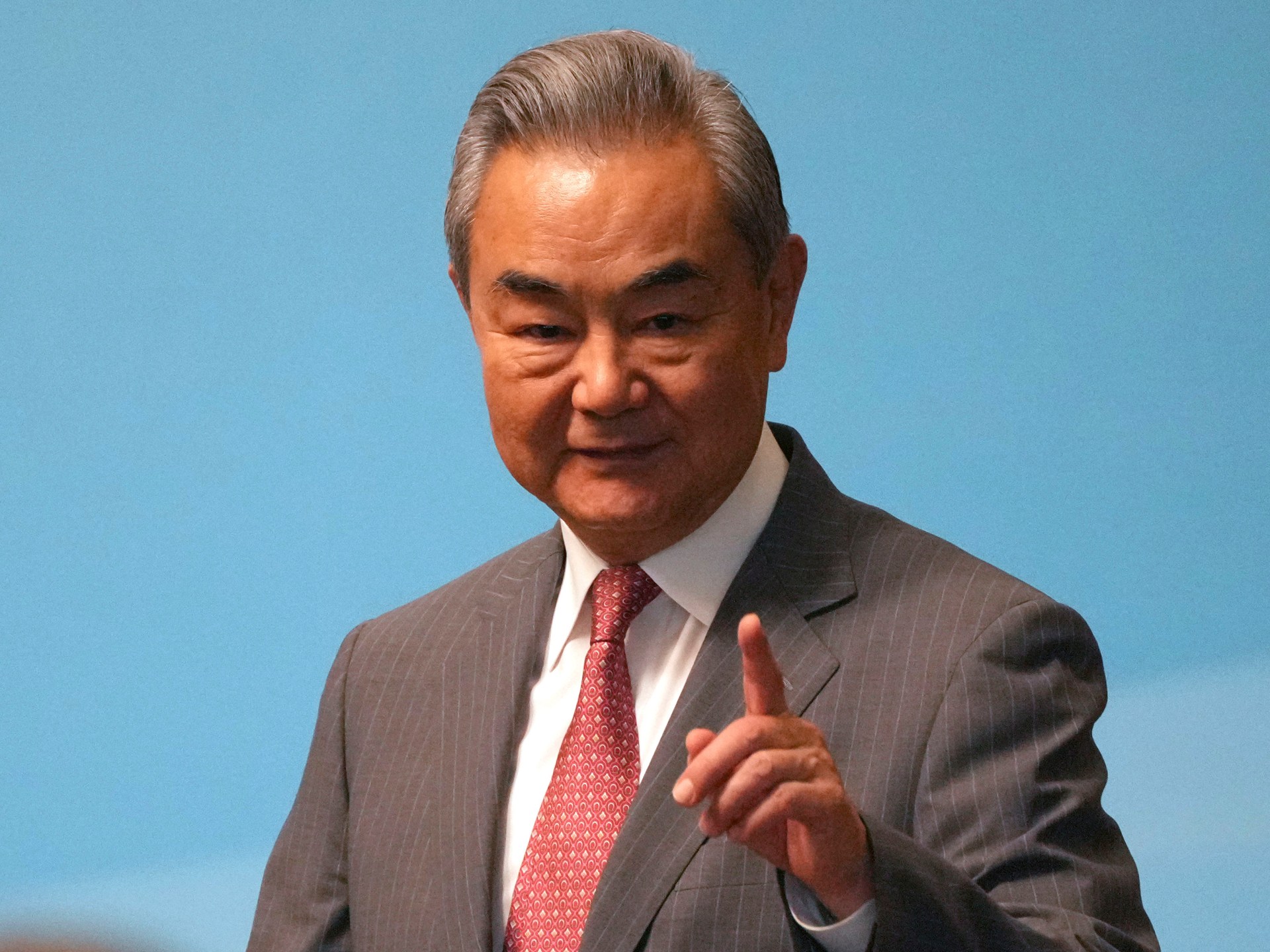
China’s foreign minister has urged Israel to stop and reverse what he called the “forced establishment” of settlements in the West Bank, raising the issue directly with Israeli President Isaac Herzog during a meeting in Azerbaijan.
Wang Yi told Herzog that China considers the Palestinian question “the greatest historical injustice of this century,” according to a statement from China’s foreign ministry issued Friday. The two met Thursday on the sidelines of a conference in Baku.
Wang said a two-state solution was the right path to resolving the conflict. The immediate priority, he said, was to fully open access to the Gaza Strip and prevent a humanitarian “catastrophe” from spreading. China was willing to work with the international community to bring the parties back to dialogue and seek a political settlement, the ministry said.
Herzog said in a post on X that he was “pleased” to meet Wang and that their discussion “focused on the relations between our countries and the situation in the Middle East.” He wrote: “I emphasised Israel’s desire for peace in the region, alongside the strategic threats to our security, first and foremost from Iran and its terror proxies.”
Wang was attending the Seventh Summit of the Conference on Interaction and Confidence-Building Measures in Asia as a special representative of Chinese President Xi Jinping, Al Jazeera reported, citing China’s state news agency Xinhua.
Beijing has long supported the Palestinian cause and has sought a larger diplomatic role in the Middle East. In 2023, it brokered an agreement restoring diplomatic ties between Iran and Saudi Arabia after years of hostility, the BBC reported. The BBC also reported that China joined Pakistan earlier this year in proposing a ceasefire in the US-Israel war against Iran.
China’s efforts over the war in Gaza have also focused on Palestinian unity. In 2024, Beijing secured an agreement among rival Palestinian factions to form an interim “national reconciliation government” for the occupied West Bank and Gaza after the war with Israel. The plan was never implemented, according to the BBC.
One year after a US-brokered ceasefire began in Gaza in October 2025, Israeli strikes, displacement and food security challenges continue to affect residents, the BBC reported. Large-scale bombardment has stopped, but Israel has carried out strikes almost daily, killing more than 1,400 Palestinians in the year since the ceasefire began, according to the BBC. The truce was the first phase of a deal intended to end the war triggered by the Hamas-led attack on Israel on October 7, 2023. Progress to the next phase has stalled, with Israel and Hamas each accusing the other of violations.
China also has close economic ties with Iran. It buys up to 90 percent of Iranian oil, according to the US-China Economic and Security Review Commission, as cited by Al Jazeera. The outlet reported that Beijing signed a 25-year strategic partnership agreement with Tehran in 2021 while cultivating closer ties with Gulf countries, including Saudi Arabia, Qatar and the United Arab Emirates.




Be First to Comment