Key takeaways:
- More than 100 students were at a Kyiv school when a drone hit, but they had reached a shelter and no children or staff were hurt.
- Two drones hit the Pivdennyi bridge as a metro train crossed; metro trains were suspended, and preliminary checks found no critical structural damage.
- Ukraine’s air force recorded 3,177 Russian drone attacks through September 29, up from 2,850 in August, according to Al Jazeera.
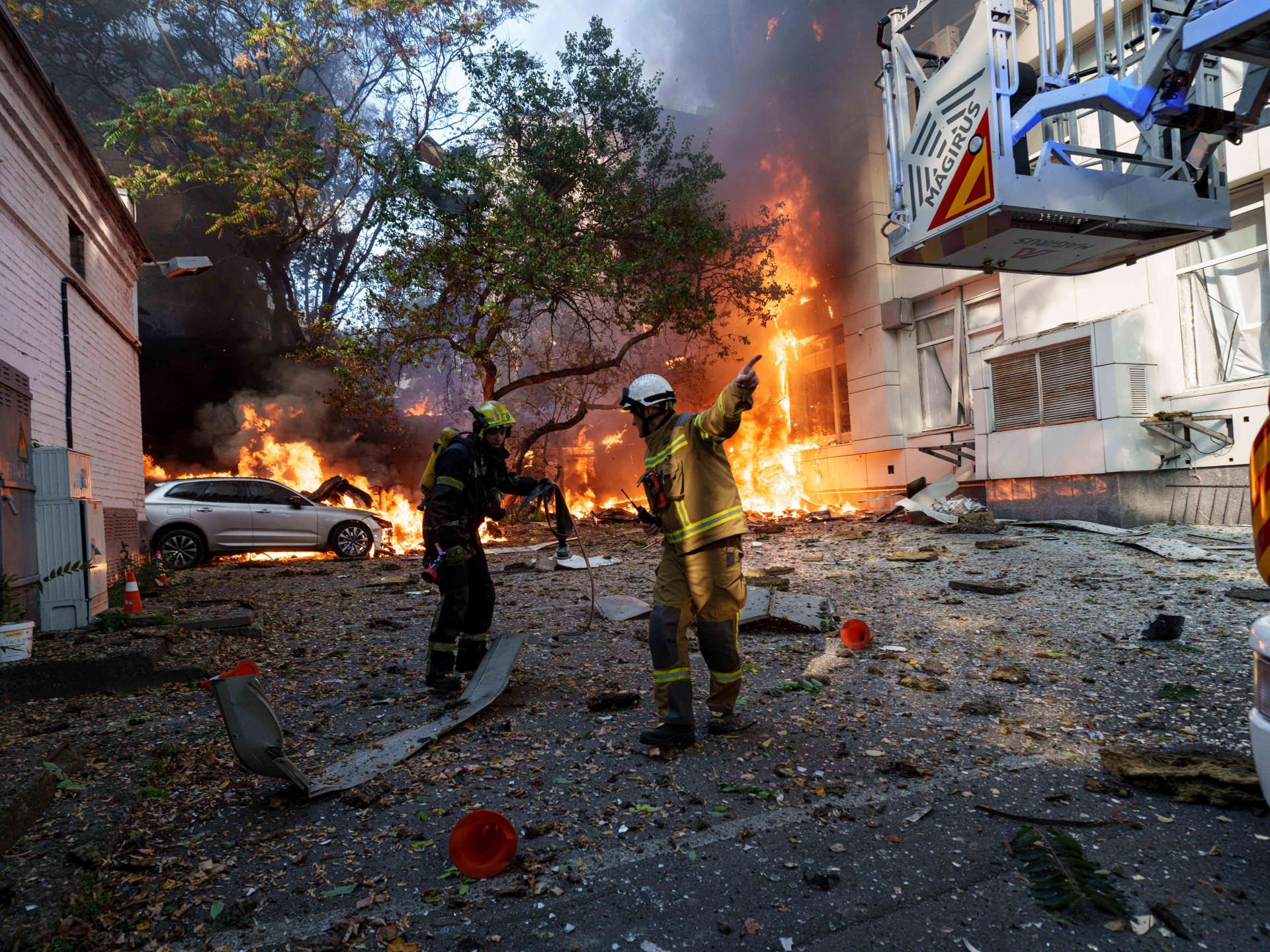
Russian drones struck a school and a major bridge in Kyiv on Thursday, suspending metro service after a train crossed the bridge during the attack. More than 100 students were at the school, but they had reached a shelter before the drone hit, and no children or staff were hurt, the BBC reported.
The drone struck the school’s third floor at about 9 a.m. local time, partially collapsing a wall. Head teacher Valentyna Chorna said the shelter protected those inside. “[The shelter’s] structure is strong, so none of the children were hurt, neither were any staff,” she said. “They just kept on with their lessons.”
Russia denies targeting civilians. Chorna said that to destroy Ukraine, “they need to destroy children.” President Volodymyr Zelensky said Russia must be held fully accountable, according to the BBC.
Later that morning, two drones hit the Pivdennyi, or Southern, bridge, a main crossing over the Dnipro River between eastern and western Kyiv. One struck the base of a central support as a metro train was travelling across, the BBC reported.
Ukrainian 5 Kanal TV reporter Mariana Mykytenko, who was aboard the train, said a passenger shouted “Shahed” — a reference to Russia’s Iranian-designed drones — before dust from the blast entered the carriage through its ventilation system. No one in her compartment was hurt, she said. The train reached Vydubychi station on the river’s western bank and went no farther.
Metro trains were suspended, while road traffic was eventually allowed to resume, according to the BBC. Al Jazeera reported that ground public transport was also suspended. City authorities said preliminary checks “did not find any critical damage to the structure,” the BBC reported. It said Kyiv’s bridges had not been hit before Thursday’s strikes.
The attacks followed strikes on Kyiv’s energy grid on Wednesday that brought back power cuts. The BBC described those strikes as the first coordinated attacks on the city’s energy grid since the end of last winter. Prime Minister Serhii Koretskyi said a combined strike on that scale had not occurred since the end of spring, according to the BBC.
It remains unclear what type of drone struck the bridge. Ukrainian officials say Russia first used a new jet-powered drone design on Wednesday. Zelensky’s technology adviser, Serhiy Beskrestnov, said the drone carries a 40-kilogram warhead and is designed to destroy high-voltage pylons and iron bridge structures, the BBC reported.
Ukraine’s air force recorded 3,177 Russian drone attacks through September 29, up from 2,850 in August, according to Al Jazeera. A drone also hit the grounds of Kyiv’s Institute of Nuclear Research on Wednesday night, the BBC reported. Ukraine’s nuclear safety watchdog said the resulting fire was quickly extinguished, no one was injured and the facility’s test reactor, shut down since 2022, was undamaged, according to Al Jazeera.
Separately, authorities in Russia’s Belgorod region said a man was killed when a drone exploded in Graivoron on Thursday, Al Jazeera reported. The outlet also reported that the United Kingdom announced 31 new sanctions on Russia, including measures against eight people for the arbitrary detention, torture and ill-treatment of Ukrainian civilians and seven for the indoctrination and militarisation of Ukrainian children.




Be First to Comment