Key takeaways:
- Judge Indira Talwani said the Postal Service had provided no clear plan for implementing new mail ballot rules 70 days before the election.
- The Postal Service rule requires ballot design standards, unique bar codes and voter data uploads to an online portal before mail ballots are delivered.
- A whistleblower disclosure warned the new system could cause large numbers of mail ballots to go undelivered if barcode errors occur.
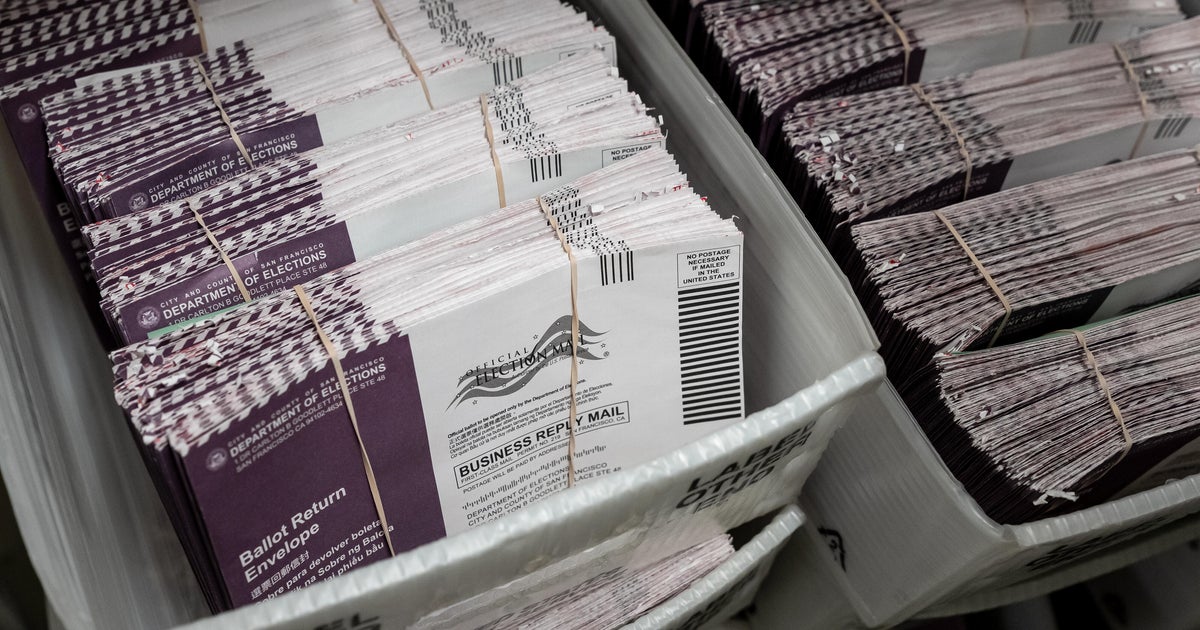
A federal judge in Boston pressed the Justice Department on Thursday for answers on how the U.S. Postal Service would carry out new mail ballot rules weeks before the November midterm elections, warning that the plan could risk voters’ access to ballots.
U.S. District Judge Indira Talwani did not rule from the bench after hearing arguments over whether to extend her temporary block on the Postal Service regulations. She said she would issue an order as soon as possible and gave the Justice Department until 3 p.m. to provide more details on implementation.
“We are 70 days from the election and I have nothing from the USPS about how this will happen,” Talwani told Michael Velchik, the Justice Department lawyer representing the Postal Service.
The case stems from an executive order President Trump signed in March directing federal agencies, including the Postal Service and Department of Homeland Security, to take steps to restrict mail voting. One provision requiring the Department of Homeland Security to compile and send election officials state-specific lists of U.S. citizens has taken effect.
Democratic-led states and voting rights groups argue that the mail ballot regulations are unconstitutional and interfere with states’ authority to administer elections. They are seeking longer-term relief. Texas and 11 other Republican-led states have intervened to defend the rules.
The Postal Service’s final rule, published last month, requires mail ballots to meet design standards, including individualized unique bar codes. States also must submit the names and addresses of voters who are set to receive mail ballots to an online portal, and voters would be enrolled on state-specific “Mail-In and Absentee Participation Lists.” The agency has said it “will not play any role in determining voter eligibility, maintaining voter rolls, or counting ballots.”
Talwani temporarily blocked enforcement of the requirements on Aug. 27 for 14 days, finding the regulation “likely unconstitutional” and “practically impossible” to comply with before the midterms. She wrote that states lacked the time and money to redesign mail ballots, get approvals, order production, update election systems, train officials to use the portal and upload citizen data before voting begins.
Some ballots have already been sent in Wisconsin municipalities, The Guardian reported. North Carolina is scheduled to begin mailing ballots Friday, and several other states will begin around mid-September, according to the Center for Election Innovation and Research.
At Thursday’s hearing, Justice Department lawyers said that if Talwani does not rule immediately on a preliminary injunction, they will seek Supreme Court intervention, bypassing the federal appeals court. Velchik said the administration will most likely ask the Supreme Court by the end of the week for permission to resume implementation.
The Supreme Court last month froze Talwani’s earlier June order blocking the executive order, saying the states’ lawsuit was premature because the Postal Service had not yet issued final regulations. The conservative majority did not address the merits of the mail voting policies.
A lawyer for Texas suggested the judge could make compliance optional in every state. Talwani questioned that approach sharply.
“So we’re going to do a test run on this election?” she asked. “We’re not playing an intellectual puzzle game. We’re talking about people’s right to vote.”
“You want me to say, ‘Well, let’s see how this works out?’” she added, calling the proposal a “laboratory” and an “experiment.” She also asked, “How does USPS holding up the ballots help you? You want the voters in your state to be disenfranchised?”
The administration says the changes are minor and legal. Election officials say they cannot comply in time, and The Guardian reported that the online portal was still not active this week while most election offices had already printed ballots and envelopes. Velchik told the court the federal government was offering states the choice to opt in, but the Postal Service has not identified any state that has done so.
A whistleblower disclosure submitted to Democratic Sen. Richard Blumenthal and provided to Talwani this week warned of “potentially catastrophic problems” with the Postal Service system. According to CBS News, the whistleblower said a new verification process could stop large numbers of mail ballots from being delivered because of a “zero percent failure rate.” The Guardian reported that if one ballot’s barcode registers an error, an entire batch could be thrown out, even if it contains tens of thousands of valid ballots.
Trump has long argued that mail voting restrictions are needed to protect election integrity, though his administration has not presented evidence of widespread voter fraud. He has voted by mail this year in Florida’s elections.






Be First to Comment