Key takeaways:
- Chevron said it will invest $7 billion over five years in Venezuela and expand output to about 600,000 barrels per day.
- The company has been assigned rights to develop the Carabobo 1 and Carabobo-2-South-A areas in the Orinoco Belt.
- Analysts cited by CBS News and NPR said Venezuela’s aging oil infrastructure could delay major production gains for years.
Chevron said Wednesday it will invest $7 billion in Venezuela over the next five years, expanding its position in the country’s Orinoco Belt and aiming to double production there to about 600,000 barrels a day.
The Houston-based company, the only U.S. oil company operating in Venezuela and the largest foreign oil operator there, said it has been assigned rights to develop the adjacent Carabobo 1 and Carabobo-2-South-A areas. Chevron said the new acreage and revised terms will support growth in one of the world’s largest oil basins, where it says production costs are about $20 per barrel.
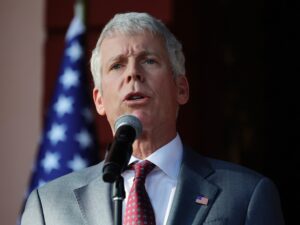
“With improved terms and additional acreage, we are strengthening a portfolio that we believe can deliver attractive low-cost oil growth, support energy supply and create differentiated long-term value,” Chevron CEO Mike Wirth said in a statement. In another company statement cited by NPR, Wirth said, “Our expanded position reflects our confidence in the country’s deep resource potential and its ability to compete for investment within our portfolio for decades.”
Chevron officials and U.S. Energy Secretary Chris Wright were expected to visit Venezuela on Wednesday for the formal unveiling of the investment, CBS News reported, citing a U.S. official.
The announcement follows President Trump’s Aug. 28 announcement of a deal with Venezuela to create a private joint venture to operate oil fields containing 65 billion barrels of petroleum. The White House said Monday that the venture involves North American Blue Energy Partners, or NABEP, a private company. Under the agreement, Venezuela granted the company 100-year concessions to drill in 17 oil fields containing roughly one-fifth of the country’s proven reserves, CBS News reported.
NABEP, run by Venezuelan executive Alejandro Betancourt, describes itself as Venezuela’s second-largest private oil producer, pumping more than 200,000 barrels per day. NPR reported that the company is headquartered in Barbados.
Venezuela holds more than 303 billion barrels of proven crude oil reserves, the largest in the world, according to OPEC’s 2025 Annual Statistical Bulletin. Saudi Arabia ranks second with 267 billion barrels.
Trump has said the Venezuela deal will help lower U.S. gasoline prices and replenish the Strategic Petroleum Reserve, which has fallen to historically low levels. Analysts cautioned that such effects could take years because Venezuela’s oil sector needs major repairs and investment after years of decline.
“Meaningful new barrels are years away: Much of Venezuelan oil is extra-heavy crude sitting behind decayed infrastructure, so significant output growth will require substantial investment and time,” Dan Alamariu, chief geopolitical strategist at Alpine Macro, said in a research note.
Alejandro Velasco, a New York University historian who specializes in Venezuela and Latin America, told NPR that the country’s vast reserves remain difficult to access. “It’s a little bit like sitting on a lottery ticket that’s just a little bit out of our reach, and you’re always having to try to stretch yourself to get it,” he said.
Much of Venezuela’s oil infrastructure has been in disrepair for more than a decade. Velasco said corruption and low oil prices in the early 2000s contributed to the deterioration, leaving refineries with rusty equipment, leaks and broken fences where thieves stole copper wire. Jorge Leon, head of geopolitical analysis at Rystad Energy, said those problems must be addressed first. “All of [the challenges] need to be solved before even thinking about increasing production in a sustained manner,” he told NPR.
Rystad analysts said in January it would take more than a decade and $183 billion to restore Venezuela’s oil production to its 1990s level of about 3 million barrels a day, NPR reported.
Chevron has operated in Venezuela since 1923. Its joint ventures include Petroindependencia and Petropiar S.A., which oversee extra-heavy oil projects in the Orinoco Oil Belt, and Petroboscan S.A. in Zulia State in western Venezuela. NPR reported that ExxonMobil and ConocoPhillips left Venezuela in 2007 after then-President Hugo Chávez renegotiated contracts with international companies, and that ExxonMobil CEO Darren Woods called the country “uninvestable” at a White House meeting in January.







Be First to Comment