Key takeaways:
- Jury selection in Abu Agila Mohammad Mas'ud Kheir Al-Marimi’s U.S. trial was postponed after newly discovered evidence emerged days before proceedings were to begin.
- The 1988 bombing of Pan Am Flight 103 killed all 259 people on board and 11 people on the ground in Lockerbie, including 190 Americans and 43 people from the United Kingdom.
- Al-Marimi has pleaded not guilty to two counts of destruction of an aircraft resulting in death and faces a maximum sentence of life in prison if convicted.
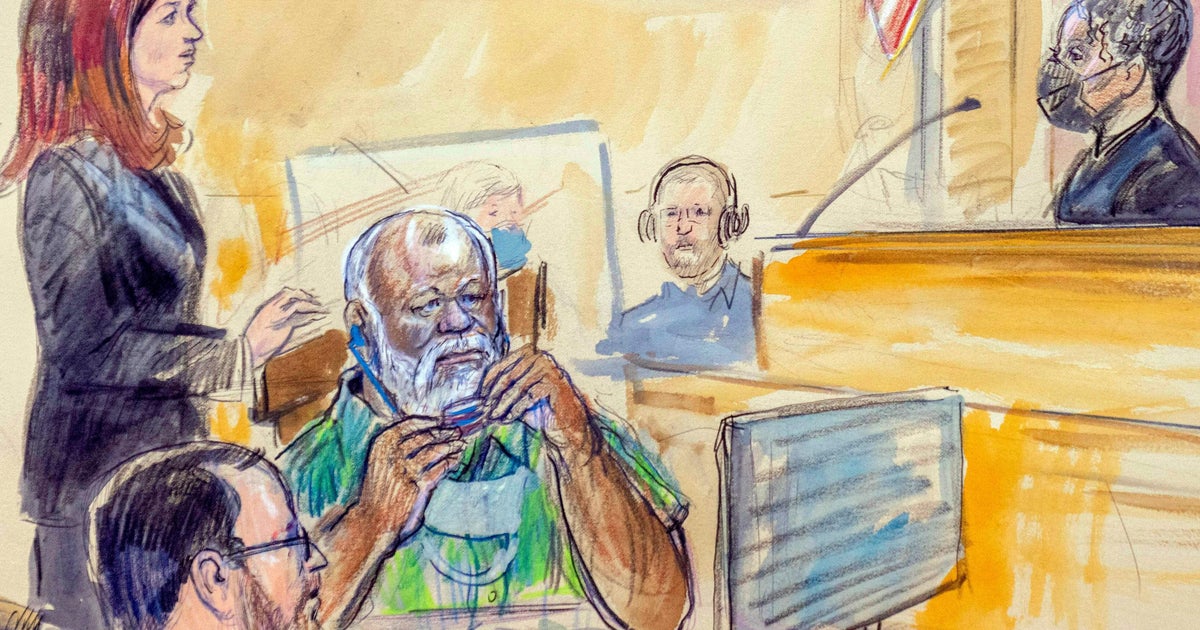
A federal judge has postponed the U.S. trial of a former Libyan intelligence official accused of making the bomb that destroyed Pan Am Flight 103 over Lockerbie, Scotland, after newly discovered evidence emerged days before jury selection was set to begin.
Abu Agila Mohammad Mas’ud Kheir Al-Marimi, who is in his 70s, is charged in Washington, D.C., with two counts of destruction of an aircraft resulting in death. He has pleaded not guilty and faces a maximum sentence of life in prison if convicted.
Jury selection had been scheduled to start Wednesday in what would be the first U.S. trial connected to the Dec. 21, 1988, bombing, which killed 270 people. U.S. District Judge Dabney Friedrich cited the complexity of the case, the new evidence and “the need for the defense to determine how best to defend this case” in setting aside the trial date. Her order did not describe the evidence.
Al-Marimi’s lawyers said prosecutors disclosed the evidence shortly before the trial was to begin and that it had been previously unknown to both the defense and the U.S. government, according to the BBC. “Constitutional and ethical obligations require the defence to investigate this development,” his lawyers told the court. The BBC reported that Al-Marimi met with his lawyers and agreed they should seek a postponement.
Friedrich scheduled a Sept. 1 hearing in Washington to discuss the status of the case. The BBC reported that it understands a new start date has been set for January next year, meaning a verdict may not come until spring.
The bombing remains one of the deadliest attacks in aviation history. Pan Am Flight 103 was traveling from London Heathrow to John F. Kennedy International Airport in New York when a bomb exploded in the forward cargo area 38 minutes after takeoff, breaking the aircraft apart at 31,000 feet. All 259 passengers and crew died, along with 11 people on the ground in Lockerbie, where falling wreckage destroyed an entire city block.
The dead included citizens of 21 countries, among them 190 Americans and 43 people from the United Kingdom. Thirty-five Syracuse University students returning home from a semester abroad were also killed. The FBI has said that before the Sept. 11 attacks, the bombing was “one of the world’s most lethal acts of air terrorism and one of the largest and most complex acts of international terrorism ever investigated” by the agency.
Kara Weipz, board president of Victims of Pan Am Flight 103, said her organization had received no details about the evidence that prompted the delay. Her brother, Richard Monetti, was among the Syracuse students killed.
“At the same time, for almost 38 years we’ve been seeking the truth of what happened,” Weipz said. “If that’s what this is, then that’s a good thing, and this delay is worth it…. It’s important to hear all the facts.”
Laura Buchan, head of the Lockerbie investigation team at Scotland’s Crown Office and Procurator Fiscal Service, said the adjournment would be “disappointing for the families and for those who have followed this case over many years.” She added that because the matter remains before the court, it would not be appropriate to comment on the reasons, but said Scottish prosecutors and police “remain fully committed to supporting the pursuit of justice.”
U.S. prosecutors allege Al-Marimi worked as an explosives expert for Libya’s intelligence service from about 1973 to 2011, rising to the rank of colonel, and carried out the bombing with others at the direction of Libyan leader Muammar Qaddafi. Investigators say he brought a suitcase containing a bomb to an airport in Malta and handed it to co-conspirators for a flight to Frankfurt, Germany; the suitcase later traveled to London and was loaded onto Flight 103.
Two other Libyan intelligence agents were tried by Scottish judges at Camp Zeist, a former U.S. air base in the Netherlands, in 2000. Abdulbasset Al-Megrahi was convicted of mass murder and jailed for life, while Al Amin Khalifah Fhimah was acquitted. Megrahi died of cancer in 2012 after being freed on compassionate grounds by the Scottish government.
The BBC reported that the U.S. government says Al-Marimi admitted involvement in the bombing during questioning in a Libyan detention facility in 2012, and that the alleged confession was handed to Scottish investigators in 2017. Al-Marimi says the confession is false and was made under duress, but Friedrich has ruled it can be used at trial.






Be First to Comment