Key takeaways:
- Justice Gregory Carro gave prosecutors until Oct. 9 to respond to Mangione’s motion to dismiss the New York state case, with a defense reply due Oct. 30.
- Mangione pleaded guilty to federal stalking charges and admitted he fatally shot UnitedHealthcare CEO Brian Thompson on Dec. 4, 2024.
- Mangione’s state trial on second-degree murder, weapons and forgery charges had been scheduled for Sept. 8 but will not proceed before his Dec. 10 state court appearance.
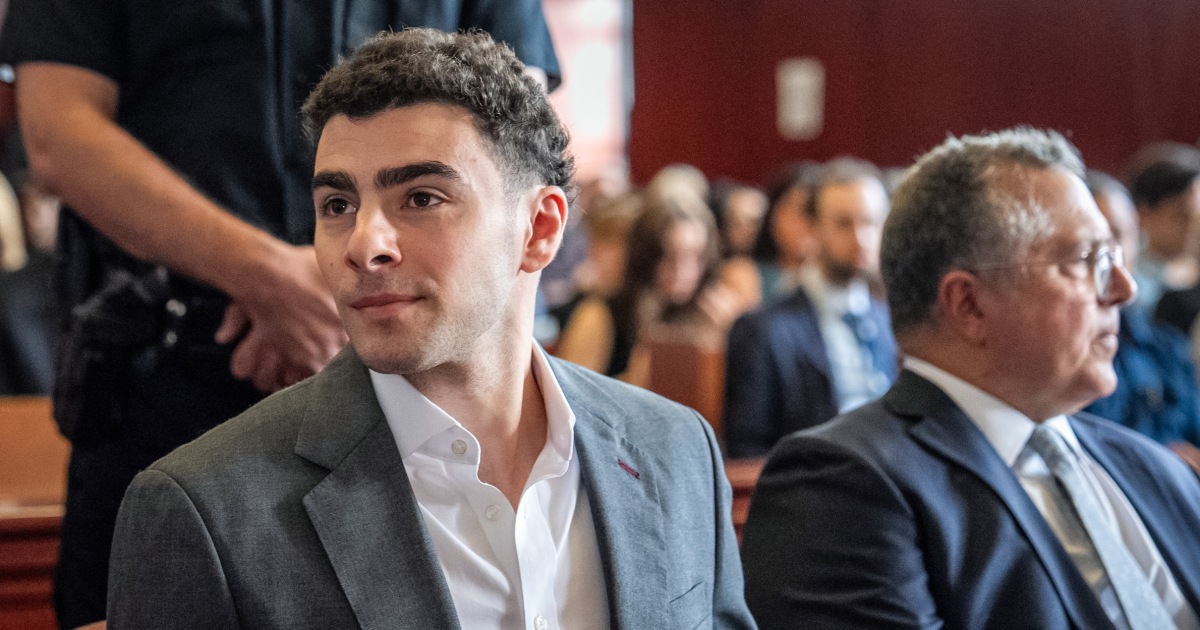
A New York judge has put Luigi Mangione’s state murder trial on hold while prosecutors and defense lawyers fight over whether the case should be thrown out after Mangione pleaded guilty to federal charges in the killing of UnitedHealthcare CEO Brian Thompson.
New York state Justice Gregory Carro on Monday gave the Manhattan District Attorney’s Office until Oct. 9 to respond to a defense motion seeking dismissal of the state case under New York’s double jeopardy law. Mangione’s lawyers will have until Oct. 30 to reply. His next state court appearance is scheduled for Dec. 10, meaning the trial, which had been set to begin Sept. 8, will not go forward next month.
Mangione, 28, has pleaded not guilty in state court to second-degree murder, weapons and forgery charges connected to Thompson’s killing on Dec. 4, 2024. A previous first-degree murder charge was thrown out last year, CBS News reported. Thompson was shot outside a New York City hotel where he was attending an investors conference.
The delay follows Mangione’s guilty plea last week in federal court to interstate stalking resulting in death and stalking through use of interstate facilities resulting in death. Other federal charges, including murder, were dropped, The Guardian reported. Prosecutors have said they will seek a life sentence in the federal case. Sentencing is scheduled for Dec. 18 and will be decided by a judge.
At Friday’s federal hearing, Mangione admitted that he fatally shot Thompson and described his plan to carry out the killing. He told the court he was motivated by his experience with the health care system. According to NBC News, Mangione said he had posed in an email to UnitedHealthcare leadership as an investor managing more than $50 billion in assets in an effort to confirm the location of the conference Thompson was attending.
The Guardian reported that Mangione told the court he had a dispute with UnitedHealthcare over treatment for severe back pain and cited problems with “navigating the obstacles of the health insurance system and witnessing similar experiences of countless others.”
Mangione’s defense team filed a 32-page motion Friday asking Carro to dismiss the New York charges, arguing that he should not be punished twice for the same conduct. The motion called him a “pawn in parallel prosecutions,” according to CBS News.
Legal experts cited by NBC News and CBS News said New York’s double jeopardy statute is considered favorable to defendants and can allow dismissal arguments even when federal and state charges are not identical. CBS News contributor Jessica Levinson, a professor at Loyola Law School in Los Angeles, said the defense is likely to argue that the federal stalking charges and state murder charges arise from “the same set of conduct and the same set of facts.”
“The prosecution is going to say, ‘But wait, there’s a carve-out in state law,’” Levinson said. “And those exceptions deal with situations where the elements of the crimes, the elements of federal stalking versus the elements of the state murder charge, are substantially different.”
Legal expert Rich Schoenstein told CBS News the issue remains contested. “They have a live argument,” he said. “There is a vigorous double jeopardy statute in New York state. It’s very liberal. New York state does not let you retry somebody for the same activity. But there’s an argument here that the federal stalking charges are different than the New York state intentional murder charge.”
The Manhattan District Attorney’s Office declined to comment Monday. In a statement Friday, a spokesperson said the office was prepared to litigate the motion and remained “committed to seeking justice for Mr. Thompson and his family.” NBC News reported that a source familiar with the office’s discussions said prosecutors intended to fight the motion until they see the outcome of Mangione’s federal sentencing.
After Mangione’s guilty plea, Thompson’s family said they were grateful the federal justice system had held him accountable. “Now we look to the court to ensure that sentencing reflects the severity of this crime,” they said.






Be First to Comment