Key takeaways:
- U.S. intelligence detected a credible threat involving Iran and allied proxies targeting the plane Trump was expected to use leaving Ankara, CBS News reported.
- Trump was secretly moved by an airport catering truck to a separate U.S. government aircraft while reporters and some staff flew on the older Air Force One believing he was aboard.
- White House communications director Steven Cheung said the administration uses “every tool at our disposal” to address threats against Trump.
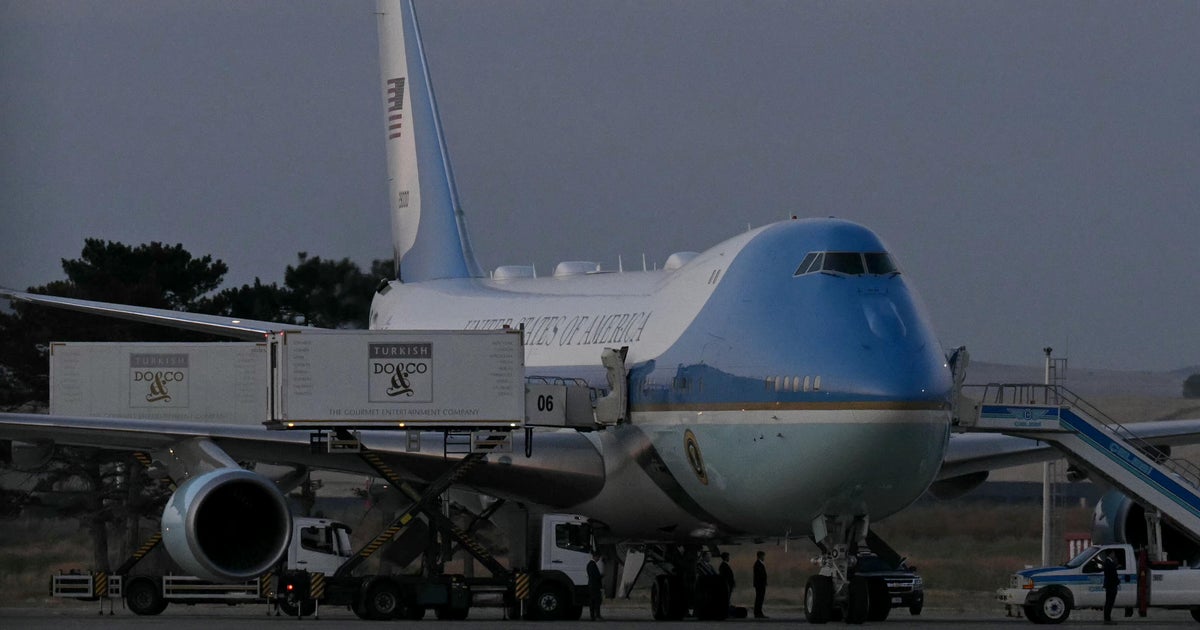
President Donald Trump secretly left Turkey aboard a different U.S. government aircraft last month after officials learned of a credible threat involving Iran, while reporters and some White House staff flew on Air Force One believing he was on board, according to reports from CBS News, The Washington Post and The New York Times.
The operation unfolded July 8 as Trump departed Ankara after a NATO summit. CBS News reported that U.S. intelligence had detected a credible plot by Iran and allied proxies to fire a missile at the plane carrying the president as he left the Turkish capital. The Washington Post reported that the threat set a “deception operation” in motion.
Television cameras showed Trump walking up the stairs of the older Air Force One and disappearing inside. Minutes later, according to CBS News and the Post, he was moved away with the help of an airport catering truck and taken to another U.S. government plane. The Post identified that aircraft as an Air Force C-32A.
The older Air Force One then flew the same route to a refueling stop in Britain with members of the press and some of the president’s staff aboard. They believed Trump was traveling with them. The administration did not publicly disclose at the time that the plane was serving as a decoy.
Hours earlier, Trump had announced he would leave Ankara on the older Air Force One rather than the newer Boeing 747-8 donated by Qatar that had carried him to the summit. He said he was using the older plane “for old time’s sake” and that U.S. service members at the British stop would be able to see the new aircraft. CBS News reported that the Secret Service had advised him to take the older plane for security reasons.
Reporters on the older Air Force One said they were told to keep the window shades in the press cabin closed. Asked later why the shades needed to be down, Trump said they were “probably on a dangerous flight because of the sleazebags that we have to deal with.” According to The Guardian, he also told reporters: “But if I go, you go. Right?”
The Post reported that the C-32A carrying Trump arrived in Britain at about 10:20 p.m. local time, with the older Air Force One and the media arriving minutes later. The traveling press pool reported that Trump later descended the stairs of the older Air Force One at 10:56 p.m., gave reporters a peace sign, greeted service members and then walked to the newer Qatar-donated plane.
Trump then switched to the newer Air Force One for the flight across the Atlantic to Washington and spoke with reporters during that leg, CBS News reported.
The new aircraft, which debuted in June, had drawn questions about its cost and security features after its expedited upgrades. Trump later said it had been sent off to be “maxed out” with additional upgrades. The Air Force has said the new presidential plane is “safe, secure and equipped with the most advanced technologies necessary to meet the requirements of the presidential mission.”
Asked about the secret plane switch, White House communications director Steven Cheung did not directly address the operation. “The new Air Force One is a state-of-the-art aircraft that has been fitted with high-level security protocols that ensure the safety of the President and his staff,” Cheung said. “As the President has said recently, there are many enemies of America who have their sights on him, and we use every tool at our disposal to address those threats.”
CBS News reported that multiple Trump administration officials expressed frustration that classified protective tactics and procedures had become public, saying the disclosure could limit future operations to protect U.S. presidents.




Be First to Comment