Key takeaways:
- Trump said the United States would seek compensation from Iran for alleged damages over a 50-year period, including deaths of U.S. forces and Iranian protesters.
- Iran says it will not reopen the Strait of Hormuz unless Washington pays war reparations and ends sanctions, while Iran-Oman talks over shipping routes continue.
- U.S. Central Command said it has redirected 55 commercial vessels since reinstating the blockade in July, and shipping data showed traffic through the strait dropped sharply over the weekend.
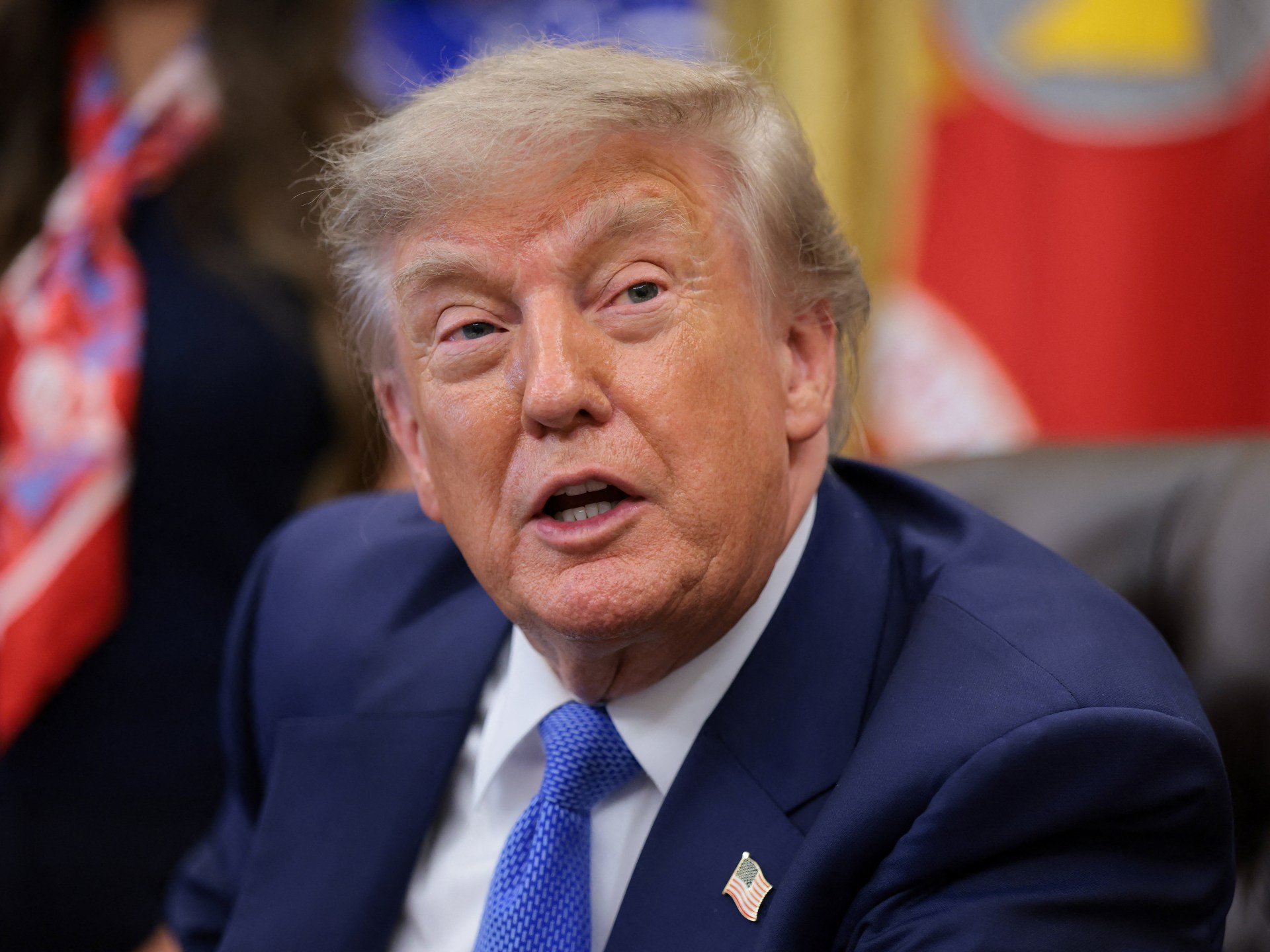
President Donald Trump demanded compensation from Iran on Monday, answering Tehran’s call for war reparations with a U.S. claim for damages tied to decades of conflict, deaths of American forces and the killing of Iranian protesters.
The demand adds another obstacle to talks over the Strait of Hormuz, the vital maritime passage that has been effectively blocked since the U.S.-Israel war on Iran began Feb. 28. Before the conflict, about one-fifth of global oil and liquefied natural gas moved through the strait.
“They asked for reparations, you might say. Or they asked for money for the damage that we’ve done. I said that’s a good idea,” Trump told reporters at the White House. “Well, we’re going to ask for money for the damage they’ve done over a 50-year period.”
On Truth Social, Trump said Iran should compensate “all of the people that they have killed and gravely wounded with their roadside bombs and many conflicts.” He said the demand should include families of the 17 U.S. sailors killed in the 2000 bombing of the USS Cole in Yemen, an attack blamed on al-Qaeda, and “thousands of others killed in combat.” He also wrote that Iran should be responsible for “the damages and death caused to the people of Lebanon, Syria, Yemen, and Gaza.”
Trump said he had instructed his representatives “to put this firmly into any, and all, future negotiations.”
Tehran has said it will not reopen the Strait of Hormuz unless Washington agrees to pay war reparations and end sanctions. Those demands largely reflected an interim peace agreement signed in June, Al Jazeera reported, but that accord has broken down over control of the strait.
Iran and Oman are continuing negotiations over the waterway, which separates the two countries. Iranian Foreign Ministry spokesman Esmaeil Baghaei told state media Monday that talks were “progressing smoothly and constructively” and that the sides had agreed on a shipping route map, though some technical issues remained. He said the talks also covered services such as safe navigation, environmental protection, maritime services and combating crime.
Baghaei accused the United States of making the passage unsafe through “hostile actions” and said Tehran views Washington’s naval blockade of Iranian ports as an “act of aggression.”
Trump gave a sharply different account, saying the United States controls the strait. “The only one that has control of the Strait of Hormuz right now is the United States Navy. We have a blockade that’s been infallible,” he told reporters in the Oval Office, calling it a “steel wall.” He also said some ships were moving through the waterway and claimed the U.S. military had cleared it of mines.
U.S. Central Command said Monday it had redirected 55 commercial vessels since reinstating the blockade in July and “disabled” at least two. Windward, a maritime intelligence firm, said the blockade had caused a “complete halt” to Iranian oil exports from Kharg Island in the Gulf. Shipping data firms reported a sharp drop in traffic over the weekend, with MarineTraffic saying crossings fell from 15 on Friday to 11 on Saturday and six on Sunday.
Oil markets reflected the uncertainty. CBS News reported that Brent crude was unchanged at $87.72 a barrel and U.S. benchmark crude was flat at $82.13 after oil prices surged 5% Monday. Prices swung between $72 and $102 last month as expectations shifted over whether Washington and Tehran could reach a deal allowing tankers to move freely again.
Trump also claimed Iran had killed 52,000 people in the past four months; CBS News quoted him referring to 52,000 killed in the last five months. Tehran says 3,117 people died in antigovernment protests in January, while the U.S.-based Human Rights Activists News Agency reported in February that about 7,000 people had died, including 6,500 protesters.
Charles Kupchan, a former special assistant to President Barack Obama, described Trump’s compensation remarks to Al Jazeera as “banter” and said both sides still have incentives to reach an agreement. “Unfortunately, we are just looking at some back-and-forth banter here, where neither the Iranians nor the Trump administration is being serious,” he said.


Be First to Comment