Key takeaways:
- Keiko Fujimori defeated Roberto Sanchez by fewer than 50,000 votes in June’s runoff and became Peru’s ninth president in a decade.
- Fujimori pledged an “iron fist” security strategy, including a mega-prison modeled on El Salvador’s Cecot facility and anonymous judges for criminal trials.
- Opposition groups are urging her government to reverse crime-related laws and investigate the deaths of 50 civilians during protests in 2022 and 2023.
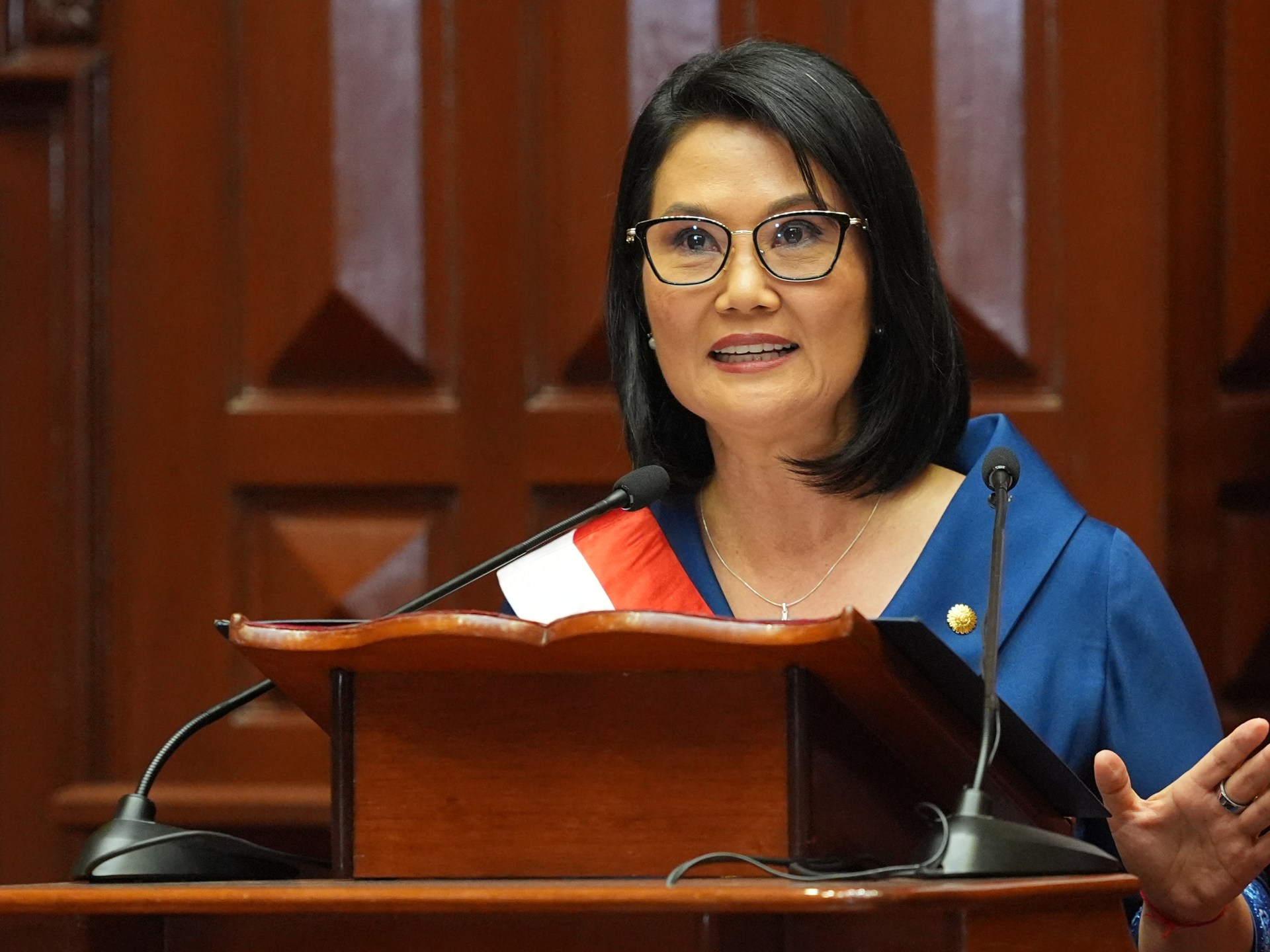
Keiko Fujimori was sworn in Tuesday as Peru’s president after a razor-thin election victory, returning one of the country’s most divisive political families to power and promising an “iron fist” response to rising crime.
The 51-year-old conservative leader defeated left-wing rival Roberto Sanchez by fewer than 50,000 votes in the June runoff, after three previous failed presidential bids. She becomes Peru’s ninth president in a decade, taking office in a country shaken by repeated presidential removals, resignations and corruption scandals.
“I swear … that I will faithfully carry out the duties of president of the republic,” Fujimori told Congress during the inauguration ceremony.
Fujimori, the leader of Popular Force, Peru’s largest political party, campaigned on restoring stability, reducing crime and boosting economic growth. Her party and its main right-wing ally, Popular Renovation, are set to hold half the seats in the Senate once the new legislature is installed, making it harder for opponents to remove her from office. Al Jazeera reported that right-wing parties still fall short of the majority needed to pass her agenda on their own.
Her campaign focused heavily on public security as Peru confronts extortion rackets, contract killings and the spread of local and foreign criminal gangs. Fujimori has pledged to build a mega-prison modeled on El Salvador’s Cecot facility, allow judges in criminal trials to hide their identities and use policies associated with Salvadoran President Nayib Bukele. Al Jazeera reported that she also proposed deportations of undocumented migrants and requiring prisoners to work for their food.
On Tuesday, Fujimori said the military would “temporarily” lead security operations in crime-hit areas. She also pledged to reorganize social services to fight malnutrition in rural communities, announced a 15% increase in the minimum wage and said her government would prepare Peru for the latest onset of El Niño, a weather pattern that warms ocean temperatures and often causes flooding along the country’s coast.
“My goal is not only to administer the state,” Fujimori said. “My main objective is to narrow the enormous social deficit that affects millions of Peruvians.”
Her inauguration also underscored deep divisions over her family’s legacy. Fujimori is the daughter of former President Alberto Fujimori, who governed in the 1990s. Supporters credit him with stabilizing the economy and defeating armed groups, including the Shining Path. He was later imprisoned for human rights abuses committed under his rule by the military as his government became more authoritarian. Al Jazeera reported that he was convicted of corruption and crimes against humanity and served 16 years in prison. He was pardoned in December 2023 and died the following September.
Critics fear Keiko Fujimori could revive elements of her father’s governing style. “She is going to be a replica of her father,” a retiree named Cesar Fuentes told AFP, according to Al Jazeera.
Opposition leaders have urged the new government to reverse laws approved by the last legislature that they say weakened efforts to combat organized crime. The measures eliminated preventive arrests, stopped prosecutors from treating political parties accused of corruption under the same statutes as criminal groups and made it harder for police to seize criminal organizations’ assets.
Opposition groups also want a commission to investigate the deaths of 50 civilians during anti-government protests in late 2022 and early 2023 after the removal of former President Pedro Castillo. During Fujimori’s swearing-in, some opposition lawmakers protested outside parliament with photos of people killed in the demonstrations. Relatives of the dead said they do not recognize Fujimori as president.
The election exposed Peru’s geographic and political divide. Fujimori drew strong support in Lima and along the Pacific coast, while voters in the highlands, home to a larger Indigenous population, overwhelmingly backed Sanchez, an ally of Castillo. Sanchez challenged the results over alleged irregularities in vote counting at Peruvian consulates abroad, but electoral authorities dismissed his complaints.


Be First to Comment