Key takeaways:
- Giovanni Castellucci, former chief executive of Autostrade per l’Italia and Atlantia, was sentenced to 12 years in prison over the 2018 Morandi bridge collapse.
- The Genoa court convicted 32 of 57 defendants and sentenced them to terms ranging from one year and 11 months to 12 years; 25 were acquitted or cleared because offences had expired.
- Prosecutors said delayed maintenance and ignored warning signs contributed to the disaster, while defence lawyers argued the collapse resulted from a hidden design defect involving corroded cables encased in concrete.
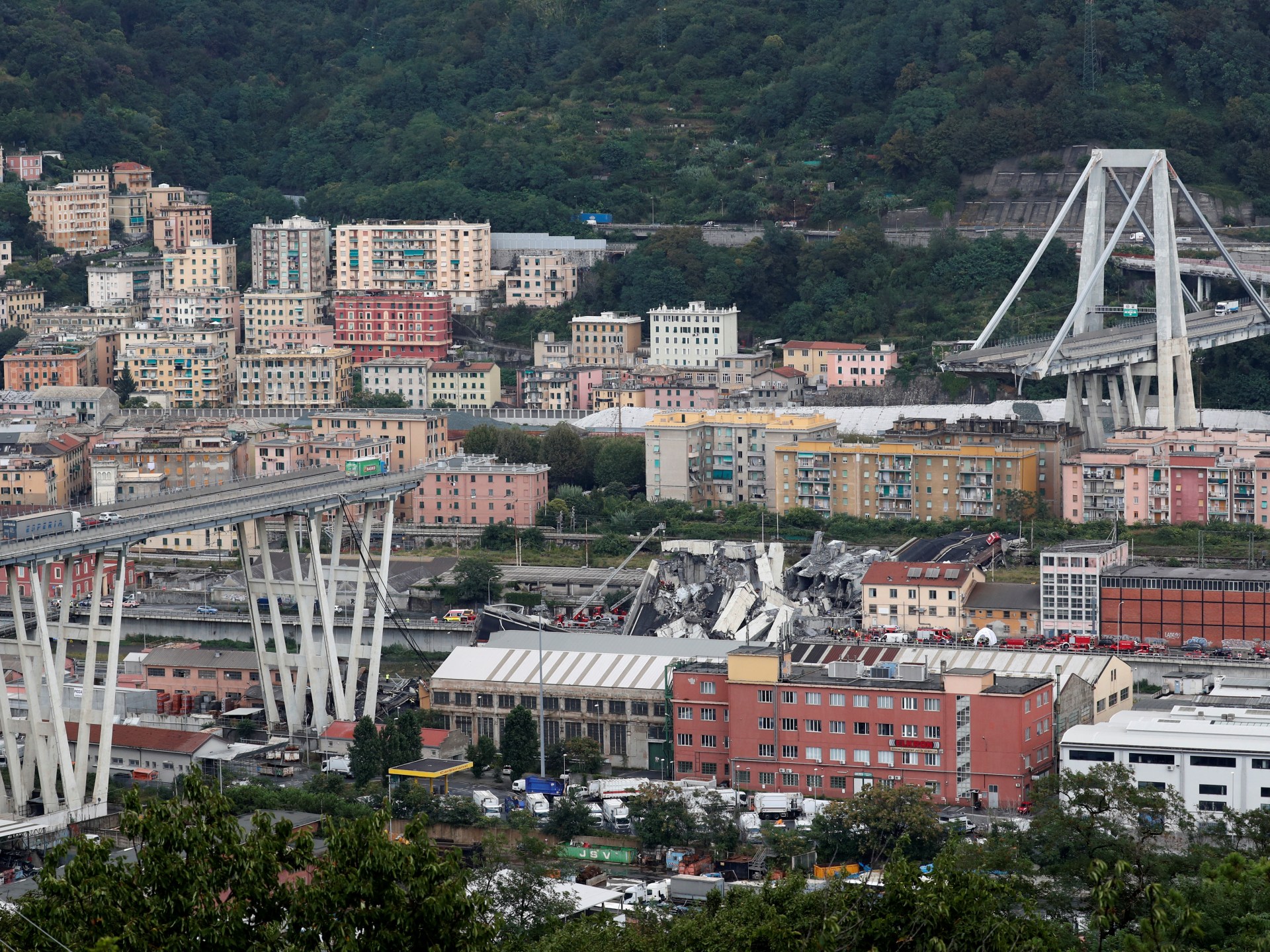
A Genoa court sentenced the former head of Italy’s main motorway operator to 12 years in prison Thursday over the 2018 collapse of the Morandi bridge, a disaster that killed 43 people and became one of Italy’s worst infrastructure failures.
Giovanni Castellucci, the former chief executive of Autostrade per l’Italia and Atlantia, was found guilty in the first trial over the collapse, which occurred on Aug. 14, 2018, as the motorway bridge came down during a rainstorm at the height of the holiday season. Cars and lorries plunged from the viaduct, with a 50-metre-high section falling onto warehouses and a riverbed below.
Castellucci was not in court when Judge Paolo Lepri read the verdicts. He is already serving a six-year prison term for another fatal road incident in 2013 on a viaduct in southern Italy. Prosecutors had sought a longer sentence in the Morandi case.
The court convicted 32 defendants and handed down sentences ranging from one year and 11 months to 12 years. Twenty-five others were acquitted or cleared because some offences had expired under the statute of limitations. All 57 defendants had denied wrongdoing.
Michele Donferri Mitelli, the former head of maintenance at Autostrade, received an 11-year sentence. Paolo Berti, a former number two at the motorway operator, was sentenced to five and a half years, seven years less than prosecutors had requested. Antonino Galatà, the former chief executive of the SPEA engineering company, received five years and six months. Mauro Coletta, the former top official in charge of the transport ministry’s motorway directorate, received five years.
The defendants included company executives, engineers from SPEA, transport ministry officials and former officials from Atlantia, Autostrade’s parent company. Prosecutors had sought a total of 400 years in prison on charges including manslaughter, endangering transport safety, falsifying official documents and failing to maintain the viaduct.
Prosecutors argued that maintenance on the ageing bridge had been repeatedly delayed, warning signs ignored and safety work postponed while profits continued to be generated and distributed. Prosecutor Walter Cotugno called the bridge “a ticking time bomb” at the verdict, Al Jazeera reported.
Defence lawyers blamed the disaster on a design flaw, including a hidden construction defect involving corrosion of cables encased in concrete, rather than a lack of maintenance.
The 1,182-metre bridge, designed by Riccardo Morandi and inaugurated in 1967, had been dubbed Italy’s “Brooklyn Bridge.” Al Jazeera reported that experts had continued to warn by the turn of the century that the structure was deteriorating, but critical repairs were not carried out.
Relatives of victims packed the courtroom for the verdict after four years of hearings. Emmanuel Diaz, whose brother Henry died, told Italian television he was “very satisfied” with the outcome. Egle Possetti, whose sister and her sister’s family were killed, said the 12-year sentence for Castellucci was “acceptable.”
On Wednesday, Autostrade’s current chief executive, Arrigo Giana, issued the company’s first public apology for the collapse. “I wish to apologise to the victims’ families, to the people of Genoa, and to all Italians for the suffering caused by the tragic Morandi disaster, fully aware that our gesture can never erase their pain,” he wrote, according to Al Jazeera. The BBC reported that he also said “the actions and decisions of some people left indelible scars.”
Cesare, an 18-year-old whose father Andrea Cerulli died in the collapse, dismissed the apology as “crocodile tears,” telling La Repubblica: “Unfortunately, these people lack tact and humanity.”
Genoa Mayor Silvia Salis, who attended the hearing, called the day one of “immense historical and emotional weight.” She said, “Finally, a first step has been taken towards establishing responsibility for the collapse of the Morandi bridge – it is a moment owed by the state, which the families have been waiting for since that cursed 14 August 2018.”
The remains of the Morandi bridge were demolished in early 2019. A replacement, the San Giorgio bridge, designed by Genoa-born architect Renzo Piano with sail-like pillars reflecting the port city’s maritime history, opened the following year.







Be First to Comment