Key takeaways:
- President Trump deleted an AI-generated image of himself as a Christ-like figure following criticism from evangelical Christians who called it blasphemous.
- Trump continues to criticize Pope Leo, calling him "WEAK on Crime, and terrible for Foreign Policy," and refuses to apologize or engage directly with the pontiff.
- The controversy has caused tension within Trump's religious base, with some evangelical leaders labeling the image as embodying an "Antichrist spirit."
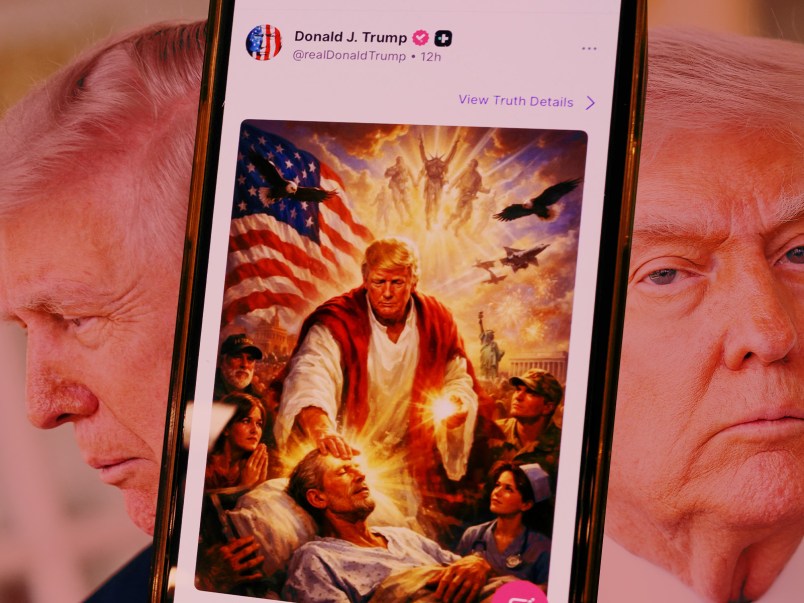
President Donald Trump removed an AI-generated image of himself depicted as a Christ-like figure following widespread criticism from his Christian supporters, but he has not apologized or retreated from his ongoing feud with Pope Leo. The image, which showed Trump in a white robe with a red sash, healing a bedridden man with patriotic symbols in the background, was posted on Truth Social and quickly condemned as blasphemous by prominent conservative Christian voices.
Megan Basham, a conservative Protestant commentator, called the image “OUTRAGEOUS blasphemy” and urged Trump to take it down and seek forgiveness from both the American people and God. Conservative commentator Cam Higby also expressed dismay, stating, “I support Trump… I will not defend blasphemy.” Riley Gaines, a conservative podcaster, questioned Trump’s judgment, saying, “God shall not be mocked.”
Trump confirmed he personally posted the image but insisted it was meant to portray him as a doctor “making people better,” citing the presence of Red Cross symbols and medical personnel in the image. “Only the fake news could come up with that one,” he said. He explained in a CBS News interview that he removed the post to avoid confusion, though he denied being influenced by critics like Gaines.
The image’s removal coincided with a meeting of Trump’s Religious Liberty Commission, a group established to defend religious freedom and including evangelical figures such as Paula White-Cain and Rev. Franklin Graham. Despite deleting the image, Trump has maintained his critical stance toward Pope Leo, who he described on Truth Social as “WEAK on Crime, and terrible for Foreign Policy.”
Trump’s attack on the pontiff followed a “60 Minutes” report highlighting Pope Leo’s opposition to mass deportations and the war on Iran. When asked if he would call the pope, Trump said firmly, “No,” adding, “He’s wrong on the issues. I don’t think he should be getting into politics.”
Pope Leo responded during a flight to Algeria, emphasizing that his statements were not personal attacks but rooted in the Gospel’s message of peace. “I have no fear of the Trump administration,” he said, underscoring the church’s role as a peacemaker rather than a political actor.
David Gibson, director of the Center on Religion and Culture at Fordham University, noted that Trump’s disrespect toward the pope is “uncharted territory” and politically puzzling. He also pointed out the tension this creates for Catholic politicians aligned with Trump, such as JD Vance and Marco Rubio.
The controversy has stirred significant discussion within religious communities, including a Reddit forum dedicated to Catholicism that amassed over 1,500 comments on the spat. The backlash reflects a rare moment of evangelical disapproval, as many had previously tolerated Trump’s moral controversies for political gains.
Some evangelical figures have gone further, with former Rep. Marjorie Taylor Greene labeling the image as embodying “an Antichrist spirit.” The episode highlights the complex relationship between Trump and his religious base, which has been strained by his recent actions and rhetoric.
Trump has frequently used religious imagery to bolster his image, once calling himself “the chosen one” and claiming God spared him from assassination attempts. Conservative preacher Lance Wallnau has likened Trump to the biblical figure Cyrus, suggesting he carries a divine anointing.
Despite the backlash, Trump asserted in the CBS interview that he has “done more for the Catholic Church than any president in the last hundred years,” citing financial support during the COVID-19 pandemic. However, the episode underscores growing tensions within his coalition and the challenges of navigating religious sensibilities in political discourse.


Be First to Comment