Key takeaways:
- Gulf state leaders met in Riyadh amid escalating conflict involving the US, Israel, and Iran, with Iran launching retaliatory strikes on energy and civilian infrastructure, raising fears of wider regional involvement.
- Iran’s attacks have severely impacted energy markets and regional security, damaging key oil and gas facilities across the Gulf and causing a significant rise in global oil prices, while UAE and other Gulf states face frequent missile and drone assaults.
- Military tensions have intensified with incidents like a possible Iranian strike on a U.S. F-35 and Israeli airstrikes in Tehran; Gulf states remain divided on response strategies, with calls for de-escalation and ceasefire amid ongoing instability.
As the conflict between the United States, Israel, and Iran approaches its third week, tensions across the Persian Gulf region continue to escalate, with significant military and economic repercussions. Gulf state leaders convened in Riyadh this week to address the intensifying war, which has seen Iran launch a series of retaliatory strikes against key energy and civilian infrastructure in neighboring countries. Saudi Arabia’s Foreign Minister Prince Faisal bin Farhan Al Saud described the timing of Iranian attacks as a deliberate attempt to intimidate regional leaders and warned that the prospect of Gulf nations entering the conflict should not be dismissed.
The meeting in Saudi Arabia included representatives from Bahrain, Egypt, Jordan, Kuwait, Lebanon, Pakistan, Qatar, Azerbaijan, Syria, Turkey, and the United Arab Emirates (UAE). Prince Faisal emphasized that trust between Iran and its neighbors has been shattered, and Gulf states possess significant military capabilities that could be deployed if provoked further. Iran’s Foreign Minister Abbas Araghchi underscored Tehran’s restrained response to Israel’s recent strike on the South Pars gas field, stating that future attacks on Iranian infrastructure would be met with full force. The Qatari Ministry of Foreign Affairs also warned that continued Iranian escalation would have severe consequences for regional security and diplomatic relations.
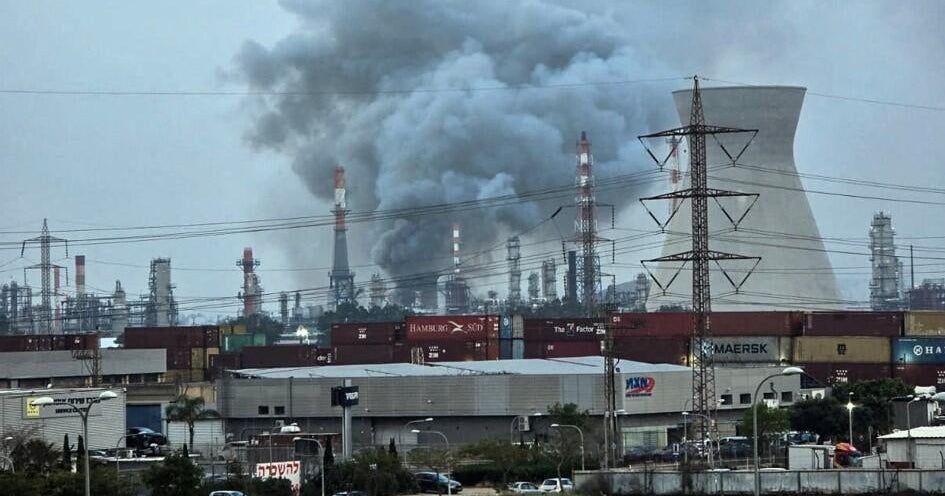
The conflict has had a pronounced impact on energy markets and regional security. Iran’s attacks have targeted major oil and gas facilities, including a Kuwaiti refinery hit for the second consecutive day and an Israeli refinery in Haifa, which is expected to remain offline for several days due to damage. The UAE has borne the brunt of Iranian drone, ballistic missile, and cruise missile attacks, with over 2,000 such projectiles detected by UAE authorities. Explosions and intercepted attacks have also been reported in Dubai, Bahrain, and Saudi Arabia, raising concerns about the safety of civilian populations and critical infrastructure. The ongoing strikes have contributed to a sharp increase in global oil prices, with Brent crude trading around $107 per barrel, up more than 47% since the conflict began on February 28.
Military developments have included an emergency landing of a U.S. F-35 fighter jet following a possible Iranian attack, marking a potential first successful strike on a U.S. aircraft in the conflict. Israeli forces have conducted a wave of airstrikes targeting infrastructure in Tehran, coinciding with the Persian New Year celebrations. Meanwhile, Iran continues its missile and drone attacks on Israel and Gulf neighbors, prompting widespread alerts and sheltering of civilians. Israeli Prime Minister Benjamin Netanyahu noted uncertainty regarding Iran’s leadership structure after targeted killings of senior Iranian officials, including top security figures. Gulf states remain divided on how to respond, with some advocating for a swift U.S. diplomatic exit to avoid further regional destabilization, while others are concerned about leaving a vengeful Iranian regime intact. Oman has called for de-escalation and a ceasefire, emphasizing the desire to avoid a broader conflict despite the growing economic and security challenges faced by Gulf countries.







Be First to Comment