Key takeaways:
- Joe Kent, director of the National Counterterrorism Center and former Trump supporter, resigned criticizing the Trump administration’s justification for war against Iran, accusing Israeli officials and American media of pushing misinformation.
- Kent’s resignation sparked backlash from Republican leaders, including Mitch McConnell, who condemned Kent’s claims as anti-Semitic; Kent has a controversial background linked to far-right figures and conspiracy theories.
- Director of National Intelligence Tulsi Gabbard testified that Iran remains a degraded but ongoing threat, underscoring internal disagreements within the administration over Iran policy and threat assessments.
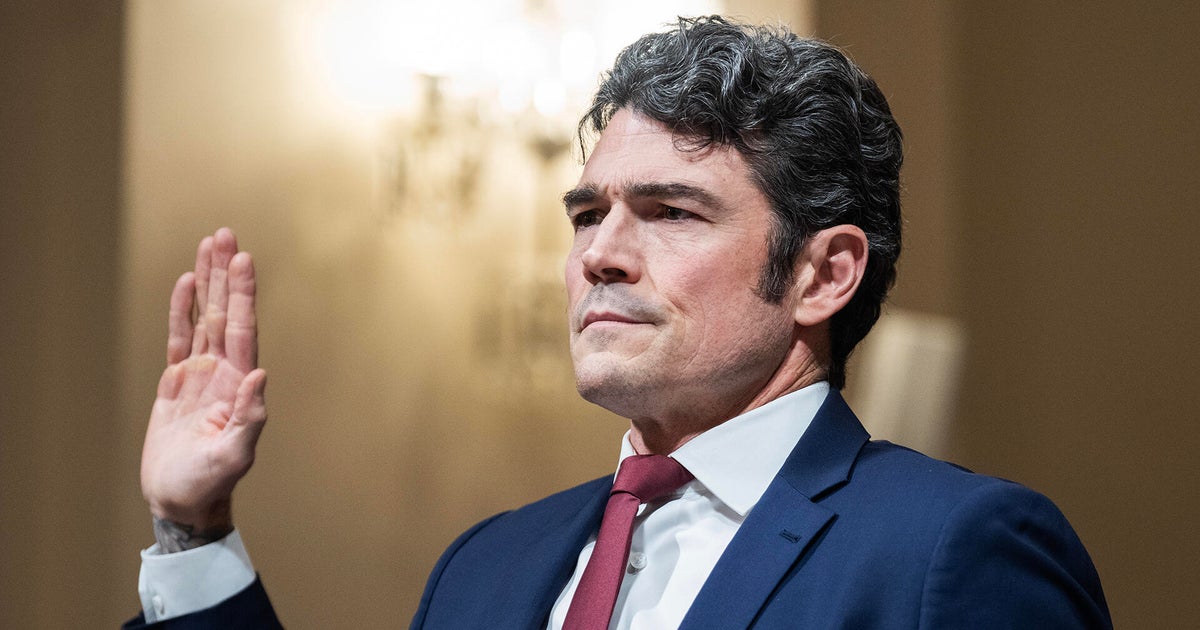
Joe Kent, the director of the National Counterterrorism Center (NCTC), resigned on Tuesday amid escalating tensions and military actions involving Iran. Kent, a retired Green Beret and former CIA paramilitary officer, had been a staunch supporter of former President Donald Trump since his 2016 campaign. However, his resignation letter, posted on the social media platform X, sharply criticized the Trump administration’s rationale for initiating war against Iran. Kent stated that Iran “posed no imminent threat to our nation” and accused “high-ranking Israeli officials and influential members of the American media” of orchestrating a misinformation campaign to push the United States into conflict.
Kent’s departure marks a significant break from his previous alignment with Trump, who justified the airstrikes against Iran by claiming the regime’s “menacing activities directly endanger the United States, our troops, our bases overseas, and our allies throughout the world.” In contrast, Kent suggested that the decision to go to war was influenced by pressure from Israel and its American lobby, a claim that drew swift condemnation from Republican Senate Minority Leader Mitch McConnell. McConnell labeled Kent’s assertions as “virulent anti-Semitism” and questioned Kent’s ability to lead with integrity and accountability. An administration official also noted that Kent had not been involved in the briefings related to Iran.
Kent’s background includes a 20-year military career with 11 combat deployments, primarily in Iraq, and service as a counterterrorism adviser during Trump’s 2020 reelection campaign. Despite his military credentials, Kent has been associated with far-right figures and conspiracy theories. During his Senate confirmation hearings, he acknowledged connections to controversial individuals such as white nationalist Nick Fuentes and members of the Proud Boys. Kent has also propagated conspiracy theories regarding the COVID-19 vaccine, the 2020 presidential election, and the events of January 6, 2021. While he later disavowed racism and bigotry, he did not distance himself from election denialism during his confirmation process. Kent was confirmed as NCTC director in July by a narrow Senate vote largely divided along party lines.
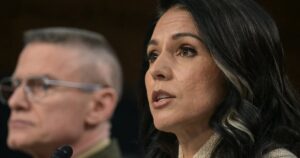
In related developments, Director of National Intelligence Tulsi Gabbard provided testimony before the Senate Intelligence Committee amid ongoing debates about the threat posed by Iran. Gabbard emphasized that her briefing reflected the intelligence community’s assessment rather than personal opinions. She noted that Iran’s regime remains “intact but largely degraded” following recent U.S. military actions, which have significantly diminished Iran’s conventional military capabilities. However, she acknowledged that Iran and its proxies continue to pose threats to U.S. and allied interests in the Middle East. Gabbard’s testimony also touched on her presence during the FBI raid on an election office in Fulton County, Georgia, at Trump’s request, though she stated she did not participate in law enforcement activities.
Kent’s resignation and Gabbard’s testimony highlight the complexities and internal disagreements within the Trump administration regarding the justification and conduct of the war in Iran. As the conflict unfolds, questions remain about the accuracy of threat assessments and the influence of foreign and domestic political pressures on U.S. foreign policy decisions.


Be First to Comment