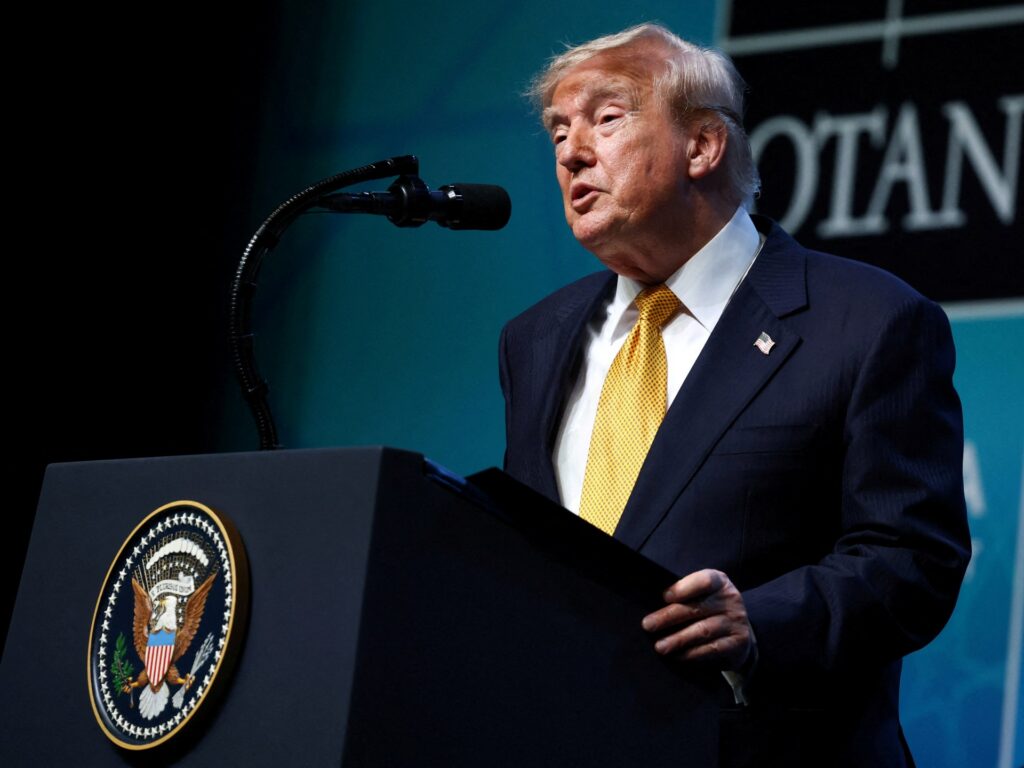
The Trump administration is intensifying efforts to encourage immigrants to voluntarily leave the United States, aligning with its broader strategy of mass deportations, but is facing complications due to a federal judge's ruling. The judge has temporarily blocked the administration from revoking deportation protections and work permits for migrants from Cuba, Haiti, Nicaragua, and Venezuela who entered legally under a Biden-era program. This legal barrier, along with stagnating deportation numbers, challenges the administration's immigration enforcement goals and necessitates a reassessment of its approach.
Posts published in “Politics”
The case of Kilmer Abrego Garcia, a Maryland resident mistakenly deported to El Salvador, has gained significant attention following a Supreme Court ruling that mandates the U.S. government to facilitate his release from a Salvadoran prison. U.S. District Judge Paula Xinis has requested updates on his current status and the efforts made by the Justice Department to rectify the deportation error, including diplomatic communications with Salvadoran authorities. Senator Chris Van Hollen has been actively involved, expressing concern for Abrego Garcia's well-being and seeking to engage with Salvadoran President Nayib Bukele to expedite his return to the United States.
A diplomatic dispute has arisen between the United States and El Salvador over Kilmar Abrego Garcia, with El Salvador's President Nayib Bukele refusing to extradite him back to the U.S., drawing attention from U.S. lawmakers. Senator Chris Van Hollen has actively engaged with El Salvador's ambassador and expressed his willingness to travel to El Salvador if the situation is not resolved, gaining support from other Democratic lawmakers. The case has also exposed tensions within the U.S. government, with criticism directed at the Trump administration for its handling of the matter, and a federal court hearing in Maryland is anticipated to address the legal and diplomatic ramifications.
The Trump administration has frozen over $2 billion in federal grants to Harvard University after the institution refused to comply with a list of ten government demands, escalating tensions between the administration and the Ivy League school. This decision is part of a broader pattern of the administration challenging judicial rulings it finds unfavorable, raising concerns about the erosion of judicial authority and the rule of law. The announcement, made alongside El Salvador's President Nayib Bukele, has sparked discussions about the implications for federal funding of higher education and the administration's approach to governance and international relations.
Mohsen Mahdawi, a Palestinian student at Columbia University, was detained by federal agents during a citizenship interview, with his legal team arguing that this violates his First Amendment rights due to his involvement in protests against the Israel-Gaza conflict. The Trump administration is reportedly using an obscure law to justify his deportation, claiming he poses "adverse foreign policy consequences for the United States," a provision also cited in another activist's case. This situation reflects broader concerns about the administration's crackdown on foreign students and the potential implications for their immigration status, highlighting tensions between immigration policies and the rights of activists.
A security breach at the Pennsylvania Governor's Residence, where an intruder named Cody Balmer entered the premises and started a fire, has raised concerns about the effectiveness of current security measures. Balmer, who expressed animosity toward Governor Josh Shapiro, was charged with multiple offenses, including attempted murder and terrorism, after he managed to evade detection and escape. The incident has prompted calls for a comprehensive review of security protocols to address potential vulnerabilities and ensure the protection of state officials and their residences.
Concerns have emerged over the U.S. government's deportation policies, particularly regarding the potential deportation of U.S. citizens without due process, following discussions between President Donald Trump and El Salvadoran President Nayib Bukele. The case of Mr. Abrego Garcia, a U.S. citizen currently in custody in El Salvador despite a court order for his release, has become central to the debate, raising questions about the administration's adherence to legal processes. The situation has prompted calls for the court to assert its authority to ensure compliance with legal standards, as the administration's actions are perceived as a challenge to institutional norms and individual rights.
President Donald Trump's proposal to deport U.S. citizens convicted of unspecified crimes has sparked significant concern among immigration advocates and constitutional law experts, who argue it challenges the fundamental legal principle of due process. During a meeting with El Salvadoran President Nayib Bukele, both leaders discussed the deportation of Kilmar Abrego Garcia, a Salvadoran citizen, despite court rulings emphasizing the necessity of due process. Legal experts warn that this approach could set a dangerous precedent, potentially allowing similar actions against U.S. citizens and undermining constitutional rights.