Key takeaways:
- Gaza’s Government Media Office said about 70,000 tents flooded within 12 hours and estimated initial losses at about $3 million.
- Gaza’s civil defence agency received about 1,500 distress calls in 10 hours, according to Al Jazeera.
- UNICEF’s representative for Palestine told the BBC that Israeli restrictions and UN budget cuts were limiting the emergency response.
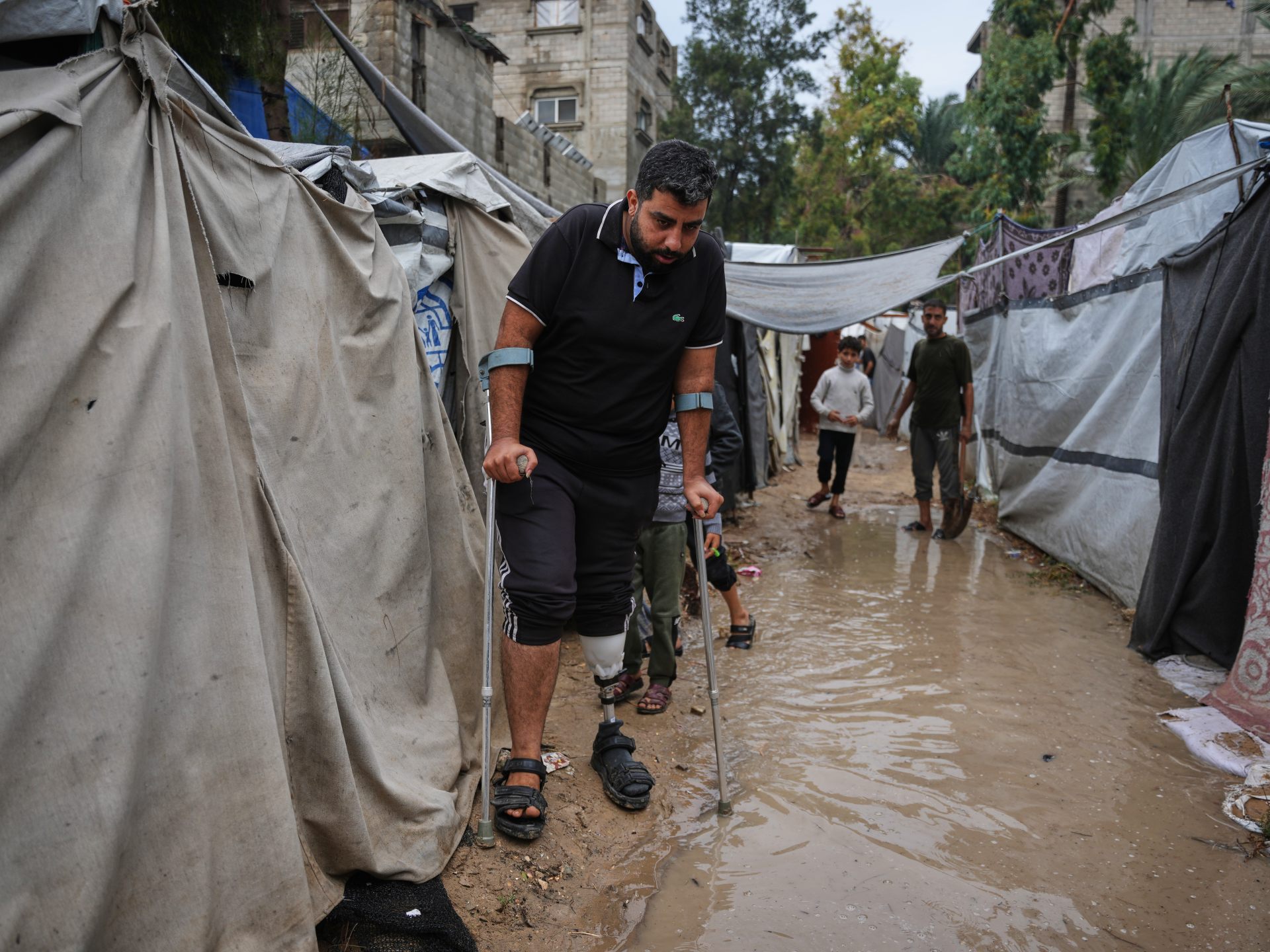
Heavy rain flooded tens of thousands of tents sheltering displaced Palestinians in Gaza on Saturday, forcing families into the open as the first winter storm of the season swept through the territory. Gaza’s Government Media Office said about 70,000 tents were flooded within 12 hours and estimated initial losses at about $3 million.
“Nearly everyone needs help,” Jonathan Veitch, UNICEF’s representative for Palestine, told the BBC from Deir al-Balah in central Gaza. Residents used pots and pans to clear water from their tents, while some said they had been left without shelter.
Gaza’s civil defence agency received about 1,500 distress calls in 10 hours after rain began early Saturday, Al Jazeera reported. Water rose 30 to 40 centimetres (12 to 16 inches) at several shelter sites. “A few shelter centres were completely flooded, and everyone inside them has now been forced out into the unknown,” civil defence spokesman Mahmoud Basal told Al Jazeera.
The Government Media Office said dozens of weakened walls and roofs had collapsed, causing injuries. The BBC reported that a government spokesperson described some injuries as critical. Al Jazeera reported that rescuers evacuated residents from a partially collapsed building in Nuseirat, while a fallen wall injured two people in northern Gaza.
Flooding also disrupted medical care. Mohammed Abu Salmiya, director of al-Shifa Medical Complex in Gaza City, told Al Jazeera that its emergency department was out of service for about four hours after it flooded. He warned that sewage mixing with rainwater in tents could increase gastrointestinal, respiratory and skin infections. Basal said premature babies, older people and the sick faced particular danger.
According to Al Jazeera, more than 900,000 displaced people are sheltering in the southern coastal area of al-Mawasi, while more than 125,000 families living along the coast risk having their tents swept away by the sea. Gaza’s emergency committee said more than one million displaced people face a harsh winter and called for about 200,000 tents and heating supplies.
The Government Media Office blamed Israel’s restrictions on crossings and shelter materials and urged international intervention. Mohammed Salha, director of the Palestinian NGO Network, told Al Jazeera that 180 to 200 trucks were entering Gaza daily, compared with 600 under a ceasefire humanitarian protocol. He said about 40 carried humanitarian aid and 50,000 tents were waiting on the Egyptian side of the border. “We must respond before the disaster happens,” he said.
Veitch told the BBC that Israeli restrictions on heavy machinery and supplies, including engine oil, were hampering the response. He said UN budget cuts had also reduced the availability of tents, tarpaulins and plastic sheeting. “We’re providing all the assistance that we can,” he said, “but we’re getting stopped on the street as we’re driving now because people are begging us for help.”
The BBC reported that about 90% of Gaza’s residents have been displaced during the war between Israel and Hamas, many more than once. Veitch warned that urgent action was needed to prevent deaths from hypothermia like those seen the previous winter.






Be First to Comment