Key takeaways:
- Israel’s military says all land crossings with the West Bank will close on Tuesday, the day of the general election.
- A Friday attack by two Palestinian gunmen killed two Israeli soldiers; both gunmen were also killed.
- Israel’s defence minister says about 2,000 Hebron residents have been displaced, while the city’s mayor puts the figure at 2,200.
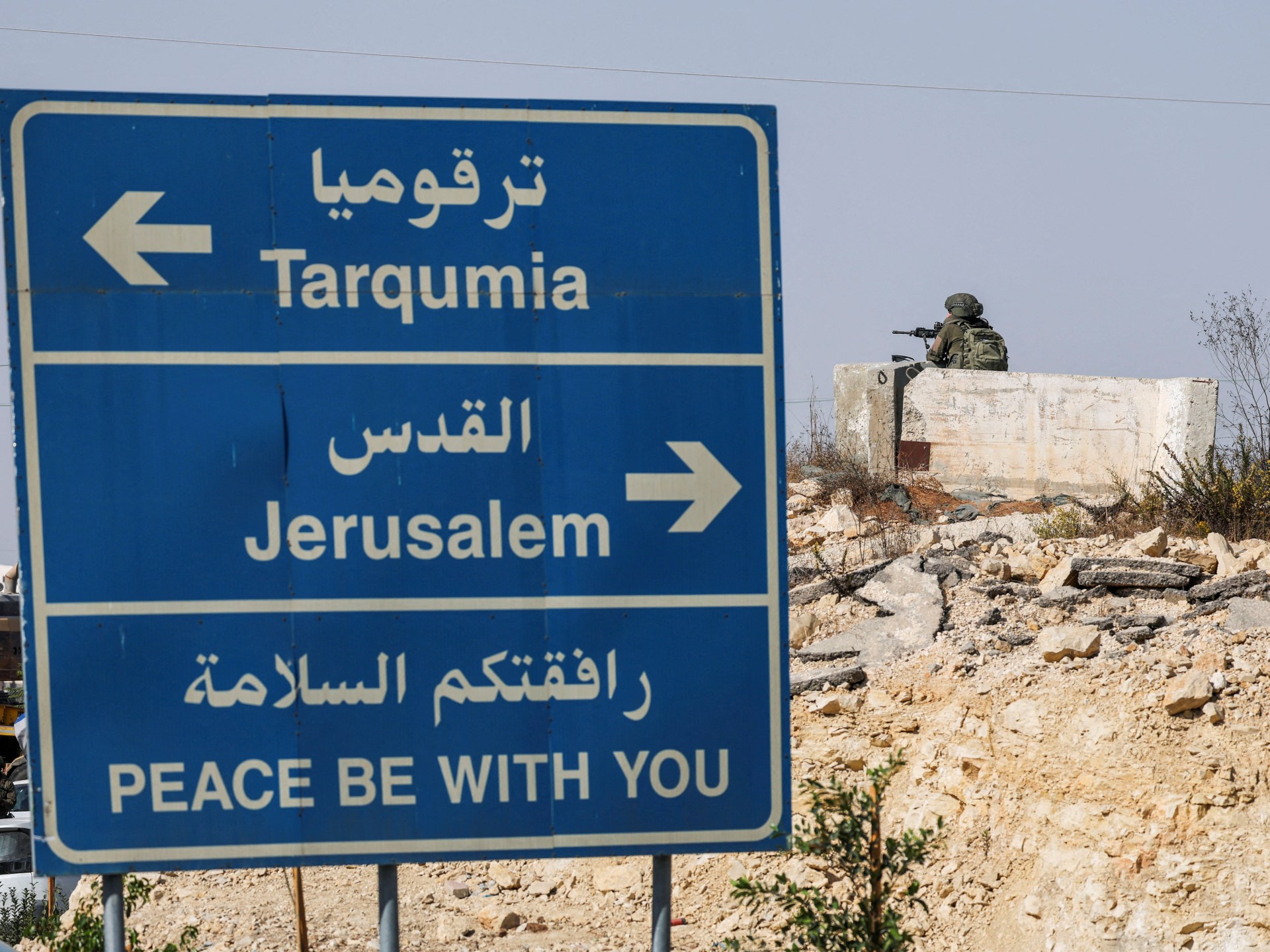
Israel will close all land crossings with the occupied West Bank on Tuesday, the day of its general election, as its military continues an operation in Hebron that has displaced about 2,000 Palestinians, according to Israel’s defence minister.
The Israel Defense Forces said it would bar Palestinian workers from entering most settlements from Sunday, with exceptions for industrial zones and a limited number of other areas. On Tuesday, it said, the restrictions will expand to a “ban on the entry and exit of Palestinian workers throughout Judea and Samaria and the Jordan Valley, including industrial zones, as well as the closure of all land crossings.”
The measures follow a Friday attack by two Palestinian gunmen that killed two Israeli soldiers. The gunmen were also killed. The BBC reported that the attack took place at a checkpoint and injured three other soldiers; Al Jazeera described the target as an Israeli army reserve base.
Prime Minister Benjamin Netanyahu announced a major operation in response. The BBC reported that Israeli forces have demolished homes and businesses in Hebron and that footage shared online appeared to show at least one entire street flattened. The military had cordoned off the city even before announcing the worker restrictions, severely limiting movement for its roughly 200,000 residents, the BBC reported.
Israeli Defence Minister Israel Katz said about 2,000 people had been displaced. Hebron’s mayor, Yousef al-Ja’bari, gave a higher figure, telling Al Jazeera on Saturday that 2,200 people had been forced from their homes. Al Jazeera reported that Israeli forces had carried out hundreds of raids since Friday’s attack and that the military expected the operation to last several days.
“They will not be allowed to return to their neighbourhood until we’ve finished dealing with all the Hamas issues in Hebron,” Katz told Israeli public broadcaster Kan, according to Al Jazeera.
Al-Ja’bari told Al Jazeera that Hebron and several nearby villages were under a “complete blockade.” The Palestinian Authority, which governs parts of the West Bank, called for international pressure to protect residents. It described the demolitions, displacement and closures as “collective punishment.” Residents said soldiers announced evacuation orders over loudspeakers late at night, leaving little time to prepare, Al Jazeera reported.
The BBC reported that Israeli forces commonly demolish the homes of Palestinians suspected of attacks against Israelis in the West Bank, a practice Israeli rights groups have also criticised as collective punishment. Before the Hamas-led attack on Israel on October 7, 2023, more than 100,000 Palestinian workers had permits to enter Israel; only a small fraction have had their permits restored since, the BBC reported.
The operation has unfolded in the final days before a closely contested election. In an interview with Israel’s i24 television channel released Saturday, Netanyahu threatened a “very big surprise” for the Palestinian Authority, according to the BBC. Al-Ja’bari told the BBC he believed the operation was “driven by the elections” and aimed at winning votes from the far right and settlers.
Thousands gathered in Tel Aviv on Saturday for an anti-government demonstration organised by the October Council, a group founded by families of victims and hostages of the October 7 attack. The group demanded accountability for the failure to prevent it. Leaders of four main opposition parties attended, the BBC reported.




Be First to Comment