Key takeaways:
- White House deputy counsel Joshua Hoyt formally invoked the presidential communications privilege in a Wednesday court filing.
- Beatty seeks records about Trump’s role in the proposed two-year closure and the addition of his name to the Kennedy Center building.
- Judge Christopher Cooper has not ruled on the privilege claim; the center closed temporarily Sept. 15 and has not reopened.
President Donald Trump has formally invoked executive privilege to withhold records sought by Rep. Joyce Beatty in her lawsuit over his management of the Kennedy Center, including plans to close the performing arts venue for renovations and add his name to its building.
White House deputy counsel Joshua Hoyt told a federal judge Wednesday that, “at the direction of the President,” he was invoking the presidential communications privilege. Hoyt said it covers information, documents and communications involving Trump, his advisers and Kennedy Center staff about the center’s management and operations.
Beatty, an Ohio Democrat and ex officio member of the center’s board, is seeking to learn more about Trump’s role in the proposed two-year closure and the decision to put his name on the building. The board elected Trump chairman last year after he named himself to the board. According to CBS News, he is the first sitting president to chair the institution, which Congress created in 1958.
The dispute now turns on whether communications about Trump’s work as board chairman qualify for a privilege intended to protect presidential deliberations. The Justice Department argues that his Kennedy Center involvement is official presidential business because the president appoints board members. Its lawyers accused Beatty of conducting a “fishing expedition” and said her requests raise separation-of-powers concerns.
Hoyt said withholding the communications would allow presidential advisers to gather information, consider alternatives and offer candid recommendations without being chilled. The privilege is not absolute and can be overcome by an adequate showing of need for the information.
Beatty’s lawyers reject the administration’s position. They argue that Trump is being sued as chairman of a nonprofit board, not as president, and that the Kennedy Center is not part of the executive branch. In a statement, attorneys Norm Eisen and Nathaniel Zelinsky accused Trump of trying to shield his management of the center “by improperly invoking executive privilege.”
Trump directed the center’s closure for renovations in a February social media post. Beatty contends that subsequent board votes to close it were effectively settled by that directive. Trump has since said the renovations will not proceed unless he receives “recognition” for his efforts. According to CBS News, he said the center could “end up being ripped down” without such recognition.
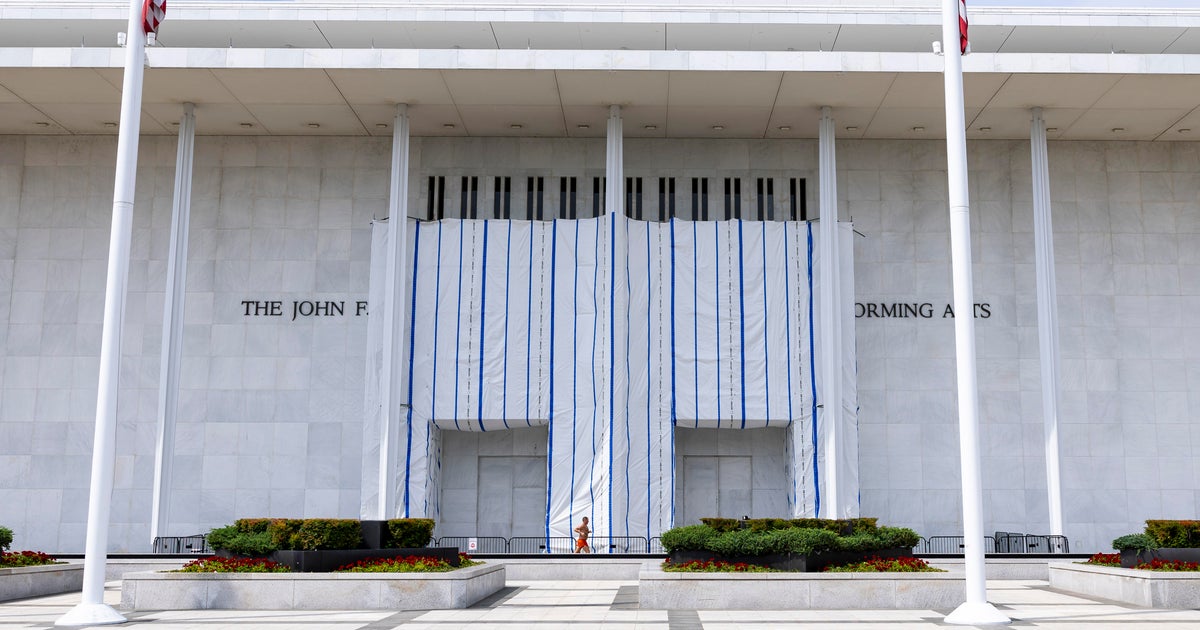
U.S. District Judge Christopher Cooper has not ruled on the privilege claim. According to CBS News, Cooper blocked the closure in May and ordered Trump’s name removed from the facade; crews removed the name in June, though a tarp has since concealed most of the building’s name. Cooper has also allowed Beatty to seek information about the closure and possible demolition.
NBC News reported that Cooper this month permitted Beatty’s lawyers to investigate a photograph of Trump aboard Air Force One viewing a poster that read “Kennedy Center DEMOLISH.” The venue closed temporarily Sept. 15 for what officials called emergency safety assessments and has not reopened.





Be First to Comment