Key takeaways:
- Trump canceled the planned livestream but did not announce a change to Hasan’s Dec. 3 execution date.
- Hasan killed 13 people and wounded 32 in the 2009 Fort Hood attack; a military court sentenced him to death in 2013.
- Archbishop Timothy Broglio opposed the livestream proposal, while CREC co-founder Douglas Wilson said he preferred a public execution.
President Donald Trump has canceled plans to livestream the execution of Nidal Hasan, the former Army major sentenced to death for killing 13 people at Fort Hood, Texas. The decision reverses a proposal by Defense Secretary Pete Hegseth that drew condemnation from some religious leaders and support from figures in Hegseth’s church.
“I think streaming the execution for all to see might have been a strong deterrent,” Trump wrote on social media, but “many very good and well meaning people would rather not watch him die.”
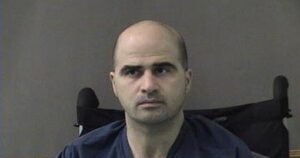
Hasan, a former Army psychiatrist, wounded 32 other people in the 2009 attack. A military court sentenced him to death in August 2013, and his execution by firing squad is set for Dec. 3.
Hegseth had said the public would be able to watch. “There’s serious consequences for these types of things,” he told the streaming network Real America’s Voice. He described the shooting as “a radical Islamist attack in uniform inside the ranks.” According to The Guardian, a Defense Department spokesperson confirmed the livestream plan before Trump canceled it.
The proposal divided religious leaders. Archbishop Timothy Broglio, who serves Catholics in the U.S. military, opposed it and instructed Catholics assigned to a firing squad to request an excusal, NPR reported. The Guardian reported that Pope Leo also condemned the plan.
Douglas Wilson, an Idaho pastor who co-founded the Communion of Reformed Evangelical Churches, or CREC, supported a public execution. Hegseth attends a CREC church in Washington, according to The Guardian. Wilson told the newspaper, “I support the execution of Hasan, and prefer public executions to private.” He said he favors a firing squad over lethal injection, while warning that the Pentagon would need to prevent “ghoulish behavior” — a challenge with a livestream. Wilson said he had not discussed the matter with Hegseth or his department.
Julie Ingersoll, a University of North Florida scholar who studies Christian reconstructionism, said support for capital punishment, including public executions, is widespread in Hegseth’s religious community. She also warned that proposing a public execution could change what people consider acceptable. “Just saying it out loud moves the boundary,” she told NPR.
Matthew Taylor, a visiting scholar at Georgetown University’s Center on Faith and Justice, called Hegseth’s proposal an outlier even within right-wing Christianity. He told NPR he worries Hegseth is trying to advance a Christian nationalist ideology within the military. NPR said the Pentagon did not respond to its request for comment by its publishing deadline.
Joshua Salaam, president of the Association of Muslim Chaplains, questioned whether Hasan’s Muslim identity played a role in the proposal. “Why is he being punished differently than everyone before him?” he asked NPR. Salaam also raised concerns about the effect of inviting the public to watch an execution: “It does something to all of us to have to watch something like that publicly.”





Be First to Comment