Key takeaways:
- Courts cleared the Orange Order to march along Garvaghy Road, but thousands of protesters blocked the route Sunday.
- The Parades Commission limited the procession to 35 people, barred bands and accompanying supporters, and set a 9:30 a.m. finish.
- Police reported no signs of violence or disorder while political leaders challenged the decision or appealed for calm.
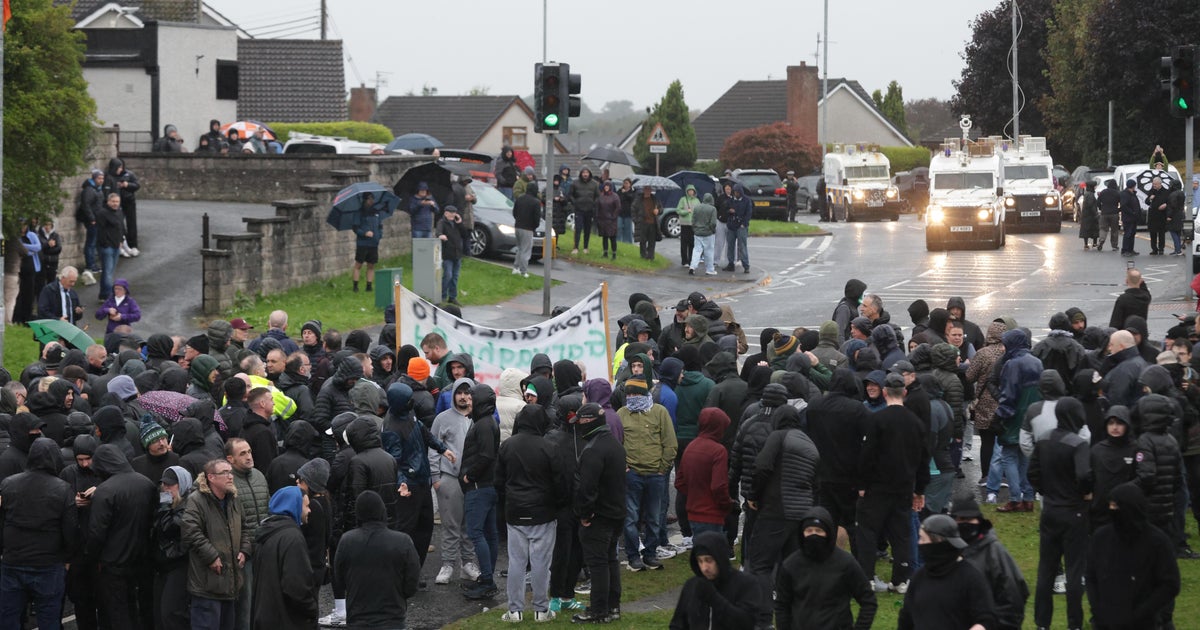
Thousands of protesters blocked Garvaghy Road in Portadown, Northern Ireland, on Sunday, delaying an Orange Order parade cleared to pass through the mainly Catholic area for the first time in nearly three decades. Police reported no signs of violence or disorder as leaders clashed over the court decision and appealed for calm.
The road was a flashpoint in disputes over Orange Order marches before the 1998 Good Friday Agreement largely ended Northern Ireland’s decades of conflict. The Orange Order is a Protestant organisation closely associated with unionism, the political tradition that favours remaining part of the United Kingdom. Many residents of the area favour Irish unification.
Northern Ireland’s Court of Appeal overturned a temporary injunction granted Saturday, and the High Court rejected a final attempt by residents to keep the procession off Garvaghy Road, Al Jazeera reported. CBS News reported that the hearing giving the march its final go-ahead ended at 2:15 a.m. Sunday.
The Parades Commission, the independent body that rules on disputed marches, approved the procession with a limit of 35 participants, according to Al Jazeera. It barred bands and accompanying supporters and required the march to finish by 9:30 a.m. local time.
The protesters included Northern Ireland First Minister Michelle O’Neill of Sinn Féin and the party’s leader, Mary Lou McDonald. Speaking to reporters shortly after 8 a.m., when the march was due to begin, McDonald called the decision “primitive treatment of any community in the year 2026.” She added: “This is a dignified and united community, and they are absolutely determined that they and we will not be drawn back into the past.” McDonald and O’Neill urged the British government and police to intervene to stop the parade, Al Jazeera reported.
O’Neill said allowing the march “brings into question how this whole peace process works.” At the protest, she said progress since the Good Friday Agreement had been brought into question by “the actions of the Orange Order and those within political unionism that want to drag us backwards.”
Gavin Robinson, leader of the Democratic Unionist Party, accused Sinn Féin leaders of inflaming the situation. “The rule of law cannot apply only when Sinn Féin likes the outcome,” he said. Deputy First Minister Emma Little-Pengelly, also of the DUP, said threats of violence were unacceptable: “No one in Northern Ireland wants violence or disorder.”
British Prime Minister Andy Burnham appealed for “calm on all sides,” saying Northern Ireland had made “big gains” and “we don’t want to see things go backwards.” Police chief Jon Boutcher urged “those with influence to encourage people to comply with the law.” Officers were working with all parties to preserve peace, he said. The Irish government said it was “very concerned” and that its priority was to avoid “a return to the divisions of the past.”
Attempts by the Orange Order to return from Drumcree Parish Church along Garvaghy Road triggered protests, violence and major security operations in the 1990s. About 3,600 people were killed and 50,000 wounded during the broader conflict, according to CBS News.





Be First to Comment