Key takeaways:
- Pezeshkian told the UN Iran was open to negotiations but would not accept U.S. threats.
- U.S. and Iranian officials held indirect talks through Qatari mediators on Tuesday, their first since June.
- Pezeshkian said a deal must end the U.S. blockade affecting Iranian shipping and preserve Iran’s civilian nuclear program.
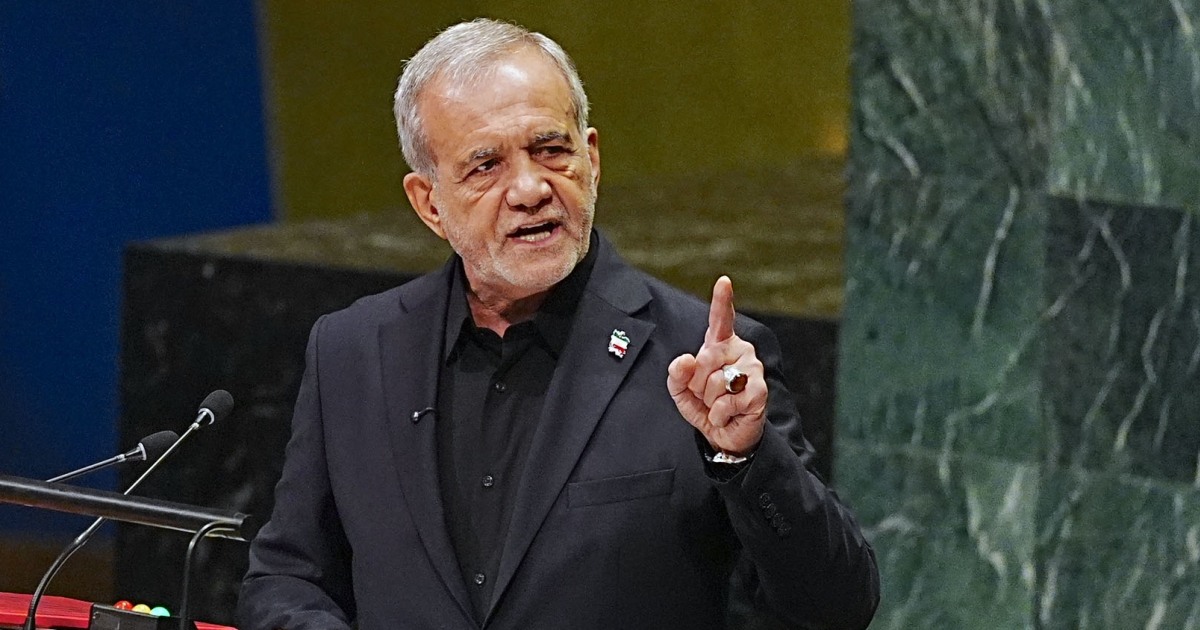
Iranian President Masoud Pezeshkian told the United Nations on Wednesday that his country would never yield to U.S. threats, but said it remained open to negotiations to end the war with the United States and Israel.
“We will never bow our head or bend the knee,” Pezeshkian told the General Assembly, responding to President Donald Trump’s warning a day earlier that he could “annihilate the Islamic Republic” if the two sides failed to reach a deal. Pezeshkian called the threat “a sign of a bullying mentality,” but added: “We are ready for dialogue and diplomacy and negotiations without accepting the language of force.”
His speech came a day after U.S. and Iranian officials held indirect talks in New York through Qatari mediators, their first such discussions since June. Trump called the meeting “very good.” Secretary of State Marco Rubio was more cautious: “I don’t want to mischaracterize this as a major breakthrough, but at the same time I think it was significant that there was at least a conversation.”
Pezeshkian said any agreement must end the U.S. blockade affecting Iranian shipping. “It cannot be the case that everyone benefits from the Strait of Hormuz while we are denied access to shipping through this waterway,” he said. Iran effectively closed the strait by attacking commercial vessels after the U.S. and Israel launched their air campaign in late February. The United States responded with a blockade of Iranian ports and ships in April, the BBC reported.
A preliminary U.S.-Iran agreement in June aimed to end the war and reopen the strait, but fighting resumed. The BBC reported that Iran wants to retain some control over the waterway and collect fees from vessels using it, a position the United States has rejected. Iran’s foreign ministry spokesman Esmail Baqai said Tuesday’s talks brought “not anything new” and that Iran continued to demand an end to the blockade and the release of frozen assets, according to the BBC.
Pezeshkian also rejected limits on what Iran describes as a civilian nuclear program. “We say it clearly: no nuclear weapons and no limitations on peaceful nuclear technology,” he said. Trump has said preventing Iran from obtaining a nuclear weapon is a goal of the U.S. attacks; Iranian officials say they are not pursuing one.
During the speech, Pezeshkian displayed a photograph of the late Supreme Leader Ayatollah Ali Khamenei, killed in a strike on his compound at the start of the war. He also held up images of children killed in attacks in southern Iran. NBC News reported that a U.S. munition likely struck an elementary school in Minab. Iranian state media put the death toll there at 168, mostly children, according to NBC News. The BBC reported that Iranian authorities say more than 175 civilians, about two-thirds of them children, died in strikes on the Minab school and a sports complex in Lamerd. The United States says it is investigating Minab and denies striking Lamerd.
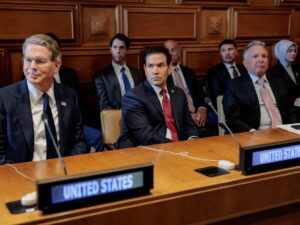
The U.S. delegation walked out during Pezeshkian’s address. Afterward, Rubio accused Iran of violating its neighbors’ sovereignty and killing its own people.


Be First to Comment