Key takeaways:
- Trump said U.S. envoys Steve Witkoff and Jared Kushner took part in a roughly three-hour meeting with Iranian officials and described it as “very good.”
- Iran said the discussions were conducted through Qatari mediators, while Witkoff said the sides completed talks he hoped would prove “constructive and promising.”
- Trump threatened to “annihilate” Iran in his U.N. speech, while Iran’s military warned of attacks that would be “more crushing and less predictable” if the conflict escalates.
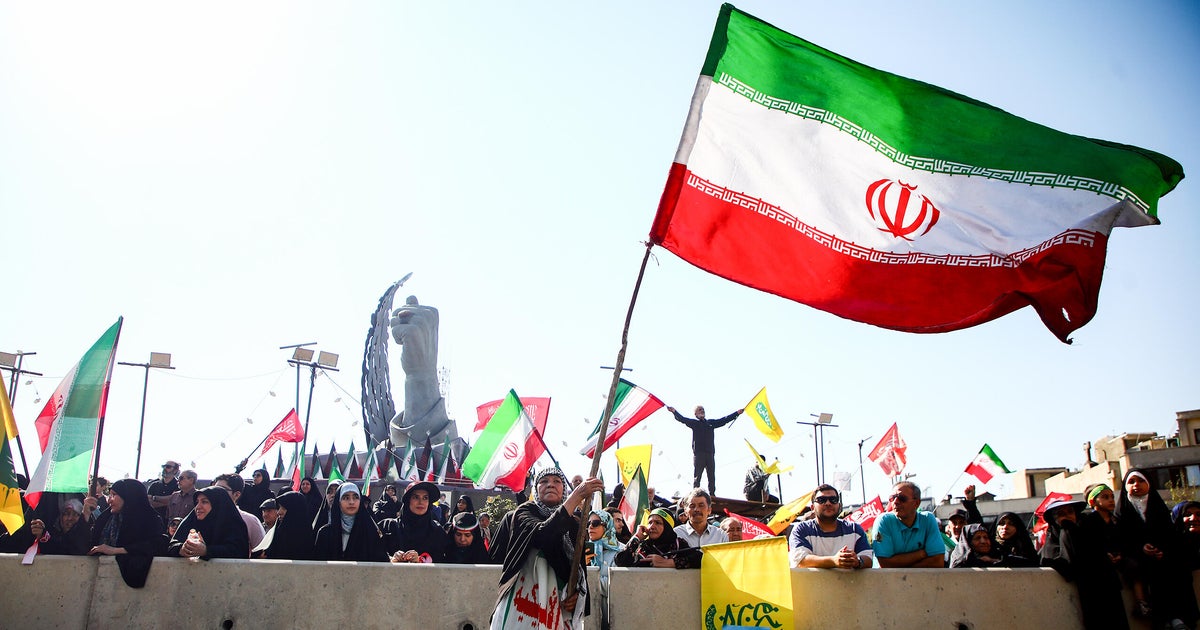
U.S. and Iranian officials held hours of talks on the sidelines of the United Nations General Assembly on Tuesday, reviving diplomacy even as President Donald Trump threatened from the U.N. podium to “annihilate” Iran if it does not agree to end the nearly seven-month war.
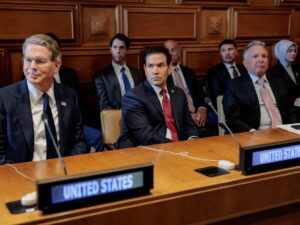
Trump told reporters the meeting lasted about three hours and was “very good.” He said special envoy Steve Witkoff and Jared Kushner were part of the U.S. delegation and that another meeting was expected “in the very near future.”
“They want to talk to us. They have been talking to us. Even today, they’ve been talking to us, and the relationship is developing, let’s say,” Trump said during a bilateral meeting with U.K. Prime Minister Andy Burnham. He added, “I think that a settlement is going to be reached.”
Witkoff later wrote on X that American and Iranian negotiators “engaged in lengthy talks” through mediators over the course of the day and had “successfully completed a round of discussions that we hope will prove constructive and promising.” Iran’s Foreign Ministry spokesman Esmaeil Baqaei confirmed to state news agency IRNA that the talks took place through Qatari mediators, saying, “The Iranian delegation conveyed its views and its conditions very explicitly and clearly to the American side through the mediators.”
Al Jazeera reported that Iranian Foreign Minister Abbas Araghchi took part, with mediators shuttling between the U.S. and Iranian teams, and that the talks were believed to be the first in-person discussions between officials from the two countries since U.S. Vice President JD Vance met senior Iranian officials in Switzerland in June.
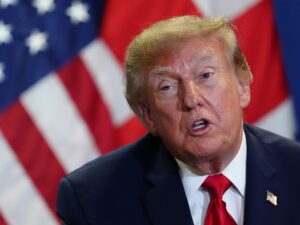
The diplomacy followed a stark warning from Trump in his address to the General Assembly. “I have a big decision to make – will a deal be made with Iran that lets them rebuild and create a far greater country than it ever was before, maybe one of the greatest in the Middle East or even the world?” he said.
“Or do I annihilate the Islamic Republic and do it quickly, never giving them a chance to kill and destroy people and countries again?” Trump continued. “Do I drive them into hell with no chance of survival and no hope of future greatness or generations?”
Trump said he believed a deal could come after November’s midterm elections. “I believe we’ll make a deal right after the election because it doesn’t make sense for them not to,” he said, adding that Iranian leaders were waiting to see how he performs politically.
Iranian officials rejected Trump’s comments. Baqaei called the remarks “a sign of desperation” and said threatening a country with military attack exposed “the nature of the current U.S. ruling establishment.” Iran’s Armed Forces General Staff, in a statement carried by Mehr news agency, accused Trump of using the U.N. platform to justify “aggression” and warned that Iran was prepared to deliver attacks against the U.S. and Israel that would be “more crushing and less predictable” than earlier in the war.
Iranian President Masoud Pezeshkian, who is in New York for the annual U.N. gathering and is due to address the summit Wednesday, said Tehran would “firmly defend” its positions and use the visit to “convey Iran’s plight,” according to Iranian state media. Before leaving Tehran, he accused the U.S. of doing “everything they can to block every possible route” to force Iran and its people to surrender after failing to achieve that militarily.
Trump also met Gulf leaders on the sidelines of the U.N. gathering, including representatives from Jordan, Saudi Arabia, Qatar and Turkey. He said there was “a lot of momentum” for Iran to make a deal and said his focus was “ending the nuclear threat from Iran.”

Be First to Comment