Key takeaways:
- Brent crude rose above $100 a barrel Wednesday for the first time in months before dipping back just below that level.
- The U.S. military said it destroyed five Iranian tankers, while Iran and Iran-backed Houthis launched attacks on U.S. and Saudi targets.
- U.S. gasoline prices rose to $4.22 on Wednesday, the highest level since early June, according to NBC News.
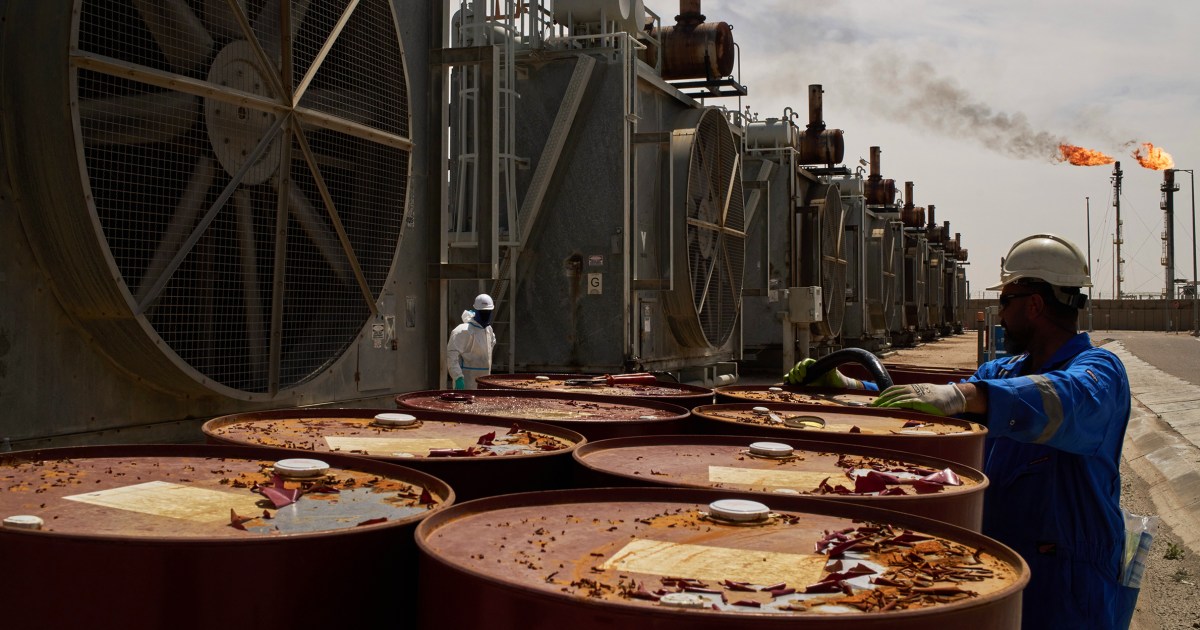
Oil prices climbed above $100 a barrel Wednesday for the first time in months, as renewed fighting between the United States and Iran deepened concerns about global energy supplies and pushed gasoline prices higher.
Brent crude, the international benchmark, rose past the symbolic threshold shortly after 3 a.m. ET before slipping back to just below $100. The Guardian reported Brent was up 2.1% as it crossed the mark, its first time above $100 since July. The U.S. benchmark, West Texas Intermediate crude, was also sharply higher, trading around $95 a barrel.
The price move followed a new round of attacks in the Gulf and across the region. The U.S. military said it destroyed five Iranian tankers that Central Command described as part of a “multibillion-dollar shadow network” funding Iran’s Revolutionary Guard and regional proxies. The Guardian reported the U.S. action came after Tehran attempted to strike a U.S. Navy warship with ballistic missiles.
Iran responded with attacks on U.S. ships and a base in Jordan, NBC News reported, in the latest flare-up of a conflict that has disrupted trade routes and energy flows for months. Iran-backed Houthi rebels in Yemen also struck Saudi Arabia, attacking four cities, wounding more than 70 people and setting oil installations ablaze, according to The Guardian. NBC News reported the Houthis also attacked Saudi energy facilities this week, threatening a significant expansion of their conflict with the key U.S. ally.
Oil exports from the Middle East have dwindled since the U.S. and Israel launched their war against Iran in February. Before the conflict, about one-fifth of the world’s oil supply flowed through the Strait of Hormuz, the key waterway that Tehran has throttled in response. The U.S. military has restored some shipping traffic through Hormuz, but other routes have faced disruption, including the Red Sea, where Houthi rebels have attacked tankers.
Brent crude is now about 40% higher than before the war, NBC News reported, though still below the highs reached earlier in the conflict. NBC News put the early-war peak at $120 a barrel, while The Guardian reported that oil peaked at $126 in April after initially surging past $100 in the first weeks following U.S.-Israeli attacks on Iran. The Guardian said analysts had warned at the time that prices could climb as high as $150 if flows through Hormuz stopped.
Prices later eased amid hopes for a ceasefire, but began rising again after a memorandum of understanding between the U.S. and Iran fell apart and hostilities resumed, The Guardian reported. The price of oil has jumped by a quarter since early August, according to the newspaper.
The increase is feeding through to consumers. U.S. gasoline prices rose to $4.22 on Wednesday, the highest since early June, NBC News reported. The rise comes ahead of the midterm elections, making energy costs a concern for both the White House and Republicans.
President Donald Trump wrote on social media Monday that “oil prices will drop precipitously, like everything else is dropping (but more!), when we WIN the war with Iran.” He added that prices could fall as low as “two dollars a gallon.”
But the conflict remains unresolved. Trump has shifted toward squeezing Iran’s economy through a U.S. maritime blockade, NBC News reported, while recent days have brought more violent exchanges.
Energy costs are also raising broader economic concerns. The Guardian reported that UK natural gas prices hit their highest level in three and a half years this month, while rising energy prices have stoked fears about inflation and the prospect of higher interest rates. In the U.S., economists expect at least one Federal Reserve rate increase by the end of the year, according to The Guardian.









Be First to Comment