Key takeaways:
- NASA images show the SpaceX impact crater is about 60 feet wide and likely less than 10 feet deep.
- The Falcon 9 upper stage crashed into the moon on Aug. 5 at an estimated 5,400 mph after launching two private lunar landers in January 2025.
- SpaceX said solar activity and gravity led the rocket stage toward the moon and that it worked with NASA on the disposal solution.
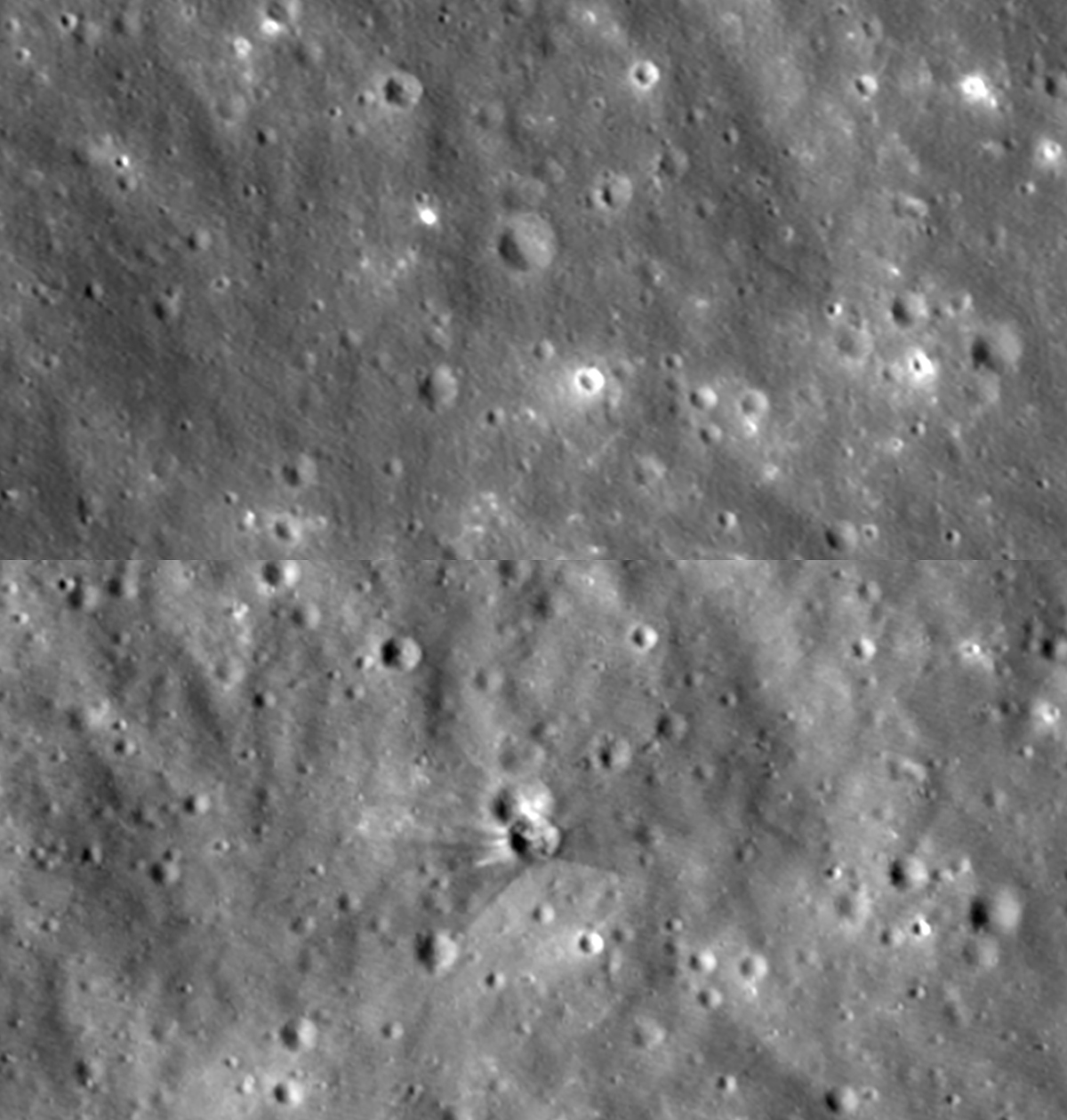
NASA has released the clearest images yet of a fresh crater blasted into the moon after a SpaceX Falcon 9 rocket booster crashed into the lunar surface at high speed on Aug. 5.
The before-and-after views, captured by NASA’s Lunar Reconnaissance Orbiter and released Tuesday, show a bright new divot in the moon’s heavily scarred terrain. Scientists say the crater is about 60 feet wide and likely less than 10 feet deep, based on the length of its shadow.
The defunct upper stage hit the moon at an estimated 5,400 mph after drifting through space for more than a year. CBS News reported the booster weighed 8,800 pounds and was about 45 feet long and 12 feet wide, crashing with a force of nearly 3 tons of TNT. NBC News described it as a roughly 10,800-pound booster.
The Falcon 9 upper stage had launched two private lunar landers in January 2025 carrying experiments and a tiny rover as part of NASA’s effort to expand commercial lunar exploration. After that mission, the rocket stage remained adrift until solar activity and gravity eventually pushed it toward the moon’s Earth-facing side.
There were no live images of the impact. Researchers tracked the rocket’s path and identified the likely crash site near the western edge of the moon’s sunlit side. A telescope in Chile later spotted a debris plume from the collision, NBC News reported.
NASA’s Lunar Reconnaissance Orbiter photographed the crater on Aug. 11 and 12 from about 60 miles above the surface while traveling at roughly 1 mile per second. The spacecraft orbits the moon from pole to pole every two hours as the moon rotates beneath it, making targeting difficult. NASA said it took six days before the impact site rotated into view, and flight controllers had to tilt the spacecraft so its cameras could point at the crater.
The images show dark and bright streaks radiating from the impact site like wings. NASA said the darker rays are surface dust and rocks kicked up from a depth of about 1.5 feet, material altered over time by solar wind, cosmic rays and micrometeorite strikes. The brighter streaks near the rim came from fresher rocks and soil excavated from deeper underground. NBC News reported that NASA placed the crater’s center at an elevation of roughly 1,700 feet.
South Korea’s Danuri spacecraft, also known as the Korea Pathfinder Lunar Orbiter, was first to photograph the site after the crash, according to CBS News. The spacecraft, launched in 2022 as South Korea’s first moon mission, later captured images of the crater and surrounding ejected material, NBC News reported.
The moon is regularly struck by natural objects such as meteoroids, but uncontrolled artificial impacts are rare. NBC News reported that the SpaceX crash was only the second known case of a rocket unintentionally hitting the moon. In 2022, an object believed to be the upper stage of a Chinese rocket struck the far side and made a snowman-shaped double crater, though China denied its spacecraft was involved.
SpaceX said in an Aug. 5 statement that it works to handle hardware responsibly after missions. “We actively work to be as responsible as possible with hardware left in space to ensure space safety, including for more complex missions,” the company said. “In this case, over time, solar activity and gravity led the second stage toward the Moon. Impacts like this are rare, but they can happen with objects in these types of orbits, and we worked with NASA on the optimal disposal solution.”









Be First to Comment