Key takeaways:
- Rep. Byron Donalds, endorsed by President Donald Trump and backed by $90 million raised, is the Republican front-runner for Florida governor.
- Former Florida Attorney General Ashley Moody is seeking to keep the U.S. Senate seat she was appointed to after Marco Rubio became secretary of state.
- Florida’s new congressional map has reshaped several House primaries, including races involving Debbie Wasserman Schultz and Jared Moskowitz.
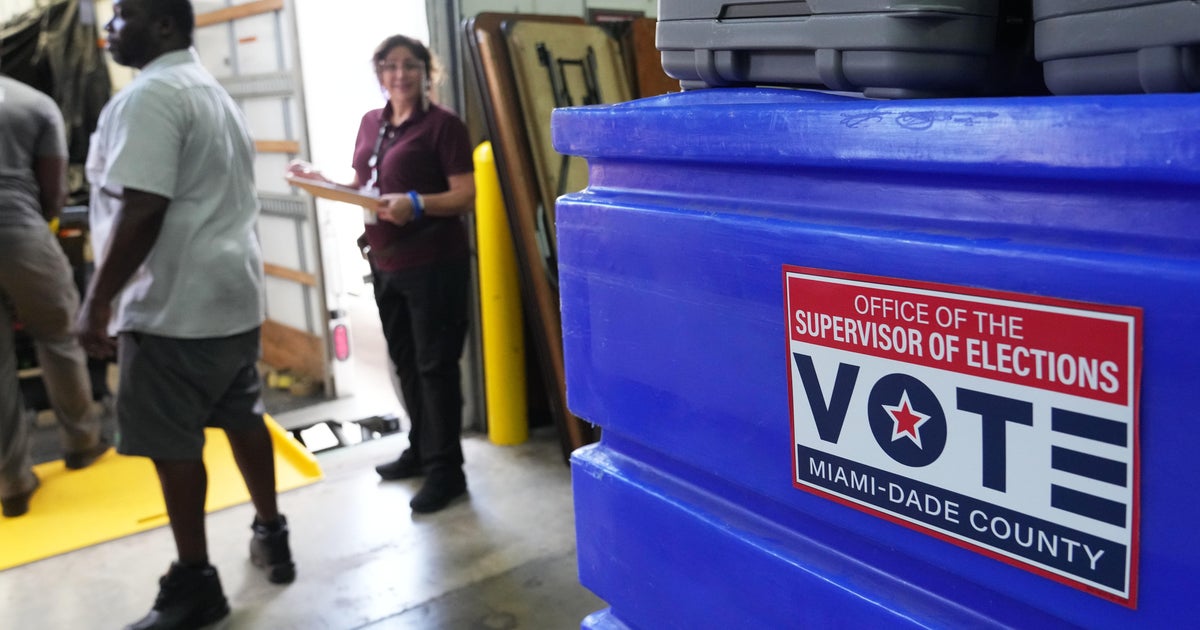
Florida voters are choosing nominees for governor, U.S. Senate and newly redrawn congressional districts Tuesday in the first election under a map designed to strengthen Republican prospects across the state.
The primaries come as Gov. Ron DeSantis, a Republican barred by term limits from seeking another term, prepares to leave office after presiding over Florida’s sharp shift to the right. DeSantis won the governorship in 2018 by less than a point, then won reelection in 2022 by about 20 points, a margin that underscored the state’s move from swing-state battleground to Republican stronghold.
In the Republican race to replace him, Rep. Byron Donalds is the clear front-runner. Donalds, who represents the Naples and Fort Myers area, has the endorsement of President Donald Trump, has raised $90 million and has held a commanding lead in polls. He is a prominent House Freedom Caucus member and was among the Republicans who challenged Kevin McCarthy’s bid for speaker in 2023, helping force 15 rounds of voting.
Donalds faces a crowded Republican field that includes Lt. Gov. Jay Collins, former state House Speaker Paul Renner and businessman James Fishback. DeSantis has not endorsed a candidate, though Collins has described himself as “DeSantis-appointed.” Collins unsuccessfully tried to remove Fishback from the ballot, alleging he failed to meet Florida’s seven-year residency requirement; a judge threw out the case.
Fishback, a 31-year-old Florida native, has drawn support from figures including Nick Fuentes and Tucker Carlson and has been accused of injecting racist rhetoric into the race. CBS News reported that he has called Donalds a “slave to donors,” a “token Black” in Congress and accused him of wanting to turn Florida into a “Section 8 ghetto.” Donalds has generally not responded to Fishback’s comments. If Donalds wins in November, he would become Florida’s first Black governor.
On the Democratic side, former Rep. David Jolly is favored in a six-candidate primary. Jolly, who represented the St. Petersburg area from 2014 to 2016, is a former Republican who later became an independent and is now running as a Democrat. Florida Democratic Party Chair Nikki Fried has acknowledged that “the bottom fell out” for Democrats in recent years, but party leaders hope to reverse the trend.
Voters also are selecting nominees for a special U.S. Senate election to fill the final two years of Marco Rubio’s term. Rubio left the Senate after being named Trump’s secretary of state, and DeSantis appointed former Florida Attorney General Ashley Moody to the seat. Moody, twice elected attorney general, faces three Republican challengers and is expected to win her primary.
Democrats Alexander Vindman and Angie Nixon are competing for their party’s Senate nomination. Vindman, a retired lieutenant colonel and former National Security Council aide, became a key witness in Trump’s first impeachment after testifying that he heard Trump pressure Ukraine’s president to investigate Joe Biden. Nixon, a state representative from Jacksonville and labor organizer, led Democratic protests against DeSantis’ congressional map and has support from unions and Rep. Maxwell Frost.
A University of North Florida poll released late last month found Moody at 50% in matchups against either Democrat, with Nixon at 42% and Vindman at 40%. Between 8% and 10% of voters were undecided, would not vote or preferred another candidate.
The new congressional map also is reshaping House races. Rep. Debbie Wasserman Schultz, whose district was affected, is running in the neighboring 20th District, a majority-Black seat long represented by Black lawmakers. She faces criticism from Black community leaders and several Black Democratic opponents, including Elijah Manley and former Broward County Mayor Dale Holness. Former Rep. Sheila Cherfilus-McCormick, who resigned earlier this year before the House Ethics Committee was set to consider sanctions over misconduct allegations, is also running again.
Rep. Jared Moskowitz faces a Democratic primary challenge from Oliver Larkin, a democratic socialist union organizer, in a district redrawn to favor Republicans. The contest has highlighted divisions over Israel, with Larkin criticizing Moskowitz’s pro-Israel stance and ties to AIPAC.
In another Republican primary, Rep. Randy Fine faces challengers including internet personality Daniel Bilzerian, who drew condemnation after releasing an AI-generated video attacking Fine with antisemitic language. Fifteen Jewish members of Congress said in a statement, “We don’t agree with Randy Fine on much, if anything, and have condemned his racist, Islamophobic statements. But the grotesque, antisemitic campaign video posted by Republican Daniel Bilzerian has no place in America.”
Florida is not the only state voting Tuesday. In Alaska, Republican Sen. Dan Sullivan faces a nonpartisan top-four primary that includes former Rep. Mary Peltola, who won a surprise special election to the state’s at-large House seat in 2022. Democrats would need to flip four Senate seats, while holding their current seats, to take control of the chamber.



Be First to Comment