Key takeaways:
- President Donald Trump ordered the Pentagon to substantially reduce the annual joint military exercises with South Korea, citing the cost, his relationship with North Korean leader Kim Jong Un, and South Korea’s refusal to join U.S. actions involving Iran.
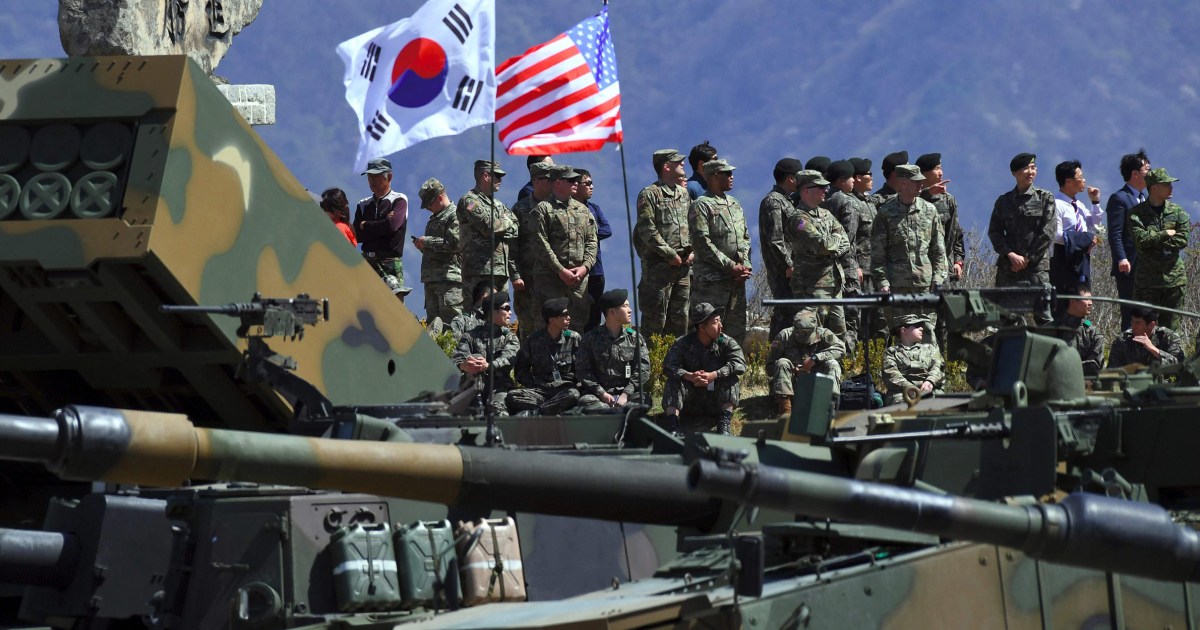
- The Ulchi Freedom Shield exercises, scheduled to begin Monday and involving about 18,000 South Korean soldiers, were intended to strengthen readiness against North Korean threats but will be scaled back due to Trump’s directive.
- North Korea condemned the planned exercises as a rehearsal for aggressive war and threatened retaliation, following recent ballistic missile tests that violated United Nations bans.
President Donald Trump said Sunday he has ordered the Pentagon to “substantially reduce” annual joint military exercises with South Korea, citing the cost of the drills, his relationship with North Korean leader Kim Jong Un and Seoul’s refusal to join U.S. actions involving Iran.
The Ulchi Freedom Shield exercises were scheduled to begin Monday, leaving little time for military planners to adjust. “Based on the fact that it is too late to cancel, I have instructed Secretary of War, Pete Hegseth, to substantially reduce the Joint Military Exercises!” Trump wrote on Truth Social.
Trump said the drills send “a signal that is totally inappropriate and hostile” to North Korea, which he described as “unthreatening and respectful” during his presidency. He also pointed to what he called his “very good relationship” with Kim.
The president linked the decision, at least in part, to South Korea’s response to a U.S. request involving Iran. “While somewhat unrelated (?), I recently asked the President of South Korea if they would like to join us in the Denuclearization of the Islamic Republic of Iran, and they said, ‘No thanks!’” Trump wrote.
Neither Seoul nor Pyongyang immediately commented, the BBC reported. South Korea’s embassy in Washington and United States Forces Korea did not immediately respond to requests for comment, according to NBC News.
The 11-day exercise was expected to involve about 18,000 South Korean soldiers and was intended to strengthen readiness against North Korean threats. U.S. and South Korean military leaders said last week the drills would be similar in scale to previous years.
The U.S. military has said the training “reinforces the role of the alliance as the linchpin for regional peace and security” and reaffirms “the ironclad commitment between the United States and the Republic of Korea to defend their homelands,” CBS News reported. Planned activities included joint operations in complex scenarios, a live-fire exercise to test joint precision targeting and maneuver, a wet gap crossing and distribution of prepositioned military equipment.
During a news conference announcing the exercises, U.S. military spokesperson Ryan Donald said the training also accounted for North Korea’s deployment of troops to aid Russia’s war against Ukraine. Referring to North Korean soldiers returning from the battlefield, he said, “our training accounts for that threat,” according to the BBC. About 28,500 U.S. military personnel are stationed in South Korea.
North Korea condemned the exercises Friday as “a rehearsal for an aggressive war” and threatened unspecified retaliation. The warning came after South Korea, the United States and Japan detected a second North Korean missile test in days. NBC News reported that North Korea launched a ballistic missile toward the sea days before Trump’s announcement, possibly in protest of the upcoming drills. The BBC reported that the tests are banned by the United Nations.
Trump has previously moved to curtail U.S.-South Korea military exercises. After meeting Kim in Singapore in 2018, he said, “We will be stopping the war games, which will save us a tremendous amount of money, unless and until we






Be First to Comment