Key takeaways:
- The Mecca Joint Defense Agreement states that an armed attack on Saudi Arabia, Turkey or Pakistan will be regarded as an attack on all three.
- Officials from Turkey and Saudi Arabia described the pact as defensive, not aimed at any specific actor and not a replacement for existing agreements.
- The deal links Saudi Arabia’s financial power, Turkey’s NATO military capacity and defense industry, and Pakistan’s nuclear-armed military as regional security tensions rise.
Saudi Arabia, Turkey and Pakistan have signed a joint defense agreement that treats an armed attack on any one of the three countries as an attack on them all, tightening security ties as conflict and maritime disruption spread across the region.
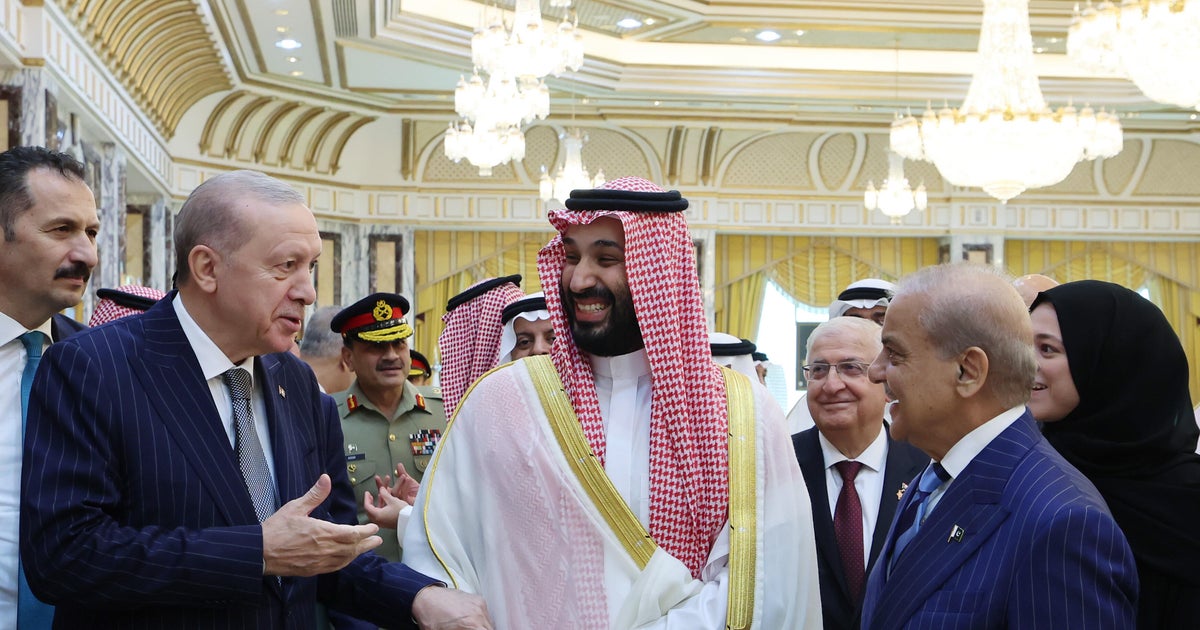
The Mecca Joint Defense Agreement was announced Friday after a meeting in the Saudi holy city between Saudi Crown Prince Mohammed bin Salman, Turkish President Recep Tayyip Erdogan and Pakistani Prime Minister Shehbaz Sharif. Pakistan’s Foreign Ministry and Turkish officials said in identical statements that the pact is intended “to strengthen collective deterrence against any act of aggression.”
“It further provides for the enhancement of all aspects of defense cooperation among the three States,” the statements said.
The agreement brings together three Sunni Muslim-majority powers with different military and economic strengths: oil-rich Saudi Arabia, nuclear-armed Pakistan and Turkey, which has NATO’s second-largest army and a growing defense industry. The pact follows an earlier mutual defense agreement between Saudi Arabia and Pakistan, announced in September, that also defined an attack on either country as an attack on both, CBS News reported.
The three countries said the deal reflects their “shared commitment to further strengthening their collective security and to promoting peace, security, and stability in the region and beyond, in pursuit of a secure and prosperous future,” according to a joint statement carried by Pakistan’s Ministry of Foreign Affairs and Saudi state media.
The pact does not lay out specific obligations for each country. A Turkish official quoted by Reuters and cited by the BBC described it as “purely defensive in nature.” A Turkish government official told The Associated Press the agreement is “not against any specific actor” and said other regional countries could join. The official said it would not replace existing bilateral or multilateral agreements.
A Saudi official also rejected the idea that the pact creates a military axis or sectarian bloc. “It is focused on building sustainable capabilities,” Deputy Minister for Public Diplomacy Rayed Krimly wrote Friday on X, according to CBS News. He said the agreement was not tied to nuclear ambitions or an arms race.
The deal comes as Saudi Arabia faces repeated strikes and threats linked to the war involving Iran, the United States and Israel. The BBC reported that after the US and Israel attacked Iran on Feb. 28, Iran and its allies launched attacks on targets in Saudi Arabia and other Gulf states and blockaded shipments. Maritime traffic has been disrupted through the Strait of Hormuz, a crucial oil shipping channel, and the Red Sea.
Al Jazeera reported that Erdogan traveled to Saudi Arabia on Friday to meet the crown prince, while Sharif had arrived a day earlier with Pakistan’s army chief, Asim Munir, and performed the Umrah pilgrimage in Mecca. The agreement followed nearly a year of negotiations, Al Jazeera reported.
The three countries already have longstanding military links. Pakistan has provided training and technical assistance to Saudi forces for decades, while Turkey and Pakistan have exchanged warships and training aircraft. In 2023, Riyadh agreed to buy Turkish drones in what Ankara called its largest defense export contract.
Turkish media reports said the agreement could allow joint military exercises and training, technology transfers and intelligence sharing, CBS News reported.
Analysts described the agreement as a formal step in a broader security partnership. Abdullah Khan, a defense analyst in Islamabad, told CBS News it was a natural evolution of decades of strategic ties among the three countries. Abdulaziz Alghashian, a senior non-resident fellow at the Gulf International Forum, told Al Jazeera the alliance sought to merge “deterrence and diplomacy.” Retired Pakistani Maj. Gen. Zahid Mahmood said its aim was “collective security.”




Be First to Comment