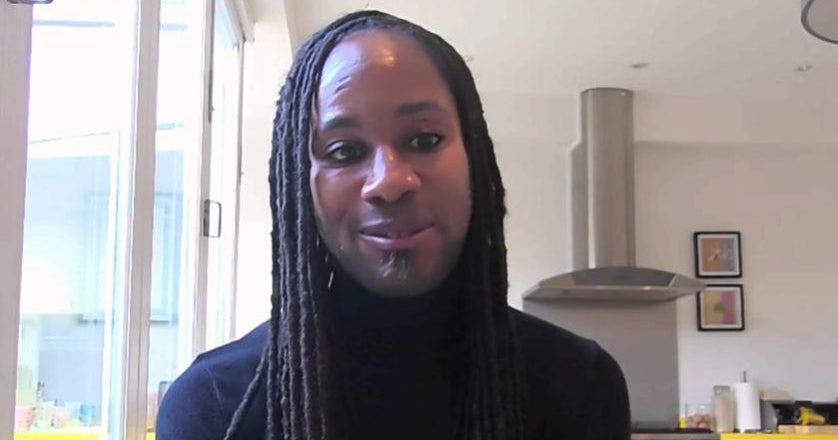
Key takeaways:
- Jason Arday resigned from Cambridge after allegations that he copied other academics’ work without proper attribution and after questions were raised about parts of his biography.
- Arday said his resignation should not be viewed as acceptance of the allegations and has previously denied deliberate wrongdoing.
- Cambridge has launched an investigation after “new information” emerged about Arday’s academic qualifications and honorary appointments, the BBC reported.
Jason Arday, the University of Cambridge sociologist whose appointment made him the institution’s youngest Black professor, has resigned amid allegations that he plagiarized academic work and questions about parts of his public biography.
Arday joined Cambridge in 2023 at age 37, after holding posts at Durham University and the University of Glasgow. His appointment drew wide attention in Britain, in part because of his account of an unusual path into academia. He has said he is autistic and dyslexic, did not speak until he was 11 and could not read or write until he was 18.
“The relentless accusations, speculation and public commentary have taken a profound toll on me and on those I love,” Arday said in a statement Wednesday. He did not address the specific allegations but said his resignation should not “be mistaken for an acceptance of the narratives that have surrounded me.”
“It is simply the decision of someone who has reached the limits of what any person should reasonably be expected to endure,” he said.
Arday has previously denied deliberate wrongdoing, describing mistakes in his academic work as unintentional. He has argued that much of the criticism against him is part of an ideologically and racially motivated campaign.
Cambridge said it has launched an investigation after “new information” emerged about Arday’s academic qualifications and honorary appointments, the BBC reported. The university defines plagiarism as “passing off someone else’s work as if it were your own without appropriate acknowledgement.”
The allegations were raised in July by Nathan Cofnas, a philosopher of biology and former Cambridge researcher who has publicly criticized diversity, equity and inclusion policies. Cofnas previously wrote that in a meritocracy, “Blacks would disappear from almost all high-profile positions outside of sports and entertainment.”
Cofnas told CBS News he ran Arday’s PhD thesis and several later academic papers through plagiarism-detection software and found passages that closely resembled or copied other scholars’ work without proper attribution.
“I found extensive plagiarism,” Cofnas said. “Much of it was just verbatim copying, word-for-word copying, or he would change the phraseology a little bit, but clearly plagiarism with no reference to the source.”
Cofnas said he began examining Arday’s work after a Cambridge academic contacted him and said, “There is a plagiarist and fabulist on the faculty.”
Arday earned a degree in education studies and physical education from the University of Surrey, a master’s degree from St Mary’s University in London and a PhD in education from Liverpool John Moores University. The Times of London reported that Liverpool John Moores previously investigated allegations involving his doctoral thesis and found no evidence of academic misconduct.
Questions have also been raised about claims in Arday’s biography. CBS News reported that Cofnas questioned Arday’s background and personal accomplishments, though he acknowledged that “it is impossible to prove or disprove Arday’s biographical claims without more direct evidence.” The Times of London reported that Arday claimed to have raised millions of pounds for charity through endurance challenges but later changed aspects of his story. The Telegraph reported it could not find evidence for Arday’s claim to have published a book. The Guardian reported that Arday said he had been the victim of multiple crimes, including being twice threatened on campus by a masked man with a knife, but said it could find no evidence to substantiate those claims.
Supporters of Arday say the scrutiny has exceeded legitimate academic criticism and has targeted him because of his work on race, inequality and diversity. The Good Law Project, a legal campaign group supporting him, posted on X that “rightwing newspapers are trying to smear him with untrue accusations of plagiarism.”
Critics say the case raises questions about academic standards, merit and diversity policies in higher education. The BBC reported that Cambridge is now facing questions over whether it adequately checked Arday’s credentials and whether its diversity goals affected how it handled concerns about his appointment.
According to Higher Education Statistics Authority figures cited by the BBC, 75 of Cambridge’s 6,180 academics at all levels were identified as Black in the last academic year. Across the United Kingdom, 270 professors out of more than 26,000 were identified as Black, around 1%.





Be First to Comment