Key takeaways:
- The Falcon 9 upper stage hit the Moon near the Einstein crater on Wednesday at about 5,400 mph, or 8,700 kph.
- NASA’s Lunar Reconnaissance Orbiter and South Korea’s Danuri spacecraft are expected to help document the crash site with before-and-after imagery.
- Scientists say the known size, speed and impact point of the rocket stage make the collision a rare opportunity to study crater formation, debris spread and lunar geology.
A discarded SpaceX rocket stage has crashed into the Moon near the Einstein crater, carving a fresh mark into the lunar surface and giving scientists a rare chance to study how high-speed impacts shape the Moon.
The empty upper stage of a Falcon 9 rocket was expected to strike the Moon at about 5,400 mph, or 8,700 kph, around 07:35 BST on Wednesday. Tracking data indicated that the four-tonne object, roughly the size of a school bus or a five-storey building, hit the surface with the force of about three tonnes of TNT, Al Jazeera reported.
The crash was difficult to observe directly. The impact happened in broad daylight for many parts of the world, and the flash it produced was expected to last only a fraction of a second. The BBC reported that even amateur astronomers using high-end telescopes would have had little realistic chance of seeing it, though some observers in darkness may have detected a dust plume stretching as far as 100 km, or 62 miles, for several minutes.
Larger observatories in the Americas, where skies were still dark, are analyzing data from the event. Spacecraft orbiting the Moon were not in position to watch the impact live, according to the BBC. South Korea’s Danuri orbiter had passed near the crash site shortly beforehand, and its team has told Korean media that any footage will be released only after researchers finish their analysis.
NASA’s Lunar Reconnaissance Orbiter is expected to photograph the site in the coming days, allowing scientists to compare images taken before and after the crash. Al Jazeera reported that both the LRO and Danuri had adjusted their instruments to document the collision site, including the dust plume and the newly formed crater.
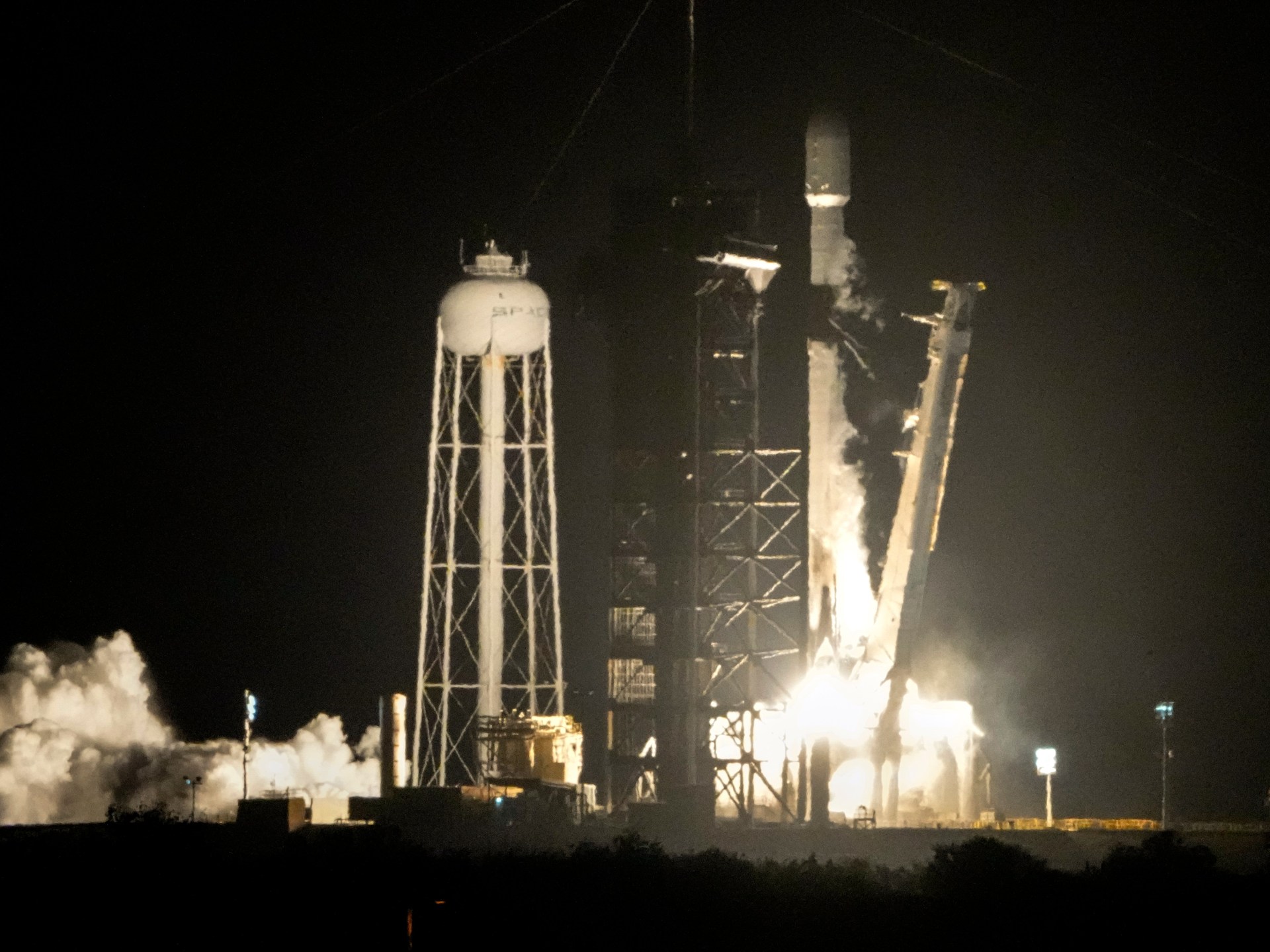
The rocket stage had been drifting through space after completing its mission. The BBC reported that the Falcon 9 launched from Florida in January last year carrying two lunar landers, and that its upper stage was left in a long, looping orbit after sending the landers toward the Moon. Al Jazeera reported that the second stage was launched in early 2025.
Over about 18 months, gravitational forces from the Earth, Moon and Sun — along with pressure from sunlight — gradually shifted the rocket part’s path until it was headed for the Moon. SpaceX said the trajectory was unintentional but could not be prevented because of the vehicle’s remaining fuel reserves, according to Al Jazeera.
“What has happened is essentially a mixture of solar activity and gravity forces have put it on a path toward the moon,” Julianna Scheiman, SpaceX director of NASA science and Dragon programmes, told reporters Monday.
For planetary geologists, the accidental collision offers unusually clear experimental conditions. Researchers know the object’s size, speed and point of impact, allowing them to test models of crater formation, debris spread and tremors through the lunar interior. The BBC reported that the findings could help engineers design safer landers and future Moon bases by showing how far rock and dust can travel and how much the ground may shake nearby.
The debris kicked up from beneath the surface may also offer clues about lunar geology and the formation of the Earth-Moon system about 4.5 billion years ago.
Human-made objects have struck the Moon many times since the Soviet probe Luna 2 in 1959, including NASA Ranger probes, Apollo-era rocket stages and the LCROSS mission in 2009. The last confirmed accidental impact occurred in 2022, when debris believed to be from a Chinese lunar mission launched in 2014 hit the far side of the Moon.
Space tracking expert Bill Gray told The Associated Press that the latest collision “doesn’t present any immediate danger, though it does highlight a certain carelessness about how leftover space hardware is disposed of.” He added: “Things are getting crowded up there.”













Be First to Comment