Key takeaways:
- The former inn where Adolf Hitler was born in 1889 has reopened as a police station in Braunau am Inn, Austria.
- Austria seized the property after years of disputes with its former owner and spent about 20 million euros renovating it, according to Al Jazeera.
- A stone from the Mauthausen concentration camp remains outside the building with the inscription: “Never again Fascism; In memory of millions of dead.”
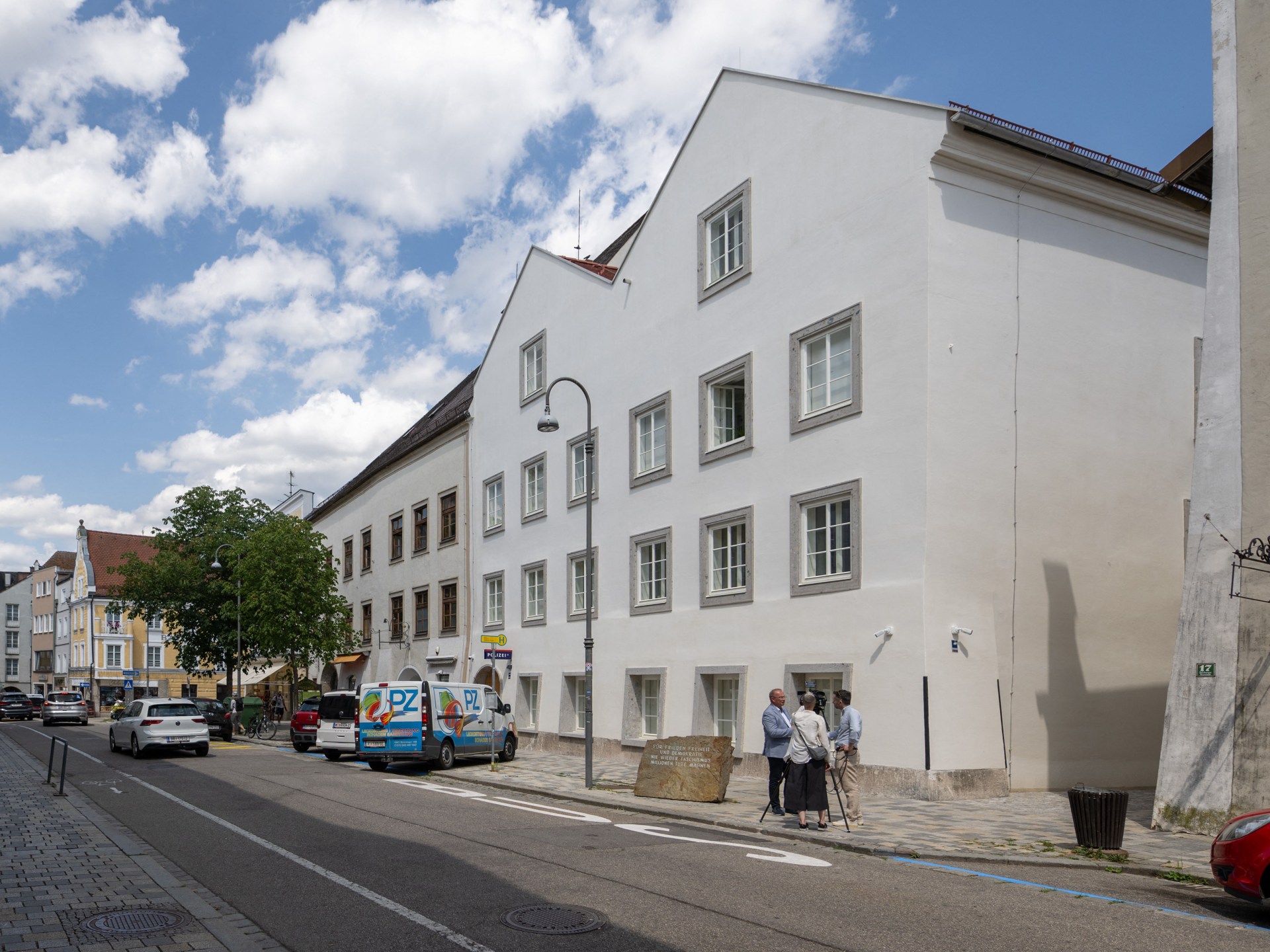
Austria has opened a police station inside the house where Adolf Hitler was born, a long-disputed building officials hope to strip of its pull as a destination for neo-Nazis.
The 17th-century former inn in Braunau am Inn, near Austria’s border with Germany, has been substantially refurbished, with its facade changed and a new “Police” sign added. Officers from the district and local police will be based there. The building opened in its new role on Wednesday, after years of argument over whether it should be demolished, turned into a memorial or used for public services.
Hitler was born at Salzburger Vorstadt 15 on April 20, 1889. His family moved out a few weeks later, later leaving Braunau for good when he was three years old. He returned briefly in 1938 on his way to Vienna after annexing Austria to Nazi Germany.
Austrian officials have long sought to prevent the property from becoming a site of far-right pilgrimage. For decades, the Interior Ministry rented the building from its former owner, Gerlinde Pommer, in an effort to keep control of how it was used. A local charity, Lebenshilfe, later operated a day centre and workshop there for people with special needs, but it moved out in 2011 after Pommer blocked renovations. The building then stood empty while she and the government argued over its future.
In 2016, Austria’s parliament passed a law allowing the state to seize the house. The government paid Pommer 812,000 euros in compensation. She challenged the amount in court but lost. Al Jazeera reported that the government bought the terraced house in 2017, announced remodeling plans in 2019 and spent about 20 million euros on the renovation.
At the opening ceremony, Braunau Mayor Johannes Waidbacher said he hoped the transformation would show that the community is “confronting its history, that it is assuming responsibility.” He added: “I believe that the opening of the police station today brings clarity to the discussion, perhaps also a bit of calm for the people of Braunau.” Interior Minister Gerhard Karner attended the ceremony, where about 100 people watched an orchestra play in the courtyard, including about 30 uniformed officers, the AFP news agency reported.
Stephan Mlczoch, who heads the Austrian Interior Ministry’s history department, said during a tour that “the aim was to prevent any association with Adolf Hitler, so as to strip it of that mystique.” Under Nazi rule, the building was known as the “Fuehrer birth house” and used as an art museum.
The decision remains contested. Some critics wanted the site turned into a “centre of responsibility” focused on confronting the Nazi past. Others hoped Lebenshilfe would return. Local historian Florian Kotanko told the BBC the charity did not want to come back because it feared being used “as a fig leaf for a political discussion, and so the government had to decide in another way.”
Robert Eiter of the Mauthausen Committee and the Network Against Racism and Right-Wing Extremism said the conversion would not erase the building’s meaning. “The world won’t forget where the worst mass murderer in history was born. Wikipedia won’t change its entries,” he said, adding that he did not expect a reduction in neo-Nazis making “the pilgrimage to Braunau.”
Waidbacher told Reuters that “on the whole the people of Braunau have accepted it and can live with it.” But some residents remain unhappy. “I would have preferred if they had done something else, but it is what it is,” said Irene, 74, who said she would have preferred the charity to stay.
There is no sign on the building explaining its history. Security cameras monitor the site, and the only public marker remains a stone on the pavement from the former Mauthausen concentration camp. Its inscription reads: “Never again Fascism; In memory of millions of dead.” Hitler’s name does not appear.






Be First to Comment