Key takeaways:
- Andy Biggs defeated David Schweikert, Scott Neely and Ken Miceli for the Republican nomination for Arizona governor.
- Democratic Gov. Katie Hobbs ran unopposed after winning the governorship in 2022 by less than 1 percentage point.
- The Cook Political Report and Sabato’s Crystal Ball currently rate the Arizona governor’s race as leaning Democratic.
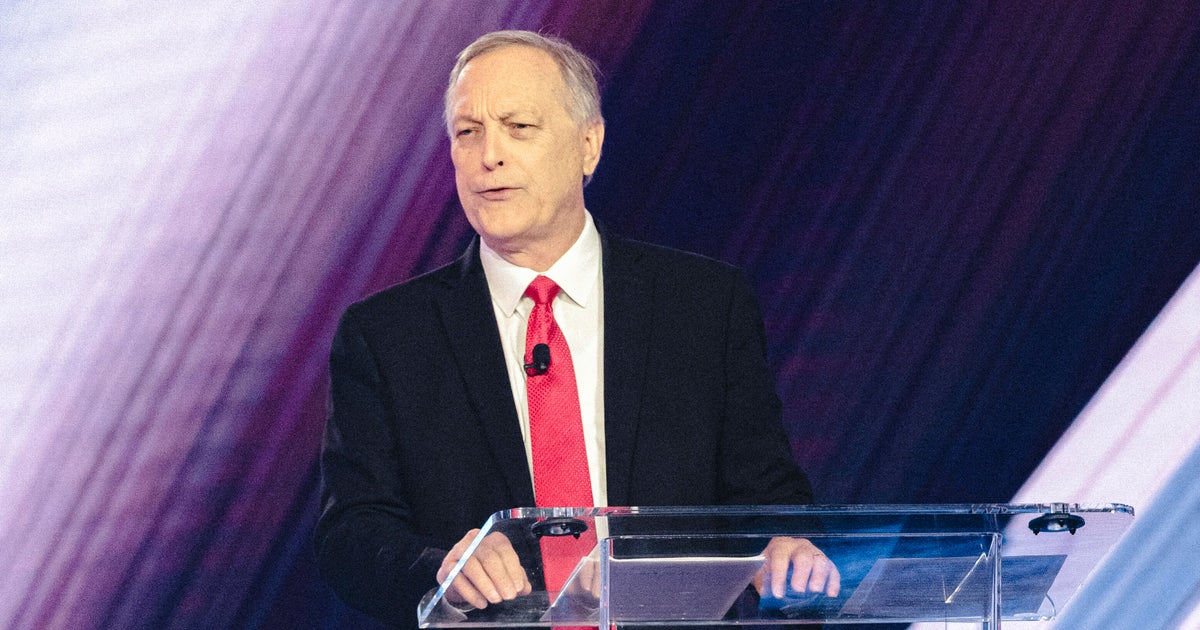
Rep. Andy Biggs won the Republican nomination for Arizona governor, setting up a fall race against Democratic Gov. Katie Hobbs in a battleground state where Trump-aligned candidates and Democratic statewide gains will again be tested.
NBC News and the Associated Press projected Biggs’ victory Tuesday. Biggs, a five-term congressman representing a district outside Phoenix and a former chair of the House Freedom Caucus, defeated a Republican field that included fellow Rep. David Schweikert and businessmen Scott Neely and Ken Miceli. Hobbs ran unopposed in the Democratic primary.
Biggs was endorsed by President Donald Trump and leaned heavily on that support throughout the primary. His campaign emphasized border security and lower taxes, and he held a consistent lead in polling before the vote, NBC News reported. The Guardian reported that Biggs appealed to the party’s deeply conservative base, while Schweikert argued during the campaign that Biggs’ hard-right politics and close alignment with Trump had helped Democrats gain ground in Arizona.
The general election is expected to be closely watched. Hobbs won the governorship in 2022 by less than 1 percentage point, defeating Trump-backed Kari Lake and flipping the office from Republican to Democratic control. Trump carried Arizona in 2024 after losing the state to Joe Biden in 2020.
Arizona, once a traditional Republican stronghold, has become one of the nation’s premier swing states. Democrats currently hold the governorship, both U.S. Senate seats, and the offices of secretary of state and attorney general. Republicans, however, retain significant strength in the state, including control of six of Arizona’s nine congressional districts, CBS News reported.
Biggs has long questioned the legitimacy of Biden’s 2020 victory. CBS News described him as one of the top backers of Trump’s unproven election fraud claims and reported that he was subpoenaed by the now-defunct House Jan. 6 select committee over his alleged involvement in Trump’s efforts after the election. The Guardian described him as a central figure in the effort to overturn Trump’s 2020 loss.
In the final days of the primary, Biggs sought to present himself as someone able to work across party lines, an apparent appeal to Arizona’s large bloc of unaffiliated voters. More than one-third of Arizona voters are not registered with either major party, according to NBC News.
“I may be conservative, but I’ve also shown that even when you’re conservative, if you look to collaborate, you can find points and ways to collaborate with even people who fundamentally disagree with you on other things,” Biggs told USA Today on Sunday.
Asked in that interview about the 2020 election outcome, Biggs did not directly answer, saying, “I’m not going to be critical against Republicans, and we have a lot of people with a lot of diverse viewpoints.” He added that Republicans will win “by looking forward and having a vision for the state.”
Political handicappers see the race as competitive but currently tilted toward Hobbs. The Cook Political Report with Amy Walter recently shifted its rating of the Arizona governor’s race from “toss-up” to “lean Democrat,” while Sabato’s Crystal Ball at the University of Virginia Center for Politics also rates the contest as leaning Democratic, according to CBS News.
Tuesday’s primary also shaped key congressional contests. Schweikert vacated Arizona’s 1st Congressional District, a longtime Democratic target anchored in affluent Scottsdale, to run for governor. In the 6th District, which stretches from the Tucson suburbs to the U.S.-Mexico border, Republican Rep. Juan Ciscomani is seeking a third term, while Democrat JoAnna Mendoza, a Marine Corps veteran, ran unopposed. Legislative primaries also advanced races that will determine control of a state Capitol where Republicans hold slim majorities in both chambers.




Be First to Comment