Key takeaways:
- U.S. officials said Iran privately told Trump advisers the Strait of Hormuz ship attacks were a mistake and blamed an “errant” hardline group.
- The White House wants Iran to publicly declare the strait open and pledge to stop firing on commercial ships during talks expected Saturday in Oman.
- Three ships were struck while using a U.S.-recommended route through Omani waters, and no fresh attacks were reported Friday, according to the BBC.
The United States is pressing Iran to publicly declare the Strait of Hormuz open and pledge to stop firing on commercial ships, after Tehran privately told Trump advisers that this week’s attacks were a mistake, senior U.S. officials said.
Negotiations are expected to take place Saturday in Oman, with President Donald Trump directing a team led by Vice President JD Vance, Secretary of State Marco Rubio, special envoy Steve Witkoff and Jared Kushner, the president’s son-in-law, to continue talks. The White House views the shootings as a violation of a ceasefire and wants Iran to publicly acknowledge that it erred.
“They came back to the table and said, ‘We screwed up. We made a mistake. Let’s keep talking,’” one U.S. official told CBS News.
The officials said Iranian representatives privately blamed the attacks on an “errant” sect of hardliners inside Iran’s system, saying the group was trying to undermine negotiations. The Trump administration, however, believes the ships may have been targeted for a different reason: Iran was caught off guard by how quickly traffic, including oil and gas shipments, moved through a southern lane along the Omani coast that the United States believed would remain open under the agreement.
After Saturday’s meeting, U.S. officials said they expect Iran to say the strait will remain open and be managed as it was before the conflict began. If not, one official said, “it’s not going to be a great day for them.” Another said, “We’re definitely in a wait-and-see moment.”
According to the BBC, U.S. officials said a message had been conveyed to Tehran through regional mediators demanding a public statement that the strait is open and that Iran will stop shooting at commercial vessels. “They’re either going to give us that statement or we’re not having a good outcome for them,” one official said, according to Reuters.
Trump wrote Friday on Truth Social: “The Islamic Republic of Iran has asked us to continue ‘talks.’ We have agreed to do so, but the United States has stated to them, in no uncertain terms, that the Cease Fire is OVER!”
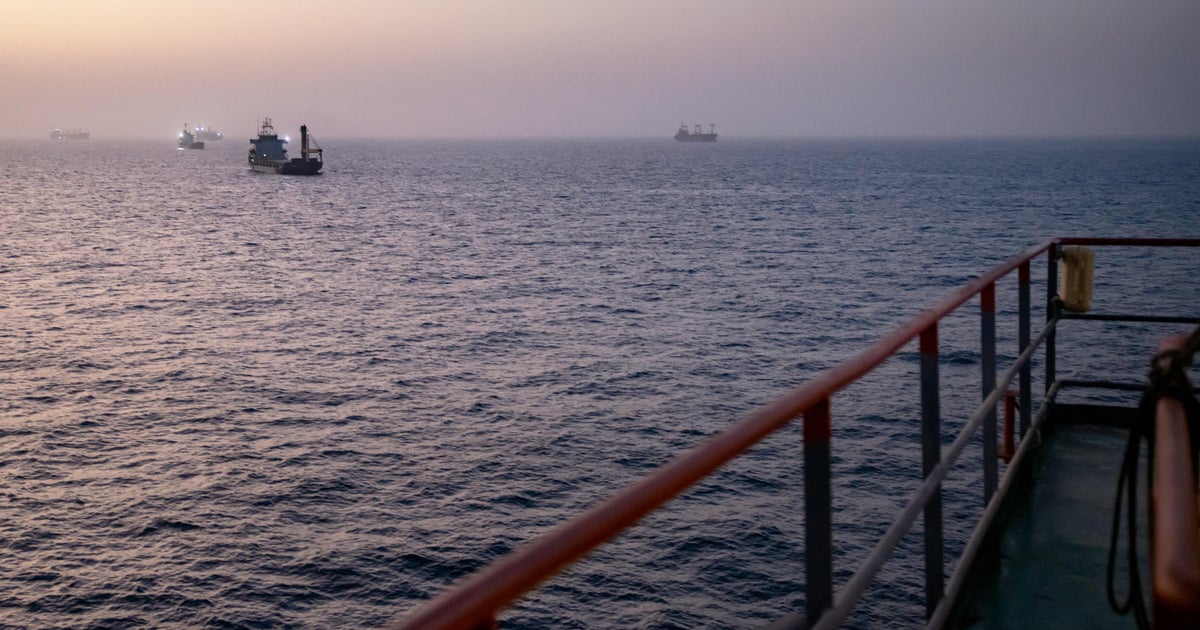
No fresh attacks were reported Friday after fighting broke out in the Gulf region earlier in the week, the BBC reported. Three ships were struck while using a U.S.-recommended route through Omani waters. Iran has repeatedly said the only “safe” passage is a separate route through its waters.
The tensions follow a June ceasefire agreement in which Iran was to provide safe passage to commercial ships. The BBC reported that the United States and Iran later agreed on a 14-point memorandum of understanding aimed at extending the ceasefire and ending conflict “on all fronts.” Under that framework, Iran and Oman are to hold talks “to define the future administration and maritime services” in the strait with other Gulf states.
During the conflict, Iran sought to assert sovereignty over the strait, including by establishing the “Persian Gulf Strait Authority,” which it said would manage “safe passage permits.” Iran’s Fars news agency has reported that, under the new deal with the United States, the strait would ultimately be managed by Iran in coordination with Oman, including possible “service fees” for ships transiting the waterway.
U.S. officials said Washington will use military and economic leverage if Iran continues hostile acts. They also said Trump is giving negotiators space to reach a deal, but “not a lot of time.” On the remains of Iran’s nuclear program, which Trump has called the “nuclear dust,” officials said the United States would prefer to excavate it, but other options include keeping it buried if Iran refuses to act like a “normal country.”




Be First to Comment