Key takeaways:
- The Swiss People’s Party proposal would require Switzerland’s population not to exceed 10 million before 2050.
- If the population reaches 9.5 million, the government would have to consider measures such as restricting asylum, family reunification and residency permits.
- Opponents warn the cap could threaten Switzerland’s EU free movement agreement and worsen labour shortages in sectors including healthcare and hotels.
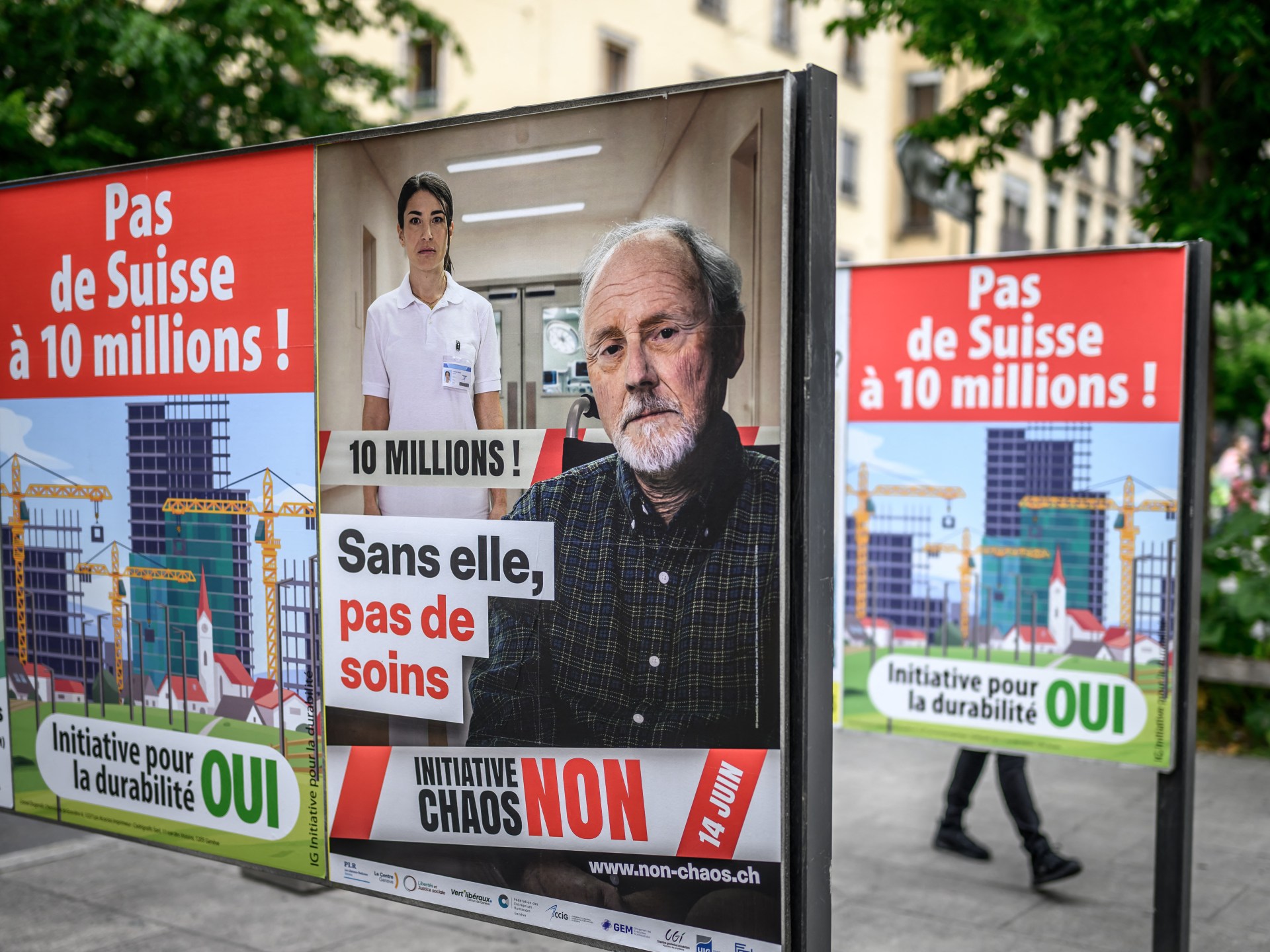
Swiss voters cast ballots Sunday on whether to impose a fixed cap on the country’s population, a proposal backed by the right-wing Swiss People’s Party that has sharpened divisions over immigration, public services and Switzerland’s ties with the European Union.
The constitutional change, described by the party as a “sustainability initiative,” would require Switzerland’s population not to exceed 10 million before 2050. The country had 9.1 million residents at the end of last year, up from 7.3 million in 2002, when Switzerland and the EU eased restrictions on citizens living and working across their borders.
If the population reaches 9.5 million before 2050, the government would have to take measures to slow growth. Those could include restricting asylum, family reunification and residency permits. If the 10 million threshold were reached, Switzerland could be required to terminate international agreements that conflict with the cap, including its EU deal on the free movement of people.
Final ballots were cast Sunday, with results expected to begin arriving around midday local time, Al Jazeera reported. Recent polling by gfs.bern suggested a close contest. The BBC reported that polls showed 52% opposed and 45% in favor, with a significant number of voters still undecided.
Supporters say rapid growth has strained housing, transport, schools, social services and the environment. “We have lost control,” said Nils Fiechter, a Swiss People’s Party representative in the canton of Bern parliament. “Unchecked immigration is leading to Switzerland no longer being Switzerland.” He said problems including a “housing shortage, gridlocked traffic, overburdened schools and strained social services” were directly linked to immigration.
Heinz Taennler, a Swiss People’s Party politician and finance director of the canton of Zug, told Al Jazeera the measure was not intended to end free movement. “I don’t want freedom of movement ended,” he said. “Another million people can still immigrate to Switzerland, but the government needs to take action.”
The federal government, parliament, other political parties, business leaders and trade unions oppose the proposal, calling it a threat to the economy and to Switzerland’s relationship with the EU, its largest trading partner. Critics say foreign workers are essential in sectors including healthcare, hotels, finance, pharmaceuticals and technology. Half of those working in Swiss hotels are immigrants, and hospitals and care homes also rely on foreign staff.
Rudolf Minsch, chief economist at the business association Economiesuisse, said Switzerland “could face challenges in our relations with the European Union” if the measure passes. “The EU is still by far the most important trading partner for Switzerland,” he said, adding that it is “in our interest to have stable and clear relationships with our main trading partner.”
Opponents also argue that limiting immigration would make it harder to support an ageing society. The BBC reported that 20% of Switzerland’s population is now over 65.
Helin Genis, a Social Democrat on Bern city council whose parents are from Turkey, said the proposal wrongly blames migrants for broader policy problems. “It is not migrants who determine rent levels. It is not migrants who raise health insurance premiums. Nor is it migrants who make political decisions on housing, infrastructure or social investment,” she told the BBC. Viewing problems “through the lens of migration does not lead to solutions, but to division,” she added.
Switzerland’s direct democracy system allows campaigners to force a nationwide vote by gathering 100,000 signatures. Voters have repeatedly considered immigration measures over the past half-century; Al Jazeera reported that only one, a 2014 initiative “against mass immigration,” narrowly passed.
The Organisation for Economic Co-operation and Development reported that Switzerland’s foreign-born population was 32% in 2024, behind only Luxembourg and Australia among its 38 member countries. The BBC reported that 27% of Swiss residents were born abroad.








Be First to Comment