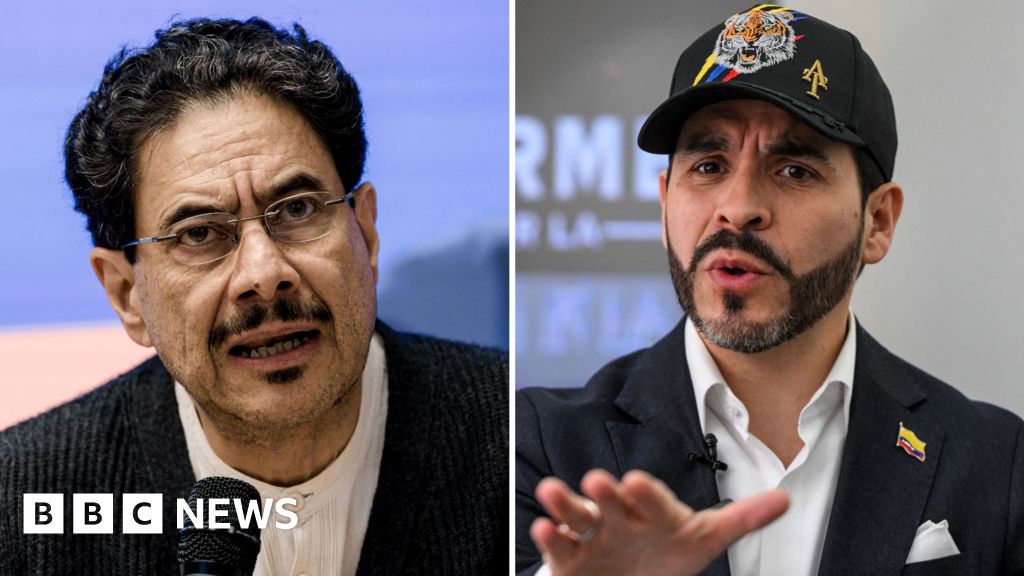
Key takeaways:
- Abelardo de la Espriella leads with 43.7% and Iván Cepeda follows with 41%, prompting a runoff on June 21.
- De la Espriella advocates a hardline security approach including military crackdowns, building mega-prisons, and closer U.S. cooperation.
- Cepeda supports President Petro’s 'total peace' strategy emphasizing dialogue with armed groups over military action and rejects U.S. intervention.
Colombia’s presidential election will proceed to a runoff on June 21 between left-wing Senator Iván Cepeda and far-right newcomer Abelardo de la Espriella after neither candidate secured an outright majority in Sunday’s vote. With nearly all ballots counted, de la Espriella led with 43.7% of the vote, followed by Cepeda at 41%, while conservative Senator Paloma Valencia, a former frontrunner, finished third and was eliminated.
De la Espriella, a lawyer and businessman who has never held elected office, ran an outsider campaign focused on security concerns, promising a tough military crackdown on crime. He has advocated for measures such as building 10 mega-prisons modeled after El Salvador’s approach under President Nayib Bukele, expanding military powers, and closer cooperation with the United States. Nicknamed “El Tigre,” de la Espriella ideologically aligns himself closer to Donald Trump and has expressed support for bombing campaigns to disrupt drug trafficking, including killing suspects by downing planes and shooting boats. These statements have been widely denounced as calls for extrajudicial killings.
Ecuador’s President Daniel Noboa stated that he had reached an agreement with de la Espriella in a meeting to drop tariffs and discussed the handover of Ecuadorian criminals and a joint fight against narcoterrorism. However, Colombia’s foreign ministry accused Ecuador of deliberate interference in the election. Noboa’s office did not immediately respond to requests for comment.
Cepeda, a seasoned politician and ally of current President Gustavo Petro, has been involved in peace negotiations with armed groups, including the 2016 deal with the FARC guerrillas. He supports Petro’s “total peace” strategy, which prioritizes dialogue and ceasefires over military intervention, despite criticism that violence and cocaine production have surged under Petro’s administration. Cepeda has pledged economic reforms such as expanding welfare and redistributing land to victims of internal conflict. He has rejected U.S. intervention, calling the U.S.-led war on drugs a failure.
Security remains a central issue in the election, as Colombia continues to grapple with a six-decade internal conflict involving criminal networks, government forces, left-wing rebels, and right-wing paramilitaries. Voters cast more than 23.6 million ballots, with a notable number of blank and null votes. The runoff is expected to be competitive, with de la Espriella likely to consolidate right-wing support. A victory for the right would align Colombia with a recent regional trend of right-wing electoral gains in Latin America.
De la Espriella expressed confidence on social media as results came in, stating, “We are going to defeat tyranny and absolutism. We have advanced to the run-off thanks to the more than 10 million Colombians who answered the roar. In 21 days, we will make history!”







Be First to Comment