Key takeaways:
- President Trump called Pope Leo XIV "WEAK on crime" and "terrible for Foreign Policy," criticizing his stance on Iran and immigration.
- Pope Leo responded that he has "no fear of the Trump administration" and will continue to promote peace based on the gospel.
- Archbishop Paul Coakley condemned Trump's disparaging remarks, emphasizing the pope's role as a spiritual leader, not a politician.
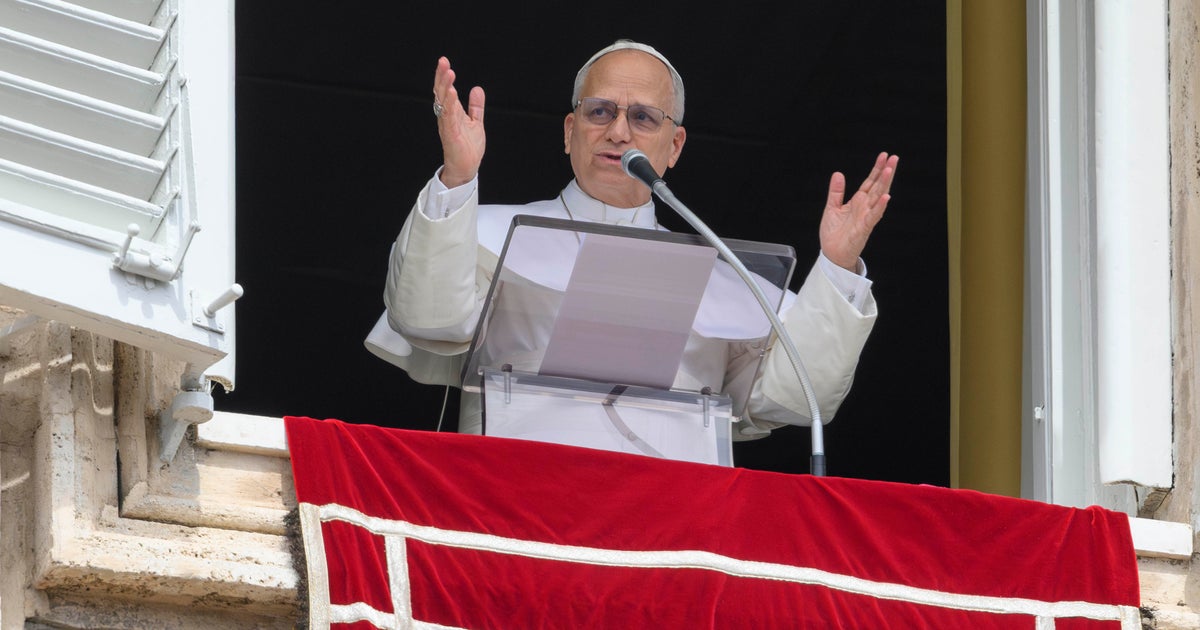
Pope Leo XIV responded firmly Monday to President Donald Trump’s harsh criticism, which labeled the pontiff as “WEAK on crime” and “terrible for Foreign Policy.” The pope, who has been outspoken against the war in Iran and critical of some Trump administration policies, said he had “no fear of the Trump administration” and would continue to promote peace based on the gospel.
Trump’s remarks came late Sunday at Joint Base Andrews, Maryland, and on social media. He accused the pope of supporting crime and nuclear weapons, stating, “I don’t think he’s doing a very good job. He likes crime, I guess.” On Truth Social, Trump wrote, “Pope Leo is WEAK on Crime, and terrible for Foreign Policy,” and claimed the pope was elected only because he was American and to better manage relations with Trump himself. “If I wasn’t in the White House, Leo wouldn’t be in the Vatican,” Trump added.
The pope addressed these comments aboard his plane en route to Algeria, the first stop on an 11-day African tour. He said, “I have no fear of the Trump administration, or speaking out loudly of the message of the gospel, which is what I believe I am here to do, what the church is here to do.” He emphasized that the church is not a political entity and that his mission is to be a peacemaker. “We are not politicians, we don’t deal with foreign policy with the same perspective he might understand it, but I do believe in the message of the gospel, as a peacemaker,” Leo said.
During the flight, the pope highlighted the significance of Algeria as the home of St. Augustine, a figure who inspired his spirituality and symbolized inter-religious dialogue. Upon arrival in Algiers, he visited a monument commemorating independence from French rule and spoke against the accumulation of resentment amid global conflicts.
Pope Leo has openly criticized Trump’s threats to “wipe out” Iranian civilization, calling such attacks on civilian infrastructure “against international law” and urging people to advocate for peace. He also condemned the war in recent social media posts and homilies, emphasizing that “God does not bless any conflict” and urging leaders to choose dialogue over rearmament.
Trump, meanwhile, criticized the pope’s stance on Iran’s nuclear capabilities and America’s actions in Venezuela, accusing Leo of catering to the “Radical Left” and harming the Catholic Church by acting like a politician rather than a spiritual leader. He said, “I don’t want a Pope who criticizes the President of the United States,” and urged the pope to “get his act together.”
Archbishop Paul Coakley, president of the U.S. Conference of Catholic Bishops, rebuked Trump’s remarks, stating, “I am disheartened that the President chose to write such disparaging words about the Holy Father. Pope Leo is not his rival; nor is the Pope a politician. He is the Vicar of Christ who speaks from the truth of the Gospel and for the care of souls.”
Trump also posted a photo Sunday night portraying himself in a biblical-style robe, laying hands on a bedridden man with light emanating from his fingers, surrounded by figures including a soldier and a nurse, with American landmarks and symbols in the background.
Earlier, Trump had praised the pope’s election in May as “an honor for our country,” calling it “a great, absolutely great honor.” However, a March NBC News poll showed that U.S. voters viewed Pope Leo more favorably than Trump, with 42% positive views of the pope compared to 41% for Trump, and 53% negative views of Trump.


Be First to Comment