Key takeaways:
- Senate Republicans propose a plan to reopen most of the Department of Homeland Security, funding TSA and other components but excluding ICE’s immigration enforcement, aiming to gain support from President Trump and Senate Democrats.
- The plan includes using budget reconciliation to pass parts of the SAVE America Act, though experts doubt election-related provisions will meet strict budgetary rules, raising questions about the plan’s political feasibility.
- Democrats show cautious openness but demand ICE restrictions, while negotiations continue with some Republican reservations; lawmakers are working to finalize a bipartisan deal to end the shutdown and restore DHS operations.
Senate Republicans are advancing a new plan to reopen the Department of Homeland Security (DHS) amid an ongoing partial government shutdown that has affected airport security and other critical operations. According to multiple sources familiar with negotiations, the proposal would fund most of DHS, including the Transportation Security Administration (TSA), while excluding immigration enforcement and deportation activities conducted by U.S. Immigration and Customs Enforcement (ICE). The plan aims to secure support from President Donald Trump and enough Senate Democrats to quickly restore agency functions.
The framework, discussed during a Monday meeting at the White House attended by Senators Katie Britt (R-Ala.), Steve Daines (R-Mont.), Lindsey Graham (R-S.C.), Bernie Moreno (R-Ohio), and administration officials including soon-to-be DHS Secretary Markwayne Mullin, would fund all DHS components except ICE’s removal operations. This includes funding for Border Patrol and Homeland Security Investigations, which are less controversial. Republicans intend to address funding for ICE enforcement and incorporate parts of the SAVE America Act—a sweeping election bill favored by Trump—in a separate budget reconciliation bill. This approach would allow the party to pass those provisions with a simple majority in the Senate, bypassing the need for Democratic votes.
However, the reconciliation process presents significant challenges. Every provision included must be directly related to budgetary matters and comply with strict rules. Experts have expressed skepticism about whether the SAVE America Act, which includes voter ID requirements and other election-related measures, can be adapted to fit these budgetary constraints. Bobby Kogan, senior director of federal budget policy at the Center for American Progress, noted that while Republicans might offer financial incentives to states to voluntarily adopt some provisions, binding national requirements are unlikely to qualify under reconciliation rules. This raises questions about the political viability of the plan and whether it will satisfy supporters of the legislation.
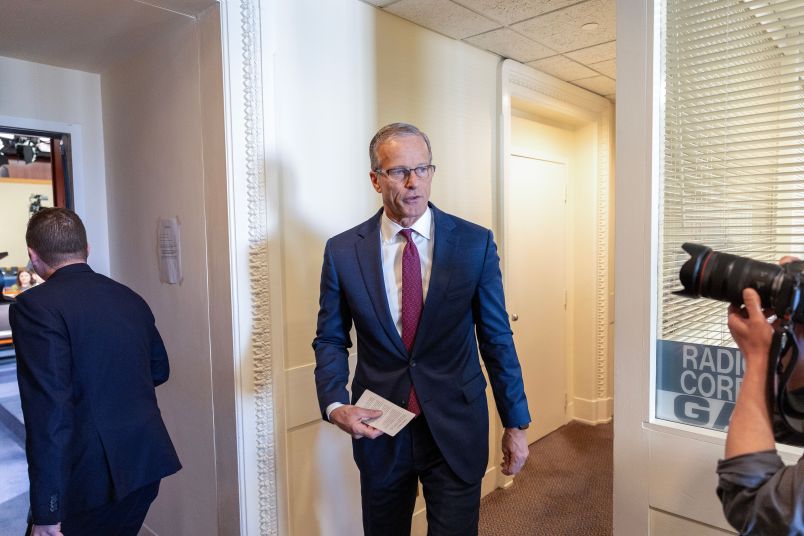
Democrats have expressed cautious openness to the Republican proposal but have withheld full endorsement pending review of the specific text. They have emphasized the need for restrictions on ICE operations as a condition for supporting any funding measure. Senate Minority Leader Chuck Schumer (D-N.Y.) and Appropriations Committee member Sen. Patty Murray (D-Wash.) have been involved in ongoing discussions with Senate Republicans, including Britt, who chairs the subcommittee responsible for DHS funding. While some Senate Republicans, such as Sen. Susan Collins (R-Maine), have voiced reservations about using reconciliation to pass election-related provisions, Senate Majority Leader John Thune (R-S.D.) described the talks as “very positive and productive” and expressed optimism about reaching an agreement.
The proposed deal marks a significant shift from previous Republican positions that blocked partial DHS funding bills. It aims to alleviate the operational disruptions caused by the shutdown, including long TSA lines and staff shortages, while addressing Trump’s demand to pass election reform legislation. The success of the plan will depend on securing enough bipartisan support in the Senate and approval from the House, where some conservatives remain skeptical. As negotiations continue, key lawmakers have pledged to work through the night to finalize a deal that could end the shutdown and restore full DHS functionality.








Be First to Comment