Key takeaways:
- A federal judge issued a temporary injunction halting the $400 million White House ballroom construction, ruling the Trump administration likely exceeded its legal authority.
- The National Trust for Historic Preservation challenged the project, citing improper adherence to federal guidelines and questioning the complex funding mechanism involving private corporate donations.
- Judge Leon emphasized that only Congress can authorize such alterations and funding, criticizing the administration’s legal justification and financial arrangements, and leaving open the possibility for future congressional approval.
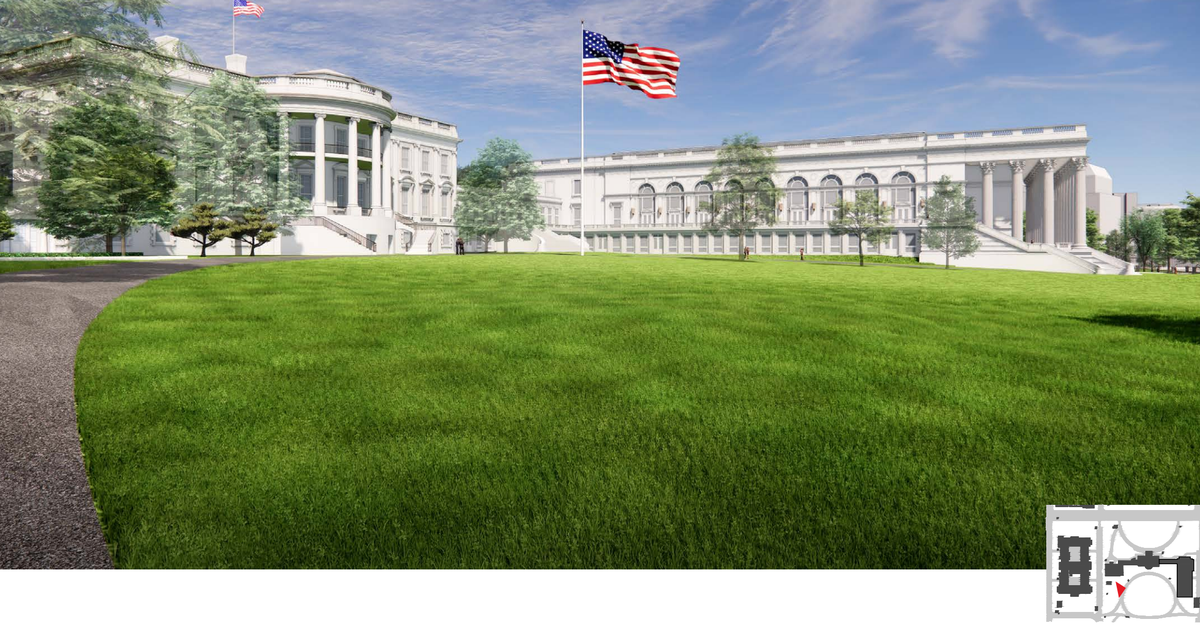
A federal judge has issued a temporary injunction halting the construction of a new ballroom at the White House, a project initiated by the Trump administration. U.S. District Judge Richard Leon ruled that the administration likely exceeded its legal authority in proceeding with the $400 million project, which involves replacing the White House’s East Wing with a 90,000-square-foot ballroom. The ruling, which takes effect in 14 days, stops any further demolition or construction activities related to the ballroom, except for measures necessary to ensure the safety and security of the White House grounds.
The legal challenge was brought by the National Trust for Historic Preservation, which sued the administration in December, alleging that federal guidelines were not properly followed before demolishing the East Wing and beginning construction. The Trust also questioned the funding mechanism for the project, which relies heavily on private donations from corporations such as Lockheed Martin, Amazon, Microsoft, and Comcast Corp., the parent company of NBCUniversal. These funds were collected by a nonprofit organization, transferred to the National Park Service, and then deposited into an account controlled by the president, typically used for minor White House repairs.
Judge Leon expressed skepticism about the administration’s legal justification for the project, stating that no statute grants the president the authority claimed. He described the administration’s argument that the ballroom constitutes a legally permissible “alteration” to the White House grounds as a “brazen interpretation of the laws of vocabulary.” In his ruling, Leon emphasized that the president is the steward of the White House for future generations but is not the owner, and that Congress holds the authority to approve funding and alterations to federal property. He wrote, “Unless and until Congress blesses this project through statutory authorization, construction has to stop!”
The judge also criticized the complex financial arrangement used to fund the ballroom, likening it to a “Rube Goldberg” machine—a reference to overly complicated contraptions designed to perform simple tasks. While the legality of the funding mechanism was not the central issue in the ruling, Leon noted that it falls far short of the affirmative congressional authorization typically required for such projects. The ruling leaves open the possibility for the administration to seek explicit congressional approval to continue construction, stating that Congress may authorize the project through statutory means or appropriate funds, thereby maintaining oversight of government spending and federal property.



Be First to Comment