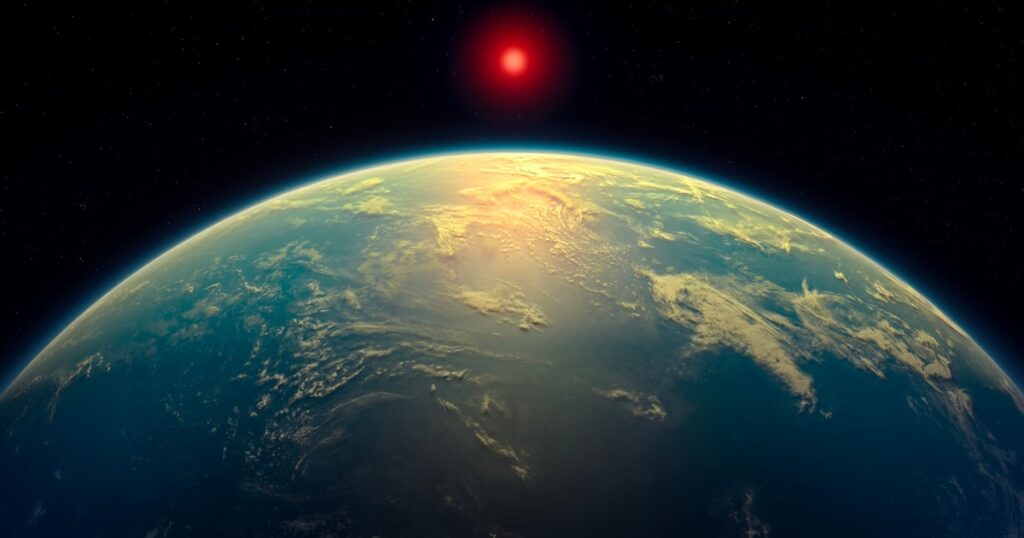
Astronomers are actively discussing the potential habitability of the exoplanet K2-18b, located 124 light-years away, following findings by a Cambridge University-led team suggesting it might be an ocean world capable of supporting microbial life. Using data from NASA's James Webb Space Telescope, researchers identified chemical signatures in K2-18b's atmosphere that are typically associated with microbial life on Earth, raising the possibility of a warm ocean on the planet. While the discovery is considered groundbreaking, researchers urge caution and emphasize the need for further investigation, as the scientific community remains divided on the interpretation of the data.
Posts tagged as “James Webb Space Telescope”
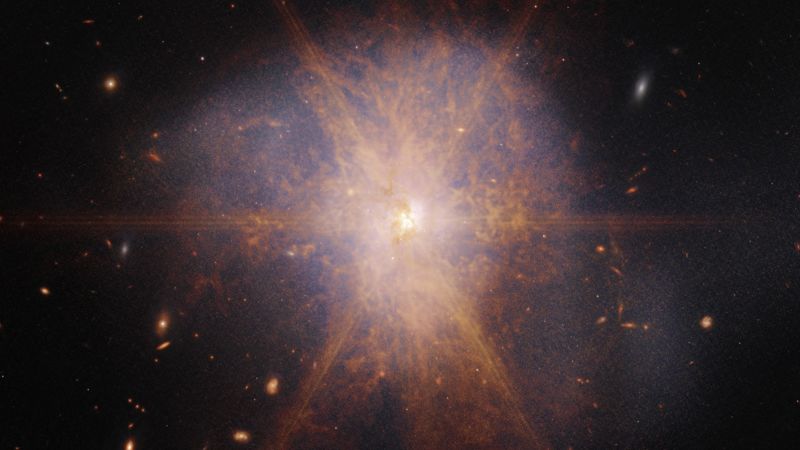
This stunning new image from the James Webb Space Telescope captures the collision of two galaxies 250 million light-years away, resulting in an enormous burst of star formation. The luminosity of the two galaxies combined is the equivalent of more than 1 trillion suns, and the amount of gas in the merging galaxies is equal to all of the gas in the entire Milky Way galaxy. The image is a testament to the power of the telescope and the beauty of the universe.
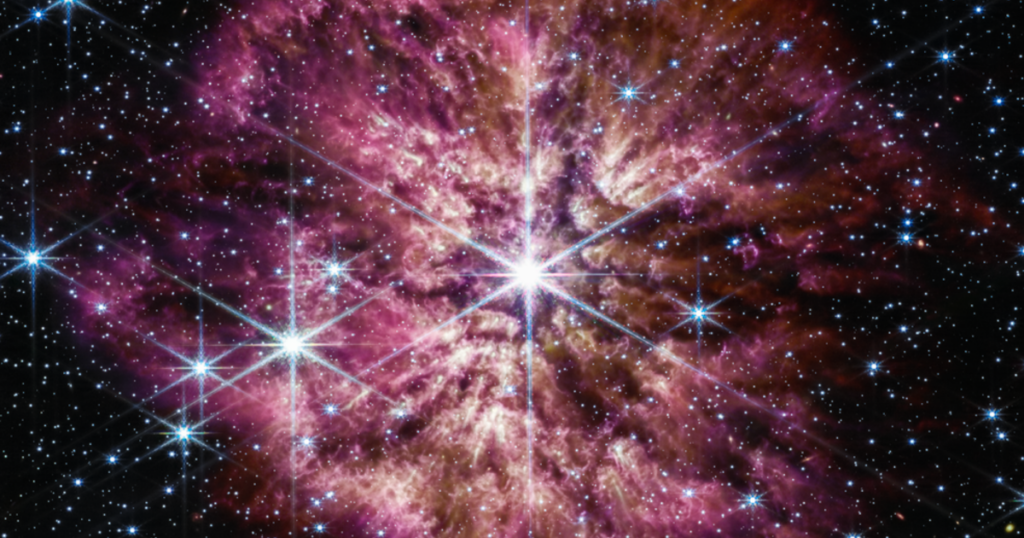
NASA's James Webb Space Telescope has captured an unprecedented image of WR 124, a Wolf-Rayet star in the Sagittarius constellation 15,000 light-years away. This massive star is in the brief Wolf-Rayet phase before going supernova, and Webb's observations of this rare phase are valuable to astronomers. The telescope is a joint project between NASA, the European Space Agency, and the Canadian Space Agency and is set to launch in 2021, providing astronomers with the most powerful space telescope ever built to study stars, galaxies, and planets, and search for signs of life.
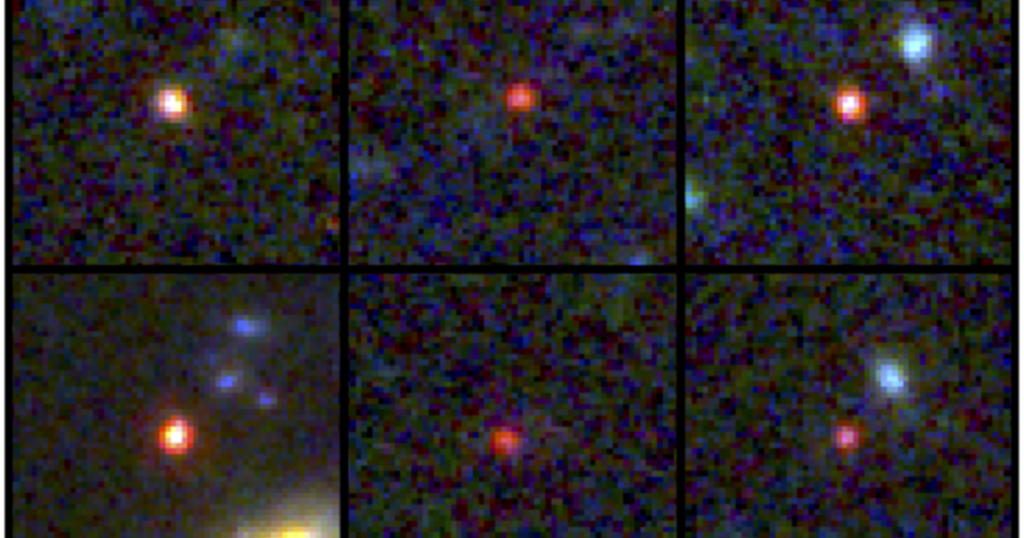
Astronomers have made a groundbreaking discovery of massive galaxies dating back to within 600 million years of the Big Bang, using the new James Webb Space Telescope. These galaxies appear to be mature, with a large fraction of their stars in place, suggesting that the early universe may have had a stellar fast-track. This discovery provides evidence that galaxies can form and mature quickly, opening up a new realm of possibilities for further research into the formation of the universe.
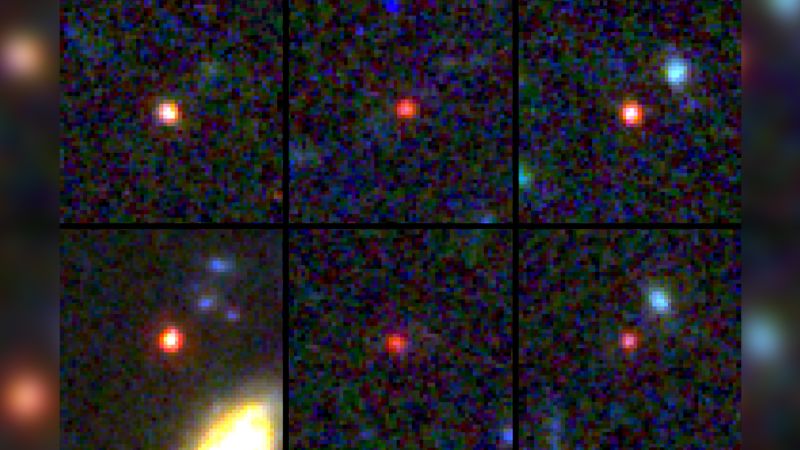
Astronomers have made a groundbreaking discovery using the James Webb Space Telescope, finding six massive galaxies that date back to within 600 million years of the Big Bang. These galaxies are more than 10 times more massive than the Milky Way, and their discovery could help scientists better understand how galaxies form and evolve. The telescope is capable of looking back to the earliest days of the universe, and has already spotted even older galaxies, dating to within a mere 300 million years of the beginning of the universe.
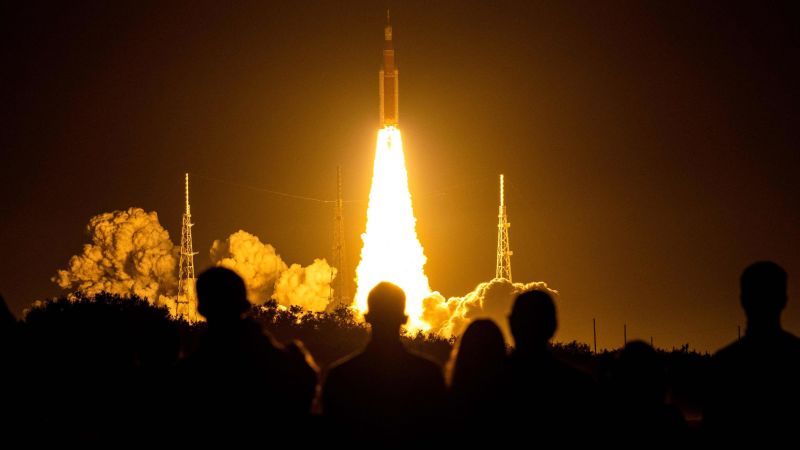
NASA had a remarkable year in 2022, achieving a number of space exploration milestones including the launch of the Artemis I mission, the first all-private mission to the International Space Station, and the successful Double Asteroid Redirection Test (DART). Other highlights included the discovery of debris from the Space Shuttle Challenger disaster, the launch of a spacecraft from a private Japanese company to the lunar surface, and the completion of China's space station. NASA also made strides in its human exploration program, scientific endeavors, and technology demonstrations.