Key takeaways:
- Artemis II astronauts set a new record for the farthest distance from Earth at 252,756 miles, surpassing Apollo 13's 1970 record.
- The Orion capsule safely splashed down in the Pacific Ocean after enduring temperatures of about 5,000 degrees Fahrenheit during re-entry.
- The crew named a moon crater 'Carroll' in honor of commander Reid Wiseman's late wife, marking an emotional moment of the mission.
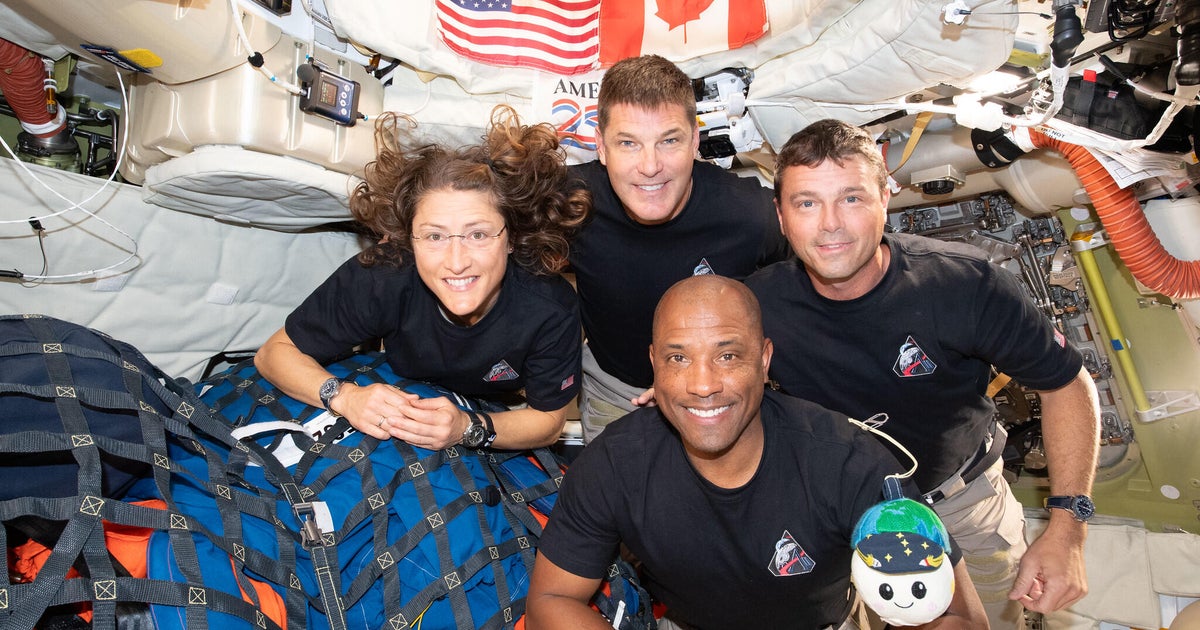
NASA’s Artemis II mission concluded successfully with the safe splashdown of its four astronauts in the Pacific Ocean off the coast of San Diego on Friday evening. The crew—commander Reid Wiseman, pilot Victor Glover, mission specialists Christina Koch, and Canadian astronaut Jeremy Hansen—completed a groundbreaking 10-day journey around the moon, marking the first crewed lunar mission in over 50 years.
The Orion capsule, launched atop NASA’s Space Launch System rocket from Kennedy Space Center on April 1, carried the astronauts farther into space than any humans have traveled before. The mission set a new record for the farthest distance from Earth at 252,756 miles, surpassing the Apollo 13 record by more than 4,000 miles.
After a nearly 15-minute fiery re-entry through Earth’s atmosphere, the capsule deployed three large parachutes and splashed down at 8:07 p.m. ET. NASA officials described the landing as picture-perfect. Moments before splashdown, the crew experienced a six-minute communications blackout, a tense period as the capsule endured temperatures reaching approximately 5,000 degrees Fahrenheit on its heat shield.
“Y’all, we did it,” Lori Glaze, acting associate administrator of NASA’s Exploration Systems Development Mission Directorate, said during a post-landing briefing. Wiseman radioed back to Mission Control, “Houston, Integrity, we have you loud and clear,” using the spacecraft’s call sign.
Following recovery by NASA and U.S. Navy teams, the astronauts were flown by helicopter to the USS John P. Murtha for post-mission medical evaluations before returning to shore and then to NASA’s Johnson Space Center in Houston.
During the mission, the crew conducted extensive tests of the Orion capsule’s life-support systems, many of which had never been tested in space with humans aboard. They spent the first day orbiting Earth to verify environmental controls and manual capsule operations.
The astronauts shared stunning images of Earth and the moon, including the first full view of Earth from the Orion capsule in over five decades. They also captured rare photographs of the moon’s far side, revealing rugged terrain, craters, ridges, mountains, and ancient lava plains. These observations are expected to aid scientists in understanding the moon’s formation and geological history.
An emotional highlight came when the crew named a crater on the moon “Carroll” in honor of Wiseman’s late wife, who passed away in 2020. Hansen described the tribute as a “bright spot on the moon,” and Wiseman called it the most profound moment of the mission.
The mission’s apex occurred on April 6 when the Orion capsule passed behind the moon, losing communication with Earth for 40 minutes. This milestone marked the farthest humans have traveled from Earth. The crew reflected on the experience with a sense of gratitude and awe.
NASA had modified the capsule’s re-entry trajectory to mitigate risks related to a known flaw in the Orion heat shield, discovered during the uncrewed Artemis I mission in 2022. The steeper, faster descent reduced exposure to extreme heat. NASA plans a full analysis of the heat shield’s performance after the capsule returns to Kennedy Space Center.
Amit Kshatriya, NASA’s associate administrator, emphasized the mission’s importance as a stepping stone toward future lunar exploration. NASA aims to launch Artemis III in mid-2027 to demonstrate lunar landing technologies, followed by Artemis IV in 2028 to land astronauts on the moon.
“The path to the lunar surface is open, but the work ahead is greater than the work behind us,” Kshatriya said. “Fifty-three years ago, humanity left the moon. This time, we return to stay.”










Be First to Comment