Key takeaways:
- Democrats face a tough challenge in the 2024 Senate midterms, needing to flip at least four seats, including defending vulnerable incumbents in key states and targeting Republican-held seats in GOP-leaning areas.
- Political tensions persist amid national issues like the Iran war and DHS funding shutdown, with criticism of lawmakers’ inaction and FCC Chair Brendan Carr’s controversial efforts to regulate media aligned with Trump’s agenda.
- The Department of Labor has proposed easing restrictions on 401(k) investments in alternative assets, sparking debate over increased risks and benefits, with opposition from Senator Elizabeth Warren highlighting concerns about favoring wealthy interests.
As the 2024 midterm elections approach, Democrats face significant challenges in their bid to regain control of the U.S. Senate. Despite a seemingly favorable political environment, the party must flip at least four seats to overcome the current Republican majority of 53-47. This task is complicated by the need to win in states that former President Donald Trump carried by double-digit margins in 2024. According to NBC News analyst Steve Kornacki, Democrats must first defend vulnerable incumbents in Georgia, Michigan, and New Hampshire—states they have won in recent Senate and presidential elections. However, even if they secure these seats, Democrats will still need to capture additional Republican-held seats in states with strong GOP leanings.
Among the most promising Democratic targets is Senator Susan Collins of Maine, the only Republican incumbent running in a state Trump lost. Former North Carolina Governor Roy Cooper is also viewed as a strong contender to replace retiring Republican Senator Thom Tillis in a politically competitive state. Beyond these, Democrats are contesting seats in Ohio, Alaska, Texas, and Iowa, though these states are considered more challenging due to their conservative voting patterns. The party’s recent successes in GOP-leaning states have largely depended on incumbents with established voter loyalty, a factor that may not benefit new Democratic candidates in 2024.
Meanwhile, the political landscape in Washington remains tense amid ongoing national issues such as the war with Iran and a Department of Homeland Security (DHS) funding shutdown. Despite the impact on Americans—including increased airport wait times, higher fuel prices, and military casualties—lawmakers have largely departed the capital without resolving the DHS funding impasse. Former President Donald Trump, who has described his golf outings during the Iran conflict as a form of relaxation, asserted in an NBC News interview that the U.S. has “decimated” Iran’s military and that the conflict is “coming to an end.” However, critics have noted a disconnect between the policymakers’ actions and the hardships faced by the public.
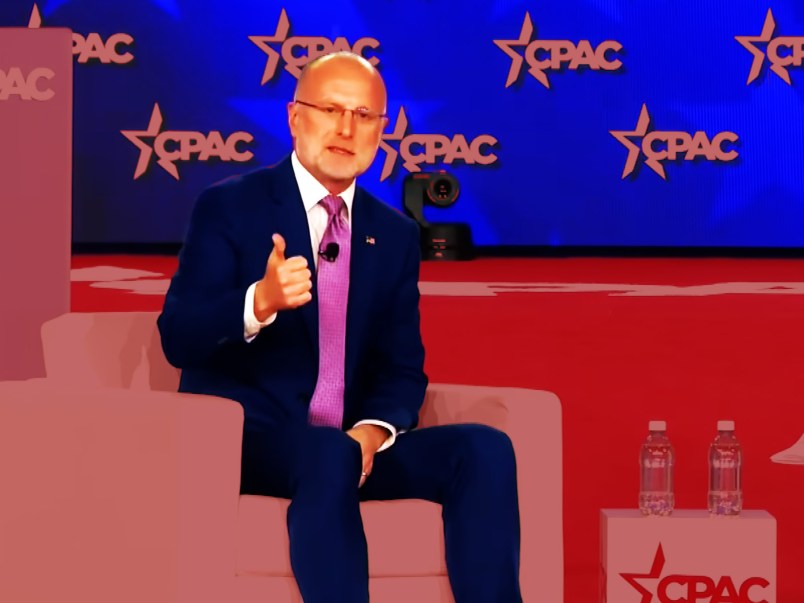
In a related development, Federal Communications Commission (FCC) Chair Brendan Carr has drawn attention for his aggressive stance toward legacy media outlets, which he has framed as part of a broader effort to support Trump’s political agenda. Speaking at the Conservative Political Action Conference (CPAC), Carr praised Trump’s efforts to challenge what he called the “fake news media,” citing recent defunding of public broadcasters and the departure of prominent journalists and media personalities. Carr has also threatened to revoke broadcasting licenses for outlets that do not align with the administration’s narrative on the Iran war, although experts note the FCC’s limited authority over national news content. This approach has raised concerns about the potential politicization of media regulation.
Additionally, the Department of Labor (DOL) has proposed a rule change that would ease restrictions on 401(k) fund managers investing in alternative assets such as private credit funds and cryptocurrencies. The proposal aims to expand protections for fiduciaries under the Employee Retirement Income Security Act, potentially encouraging greater investment in higher-risk, less liquid assets. While proponents argue this could diversify retirement portfolios and provide access to lucrative markets, critics warn of increased risks, including reduced transparency and limited investor access to funds. Senator Elizabeth Warren has voiced opposition, characterizing the move as favoring wealthy interests at the expense of everyday Americans. The proposal follows the Trump administration’s earlier rollback of a Biden-era rule that cautioned against crypto investments in retirement accounts, reflecting a broader deregulatory trend.




Be First to Comment